
Komatsu Wheel Loaders For Sale
Browse Komatsu wheel loaders for sale with insight on bucket size, operating weight, lift capacity, tire choices, and loader applications.
Learn more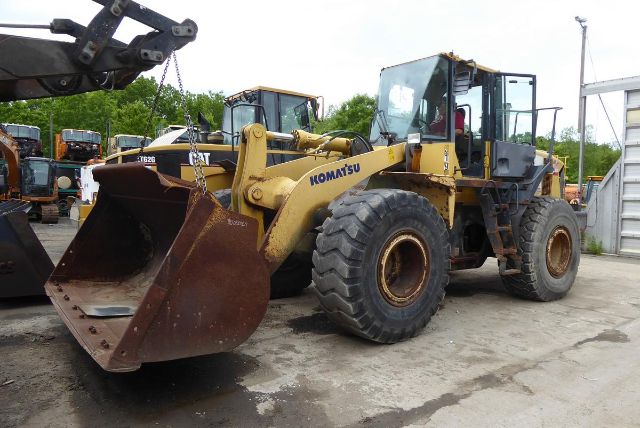
Have komatsu wheel loaders trucking equipment to sell? List it here to reach thousands of buyers.
About Komatsu Wheel Loaders
For many buyers, the key sizing decision is matching the loader to the truck body, hopper, or stockpile environment. A midsize Komatsu wheel loader may offer the right balance of bucket payload, reach, and maneuverability for feed lots, quarries, paving crews, transfer yards, and municipal operations. Common items to review include engine horsepower, linkage style, ride control, limited slip or locking differential setup, tire size, and whether the machine has a general purpose bucket, light material bucket, forks, or a quick coupler. If the loader will spend long hours on hard surfaces, tire condition and tread type matter. If it will work in abrasive material, cutting edges, bucket floor wear, pins, bushings, and center articulation play deserve close attention.
Komatsu loaders are also often evaluated on serviceability and driveline condition. On used machines, buyers should inspect cold start behavior, transmission shift quality, axle noise, hydraulic response, lift arm drift, and any seepage at boom, bucket, or steering cylinders. Cab condition matters more than many first-time buyers expect because visibility, HVAC performance, seat suspension, and control layout affect productivity over a full shift. Hour meter accuracy, maintenance records, and evidence of consistent grease intervals can tell you as much as the paint condition. Machines with enclosed cabs, good glass, sound backup alarms, and working lights are usually better suited to year-round fleet use.
A Komatsu wheel loader can be a practical choice when the job requires mobility, fast cycle times, and less ground disturbance than a track machine. Buyers comparing listings should look past year and model alone and focus on attachment setup, bucket configuration, tire package, operating weight class, and the condition of major systems. A loader that is slightly smaller but tight in the pins, strong in the hydraulics, and properly matched to the material can outperform a larger machine with worn linkage or transmission issues. For trucking-related work, the best unit is the one that loads efficiently, holds grade in the yard, and keeps downtime predictable.
Frequently Asked Questions
What size Komatsu wheel loader is best for trucking and yard work?
The right size depends on the material, the truck body height, and the space available in the yard. A midsize Komatsu wheel loader is often the best fit for trucking support because it can load dump bodies, move stockpiled material, and maneuver around tight traffic patterns without the footprint of a production quarry machine. Buyers should compare bucket capacity, operating weight, hinge pin height, and turning radius before deciding on a model.
What should I inspect first on a used Komatsu wheel loader?
Start with the powertrain, hydraulics, and articulation area. Check engine startup, exhaust smoke, transmission engagement, axle noise, and whether the loader shifts cleanly through all gears. Then inspect boom and bucket pins, bushings, cylinder seals, cutting edge wear, center joint play, tire condition, and brake response. A machine can look acceptable cosmetically and still need major drivetrain or hydraulic work, so function matters more than appearance.
Are Komatsu wheel loaders good for loading dump trucks and material bins?
Yes, Komatsu wheel loaders are commonly used for loading dump trucks, hoppers, and storage bins because they combine fast travel speed with strong lift and breakout performance. The main requirement is making sure the machine has enough hinge pin height and bucket capacity for the target body or bin. A properly matched loader improves cycle times and reduces spillage, especially in aggregate, asphalt millings, salt, mulch, and similar bulk material applications.
What bucket and tire options matter most on a wheel loader?
Bucket style affects payload, penetration, and material retention. A general purpose bucket works for mixed fleet use, while a light material bucket can increase production in low-density material such as mulch or snow. Tire choice also matters because tread pattern, rubber condition, and sidewall integrity directly affect traction, ride quality, and operating cost. On hard-packed yards or paved surfaces, tire wear can become a major ownership factor.
How important are maintenance records on a Komatsu wheel loader?
Maintenance records are one of the best indicators of long-term value on a used wheel loader. Documentation for fluid changes, axle service, transmission service, filter intervals, and pin greasing helps verify that the machine was maintained on schedule. Records also help explain component replacements and recurring issues, which is useful when estimating remaining life and planning future repair costs.