
Volvo Skid Steer Loaders For Sale in New York
Shop Volvo skid steer loaders for hauling, loading, grading, and site work. Compare lift capacity, hydraulics, cab options, and attachment setup.
Learn more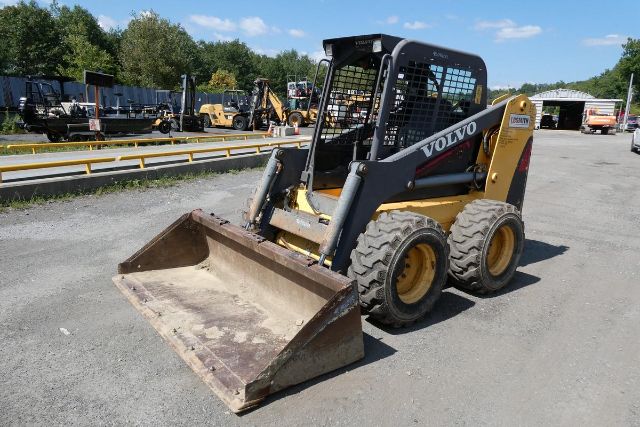
Have volvo skid steer loaders trucking equipment to sell? List it here to reach thousands of buyers.
About Volvo Skid Steer Loaders in New York
Older Volvo skid steer loaders such as the MC-series are known for straightforward mechanical layouts, hydrostatic drive systems, and practical service access. Common specs in this class include diesel power, auxiliary hydraulics for running attachments, pneumatic or solid tires, and either open-station or enclosed cab configurations. Buyers should pay close attention to bucket width, hinge pin height, overall machine width, and operating weight, especially if the loader will be trailered frequently or used in tighter spaces. A machine in the 7,000 to 8,000 pound range can be versatile enough for yard work while still offering useful breakout force and lift capability.
Attachment setup matters as much as the machine itself. Many Volvo skid steer loaders are used with general-purpose buckets, forks, snow pushers, trenchers, augers, grapples, and brooms. Auxiliary hydraulic condition, coupler type, and flow rating will determine how well the machine handles those tools. Pins, bushings, lift arm play, tire condition, and evidence of hydraulic leaks are key inspection points on used skid steers. On open-cab machines, seat condition, control response, and gauge function tell you a lot about how the loader was maintained.
For New York buyers, weather and surface conditions can influence the best setup. Snow removal work may favor good cold-weather starting, strong hydraulic response, and the right tire choice for paved lots or mixed surfaces. For landscaping, masonry supply yards, and fleet property maintenance, compact dimensions and dependable hydrostatic control are often more important than maximum horsepower. A well-matched Volvo skid steer loader can handle daily support work efficiently, provided the machine's lift capacity, hydraulic package, and attachment interface fit the actual job.
Frequently Asked Questions
What should I look at first when buying a used Volvo skid steer loader?
Start with hours, overall condition, and hydraulic performance. Check for looseness in the lift arm pivots, wear in the pins and bushings, tire condition, and any visible seepage at cylinders, hoses, pumps, and drive components. On a test run, the machine should track straight, respond smoothly through the hydrostatic drive, and lift without hesitation or unusual noise. Auxiliary hydraulics and the quick-attach system should also be tested if you plan to run attachments.
Are Volvo skid steer loaders good for trucking yards and terminal property maintenance?
Yes. A skid steer loader is a practical support machine for many trucking operations because it can load bulk material, move pallets with forks, clean up around docks, maintain gravel areas, and handle snow removal. Compact size is a major advantage in crowded yards, and a properly sized bucket or attachment package can make the machine useful year-round. The best fit depends on the loader's operating capacity, ground conditions, and the type of work done most often.
How important is auxiliary hydraulic flow on a skid steer loader?
Auxiliary hydraulic flow is critical if the machine will power tools beyond a standard bucket. Attachments such as augers, trenchers, brooms, grapples, and some snow or demolition tools depend on the correct hydraulic flow and pressure to perform properly. A buyer should confirm both the machine's hydraulic output and the coupler setup before assuming an attachment will work as intended. For attachment-heavy use, this can be as important as engine horsepower.
What is the difference between operating capacity and tipping load on a skid steer?
Tipping load is the amount of weight that causes the machine to become unstable, while rated operating capacity is the working load the manufacturer considers safe for routine use. On many skid steers, rated operating capacity is roughly 50 percent of tipping load, though the exact number depends on the model. Buyers should focus on rated operating capacity for real-world material handling and compare it to the weight of the pallets, debris, or bulk material they expect to move.
Is an open-cab Volvo skid steer loader still a practical choice?
It can be, especially for seasonal use, farm work, yard cleanup, and applications where lower purchase cost matters more than operator comfort. Open-cab machines are simpler and can be easier to inspect, but they offer less protection from weather, dust, and noise. In New York, an enclosed cab with heat may be a better choice for snow work or cold-weather use, while an open cab can still make sense for lighter duty and fair-weather operation.