
Ingersoll-Rand Paving & Compaction For Sale in New York
Shop Ingersoll-Rand paving and compaction equipment for asphalt work, road building, and site prep, including proven double drum rollers.
Learn more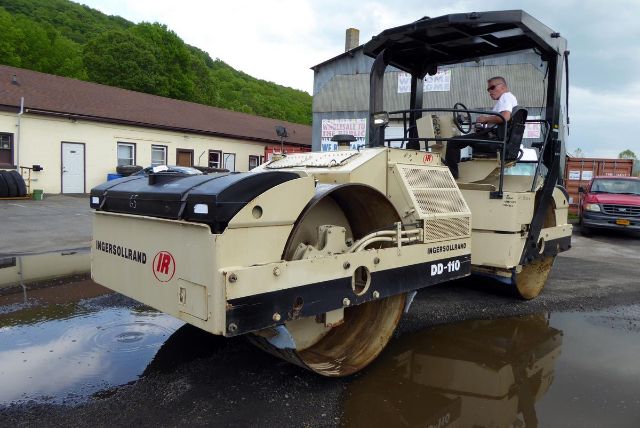
Have ingersoll-rand paving & compaction trucking equipment to sell? List it here to reach thousands of buyers.
About Ingersoll-Rand Paving & Compaction in New York
On a buyer’s checklist, drum width, machine weight, and vibration setup matter more than paint. Common units in this category fall into the mid-size tandem roller range, often with drum widths suited for lane work, shoulders, and lot paving. Hydrostatic propulsion is standard on many machines and gives smooth low-speed control around curbs, joints, and utility structures. Buyers should confirm whether vibration can be run on the front drum, rear drum, or both, and check frequency and amplitude operation under load. Water spray systems are equally important on asphalt rollers, since plugged nozzles, weak pumps, or uneven spray bars can affect mat pickup and finished surface quality.
Engine and hydraulic condition usually decide value on older Ingersoll-Rand paving equipment. Many machines from this era used dependable Cummins diesel power, which is a plus for parts familiarity and field serviceability. Inspect for drum bearing play, gearbox repairs, hydraulic cooler condition, seepage around drum motors, articulation joint wear, and pin and bushing looseness at the center joint. On open ROPS machines, look closely at operator station controls, gauges, parking brake function, and overall visibility. If the machine will be trailered between jobs, verify transport length, overall width, and operating weight against your hauling setup and permit needs.
For New York buyers, application often comes down to a mix of municipal road maintenance, private paving, and tighter urban access. A compact or mid-size tandem roller can be a practical fit where maneuverability matters as much as compaction force. Older Ingersoll-Rand rollers remain relevant because they are easy to understand, commonly supported through aftermarket channels, and well suited for contractors who want a proven roller for seasonal paving work without stepping into the cost of a late-model compactor. The right machine should match your mat width, production pace, crew size, and maintenance capacity, not just the listed horsepower or hour meter.
Frequently Asked Questions
What type of Ingersoll-Rand paving and compaction equipment is most common on the used market?
The most common Ingersoll-Rand units in this category are tandem vibratory rollers, also called double drum rollers, used for asphalt compaction. These machines are popular for parking lots, subdivision streets, patching, and municipal paving because they combine good visibility, smooth hydrostatic control, and effective finish compaction. Depending on model and setup, they may be used for breakdown, intermediate, or finish rolling.
What should I inspect first on a used Ingersoll-Rand roller?
Start with the vibration system, hydrostatic drive, and water spray system. A roller can look serviceable and still have weak vibration, leaking drum components, or spray issues that hurt production on hot mix. It is also important to inspect articulation points, drum bearings, drum drive gearboxes, hydraulic hoses, and the center joint for looseness or wear. Engine service history matters, especially on older mechanical diesel machines.
Why does drum width and machine weight matter on a paving roller?
Drum width affects coverage per pass, maneuverability, and how well the machine fits your paving pattern. Machine weight affects compaction force and influences whether the roller is better suited to light commercial paving, patch work, or heavier roadway applications. A wider, heavier tandem roller may improve productivity on open runs, while a narrower machine can be easier to transport and better in confined areas.
Are older Ingersoll-Rand compactors still a practical buy?
They can be a practical choice if the machine has solid drum, hydraulic, and engine condition and the parts support matches your market. Older Ingersoll-Rand rollers are often valued for simple controls, mechanical diesel engines, and easier troubleshooting compared with more electronic late-model equipment. The tradeoff is that condition varies widely, so inspection quality matters more than model year alone.
What features are most important for asphalt paving work?
For asphalt applications, the most important features are consistent vibratory performance, dependable water distribution across both drums, smooth hydrostatic travel, and good operator visibility. Buyers should also pay attention to drum condition, edge quality, steering response, and whether the machine allows front-only, rear-only, or dual-drum vibration. Those details directly affect mat appearance, compaction consistency, and jobsite efficiency.