
Lifts - Aerial For Sale in California
Shop aerial lifts for trucking applications in California. Compare boom types, working height, GVWR, reach, stability, and service body options.
Learn moreBrowse Lifts - Aerial Trucking Equipment by Make
Have lifts - aerial trucking equipment to sell? List it here to reach thousands of buyers.
About Lifts - Aerial in California
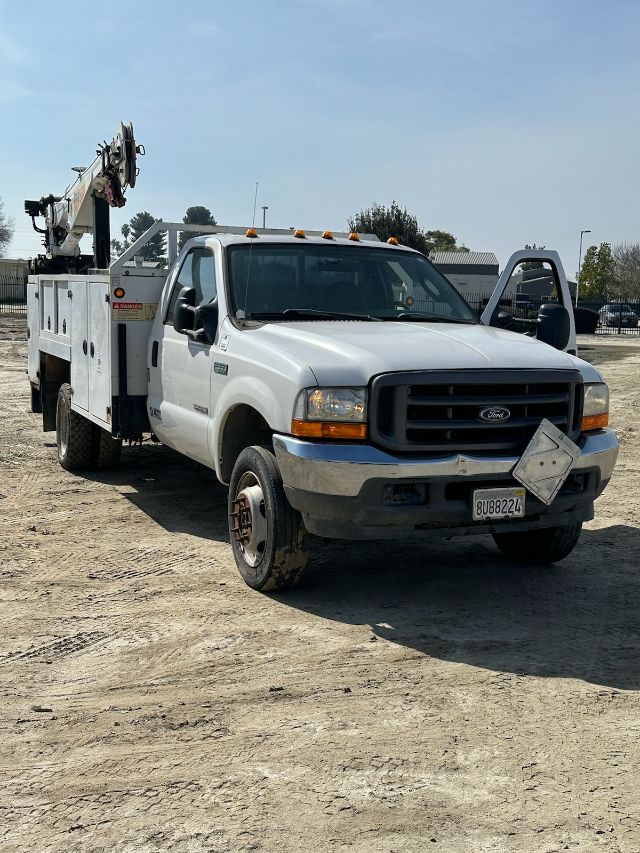
Truck class and body layout matter as much as the aerial device. Common platforms range from lighter Class 3 to Class 5 chassis such as Ford F-450 and F-550 units up to heavier medium-duty trucks for taller working heights and higher payload demands. Buyers should look closely at GVWR, axle ratings, outriggers, wheelbase, compartment storage, and PTO-driven hydraulic performance. Aerial lift specs that deserve careful comparison include platform capacity, maximum working height, horizontal outreach, stowed travel height, boom insulation rating if any, and turret rotation. For fleet use, service body condition, rust, scuffing around compartments, and signs of hard utility or tree-service use can tell you a lot about remaining life.
The intended job should drive the spec. Electric utility and telecom work may require an insulated unit that meets applicable ANSI and dielectric testing expectations. Sign, lighting, and municipal maintenance fleets may prioritize compact dimensions, lower overall height, and cleaner body packaging for urban routes. Tree-service buyers usually look for strong outreach, stable outrigger footing, and chipper-ready towing capability, but they also need to verify that the unit is configured for that duty rather than adapted from a lighter service application. California buyers should also consider emissions compliance, operating conditions in dense metro areas, and whether the chassis and lift can be serviced locally without long downtime.
Condition assessment on an aerial truck goes beyond normal truck checks. Review boom inspection records, annual certification history, hydraulic hose condition, basket controls, emergency descent systems, outrigger operation, and any structural repairs to the boom, subframe, or body. Hours on the aerial device can matter as much as miles on the chassis. A lower-mile truck with poor maintenance can be a worse value than a higher-mile unit with documented inspections and recent hydraulic or electrical work. The best comparison is not just age or price, but the match between working height, reach, payload, insulation, and stability for the exact type of elevated work your operation performs.
Frequently Asked Questions
What is the difference between an articulating aerial lift and a telescopic aerial lift?
An articulating aerial lift uses multiple boom sections connected by joints, which allows the platform to reach up and over obstacles such as power lines, tree canopies, building edges, and signage. A telescopic aerial lift extends in a straighter line and is generally favored for direct horizontal reach and simpler boom movement. The better choice depends on the worksite. Tight urban access and obstacle-heavy jobs usually favor articulation, while open-area applications often favor telescopic reach.
What specs matter most when comparing aerial trucks for sale?
The key specs are working height, horizontal outreach, platform capacity, chassis GVWR, axle ratings, outrigger design, and service body layout. Buyers should also verify stowed travel height, overall length, PTO and hydraulic setup, boom rotation, and any insulation rating. For used units, maintenance records, annual boom inspections, and the condition of hydraulic, electrical, and structural components are just as important as the published reach numbers.
Do all bucket trucks have insulated booms?
No. Many aerial trucks are non-insulated and are intended for sign work, lighting, facilities maintenance, or general elevated access. Insulated units are designed for utility and telecom applications where protection around energized lines may be required, but insulation ratings must be verified through proper documentation and testing rather than assumed from appearance. If energized-line work is part of the job, buyers should confirm the exact insulation classification, testing history, and applicable ANSI compliance.
How do miles and boom hours affect the value of a used aerial lift truck?
Miles reflect chassis wear, but boom hours often tell the more important story for the aerial device itself. A truck with modest mileage can still have a heavily used lift if it spent years on stationary utility or municipal work. Buyers should compare engine hours, PTO use, boom service records, cylinder and hose condition, basket controls, and outrigger performance alongside mileage. Value is strongest when the chassis, body, and aerial device all show consistent maintenance and documented inspection history.