
Used Takeuchi Excavators For Sale
Browse used Takeuchi excavators for digging, grading, demolition, and utility work. Compare sizes, specs, hydraulics, and undercarriage condition.
Learn more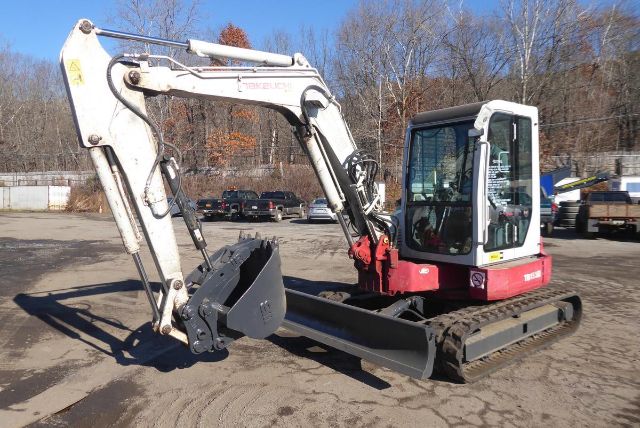
Have used takeuchi excavators trucking equipment to sell? List it here to reach thousands of buyers.
About Used Takeuchi Excavators
One of the first buying decisions is size class. Smaller Takeuchi mini excavators are easier to transport, easier to maneuver around structures, and better suited for residential or tight-access work. Mid-size machines add reach, lift capacity, and bucket breakout force for heavier excavation and production digging. Buyers should compare operating weight, transport width, boom and arm configuration, blade setup, auxiliary hydraulic flow, and cab arrangement. Rubber tracks are common in this category and help on improved surfaces, but undercarriage wear still matters. Track condition, roller wear, sprockets, idlers, and track tension can change the true cost of ownership quickly on a used excavator.
Hydraulic condition is usually more important than paint or sheet metal. Look closely at swing performance, travel speed, boom drift, cylinder seepage, and any play in the bucket, stick, or boom pins and bushings. Many used Takeuchi excavators are equipped with enclosed cabs, joystick controls, hydraulic thumbs, quick couplers, angle or straight blades, and auxiliary circuits for breakers, augers, grapples, and compactors. If attachment use is part of the plan, confirm hydraulic specs and make sure the machine has the right plumbing and control pattern. A machine that already has a thumb and quick-connect setup can be more productive from day one.
Transport and serviceability also deserve attention. Operating weight and overall width affect trailer selection, permit needs, and how easily the machine can move between jobs. Engines in this class are typically diesel-powered and built for dependable low-speed torque, but service records, cold-start behavior, and hour-meter consistency still matter on any used unit. Buyers comparing Takeuchi excavators should balance hours against maintenance history, undercarriage life, attachment compatibility, and the type of work the machine will actually do. A properly matched excavator will dig faster, trailer easier, and hold up better in daily fleet use.
Frequently Asked Questions
What should I check first on a used Takeuchi excavator?
Start with the undercarriage and the hydraulic system. Undercarriage wear on tracks, rollers, sprockets, and idlers can add major expense, and hydraulic issues such as weak functions, cylinder leaks, boom drift, or slow swing can point to costly repairs. After that, inspect pins and bushings for excessive play, verify the hour meter appears consistent with machine wear, and check how the engine starts and runs under load.
Are Takeuchi excavators good for trailer transport between jobsites?
Yes, many Takeuchi excavators are popular because they fit well into compact and mid-size classes that are practical to move. The exact transport setup depends on operating weight, overall width, bucket and attachment configuration, and local hauling regulations. Buyers should verify the machine's working weight and dimensions against trailer capacity, tie-down requirements, and any permit thresholds before purchase.
What attachments are commonly used with a Takeuchi excavator?
Common attachments include digging buckets, grading buckets, hydraulic thumbs, augers, breakers, grapples, and compactors. The key factor is the machine's auxiliary hydraulic flow and pressure, along with the presence of the correct plumbing and coupler system. A used excavator already equipped with a hydraulic thumb or quick coupler can reduce setup costs and improve jobsite versatility.
How important is tail swing style on a used excavator?
Tail swing style matters a lot if the machine will work near buildings, traffic, trenches, or other obstacles. Reduced tail swing and compact radius designs are easier to operate in tight spaces and lower the risk of rear-end contact during rotation. Conventional tail swing machines can still be a strong value, but they generally need more working room.
Is higher hour usage a deal breaker on a used Takeuchi excavator?
Not by itself. Hours need to be judged alongside maintenance history, operating condition, and component wear. A higher-hour excavator with documented service, dry cylinders, smooth hydraulics, and a solid undercarriage may be a better buy than a lower-hour machine with poor maintenance and visible wear in the pins, bushings, and track system.