
Takeuchi Excavators For Sale
Shop Takeuchi excavators for sale, including compact and midi models known for strong hydraulics, jobsite maneuverability, and operator comfort.
Learn more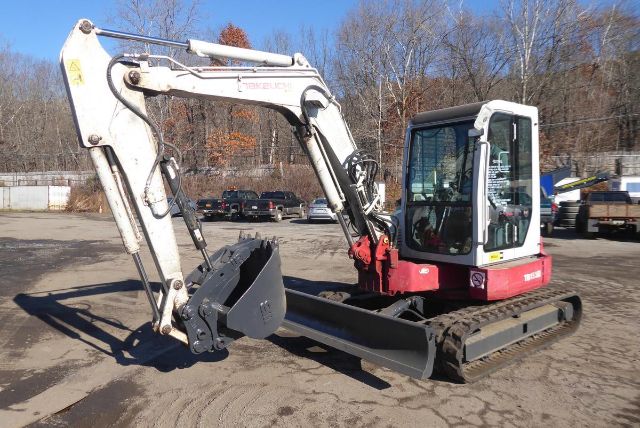
Have takeuchi excavators trucking equipment to sell? List it here to reach thousands of buyers.
About Takeuchi Excavators
A Takeuchi excavator buyer should pay close attention to operating weight, engine horsepower, dig depth, arm configuration, and undercarriage condition. Rubber track models are common and work well on finished surfaces, residential sites, and mixed-ground applications, but track wear, roller condition, sprocket wear, and track tension need a close inspection. Hydraulic thumb setups, quick couplers, angle blades, auxiliary hydraulics, and enclosed cabs add versatility and resale appeal. On many used units, pin and bushing wear, cylinder seepage, boom swing play, and final drive performance tell you more about the machine than paint or cosmetics. Service access, cold-start behavior, and smooth joystick response are also good indicators of overall condition.
Takeuchi has a strong reputation in compact excavators because the machines are straightforward to operate and productive in confined spaces. Zero tail swing and short-radius configurations are especially useful around buildings, traffic control setups, trench lines, and urban utility work. Buyers comparing Takeuchi excavators to other compact excavators often look at travel speed, hydraulic flow for attachments, blade function, and cab layout. Common attachments include buckets, hydraulic thumbs, trenching buckets, grading buckets, augers, and breakers. If the machine will spend time on a trailer behind a tandem axle or larger truck, verify loaded height, overall length, securement points, and whether the attachment package changes transport weight enough to affect compliance.
For fleet buyers and owner-operators, the right Takeuchi excavator usually comes down to matching the machine to the work cycle. Lighter compact units fit residential excavation, drainage, and backyard access work where narrow width is critical. Heavier midi models step up to deeper trenching, pipe work, and commercial site preparation without moving into full-size excavator hauling requirements. A well-matched Takeuchi excavator can deliver strong production with lower transport complexity than larger machines, which is a major advantage for contractors trying to keep trucks moving and downtime under control.
Frequently Asked Questions
What should I inspect first on a used Takeuchi excavator?
Start with the undercarriage, hydraulic system, and pin-and-bushing wear. Track condition, rollers, sprockets, and final drives can represent a major expense, especially on compact excavators that have spent time on abrasive surfaces. Check boom, stick, and bucket pins for movement, inspect cylinders and hoses for leaks, and verify the machine tracks straight and operates smoothly through all hydraulic functions. Hour meter readings help, but overall wear and maintenance history usually tell the more accurate story.
Are Takeuchi excavators good for transport between multiple jobsites?
Yes, many Takeuchi compact and midi excavators are popular because they offer a useful balance of digging performance and manageable transport size. Buyers should still confirm operating weight, overall width, loaded height, and attachment weight before choosing a trailer or planning a route. Compact units are often easier to move without stepping into the same hauling complexity as larger excavators, which makes them practical for contractors and trucking operations handling frequent job-to-job relocation.
What attachments are commonly used on Takeuchi excavators?
Common attachments include standard digging buckets, trenching buckets, grading buckets, hydraulic thumbs, augers, and hydraulic breakers. Auxiliary hydraulic capability is important if the machine will run more than a basic bucket. A quick coupler or quick disconnect setup can improve productivity by reducing attachment change time. Buyers should confirm hydraulic flow, coupler type, and pin dimensions so the excavator matches the attachment package they plan to use.
What is the benefit of a zero tail swing or reduced tail swing Takeuchi excavator?
Zero tail swing and reduced tail swing designs help the machine work safely and efficiently in tight areas. That matters on residential lots, roadside utility work, and sites with nearby structures or live traffic. A tighter rear swing radius reduces the chance of contact when rotating the house, which can improve productivity and lower operator fatigue in confined work zones. It is a key feature for buyers who regularly work in urban or space-restricted environments.