
Used Hitachi Excavators For Sale
Shop used Hitachi excavators for digging, utility, site prep, and loading work. Compare operating weight, tail swing, hydraulics, and undercarriage.
Learn more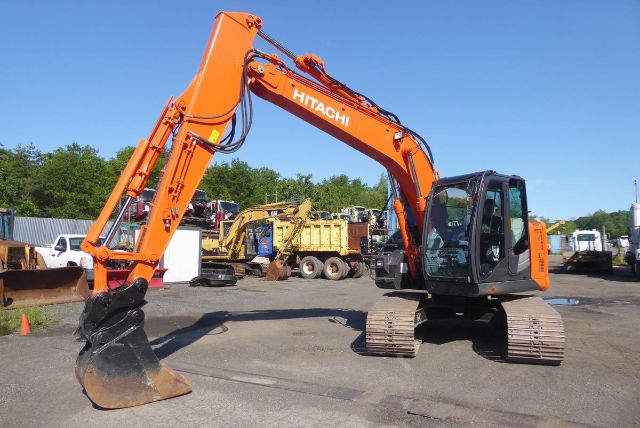
Have used hitachi excavators trucking equipment to sell? List it here to reach thousands of buyers.
About Used Hitachi Excavators
A used Hitachi excavator can range from compact and reduced-tail-swing models up to full-size conventional machines. Mid-size units are common for contractors who need enough breakout force for production digging without stepping into oversized transport costs. Key specs to compare include engine horsepower, bucket capacity, max dig depth, reach at ground level, track shoe width, counterweight clearance, and travel speed. Auxiliary hydraulics matter if the machine will run a hammer, thumb, compactor, auger, or specialty attachment. Quick couplers, pattern changers, rearview cameras, and enclosed cabs with heat and air conditioning also affect daily productivity and operator retention.
On a used machine, undercarriage condition is one of the biggest cost drivers. Track chains, rollers, idlers, sprockets, pads, and track frame wear should be inspected closely, along with swing bearing condition, boom and stick pin play, bucket linkage wear, and any seepage at cylinders or hydraulic joints. Buyers should also look at cold-start behavior, idle quality, final drives, slew function, and whether the hydraulics stay smooth under load. Service records, hour meter credibility, and evidence of regular grease intervals can tell you as much as the paint. For trucking and hauling considerations, transport width, overall height, shipping length, and operating weight need to line up with your trailer capacity, permit requirements, and route restrictions.
Hitachi excavators are commonly powered by diesel engines from established industrial suppliers and paired with hydrostatic travel systems and pilot controls. Many buyers look for features such as triple grouser pads, long-arm configurations, blade options on smaller units, and factory plumbing for multiple hydraulic circuits. If the job mix includes tight urban sites, a short-radius or reduced-tail-swing Hitachi excavator can help around traffic lanes, buildings, and utilities. If production earthmoving is the priority, a conventional tail swing machine with the right bucket and arm combination usually delivers better reach and lifting stability. The best used Hitachi excavator is the one with a sound undercarriage, tight pins, clean hydraulic performance, and specs that match the work cycle rather than simply the lowest hour reading.
Frequently Asked Questions
What should I inspect first on a used Hitachi excavator?
Start with the undercarriage, hydraulic system, and boom-to-bucket linkage. Undercarriage wear can be one of the most expensive ownership items, so inspect chains, rollers, idlers, sprockets, pads, and track adjusters. Then check cylinders, hoses, valve areas, and swivel joints for leaks or seepage, and look for pin and bushing movement in the boom, stick, and bucket linkage. A machine can look clean cosmetically and still need major undercarriage or hydraulic work.
Are Hitachi excavators good for attachment work?
Yes, many Hitachi excavators are well suited for running attachments if they have the correct auxiliary hydraulic plumbing and flow settings. Buyers should confirm whether the machine has one-way or two-way auxiliary circuits, a hydraulic quick coupler if needed, and the pressure and flow required for the attachment. Thumb compatibility, return line setup, and control integration also matter if the excavator will switch between buckets, hammers, compactors, or augers.
What size used Hitachi excavator is most practical for general contractor work?
Mid-size excavators are often the most versatile choice for general contractor use because they balance digging power, transportability, and jobsite access. A machine in this range can handle trenching, foundation digging, loading trucks, and utility work while staying more manageable on a tag trailer or lowboy than a larger production unit. The right size still depends on dig depth requirements, lifting needs, and the width and access limits of the jobsites you service.
How important is tail swing on a used excavator?
Tail swing is critical if the machine will work in confined spaces, near traffic, beside structures, or around active crews. Reduced-tail-swing and zero-tail-swing style machines help minimize counterweight overhang and lower the chance of contact in tight areas. Conventional tail swing machines usually offer strong stability and are often preferred where there is room to work, especially for heavier digging and lifting applications.
Do hours matter more than condition on a used Hitachi excavator?
Condition usually matters more than the hour meter by itself. A higher-hour excavator with documented maintenance, a tight undercarriage, dry cylinders, and smooth hydraulic performance can be a better buy than a lower-hour machine with neglected service and visible wear. Hours should be considered together with service records, operator care, wear points, and how the machine performs when started cold and worked under load.