
Hitachi Excavators For Sale
Browse Hitachi excavators for sale, including compact and mid-size models known for hydraulic performance, durability, and jobsite versatility.
Learn more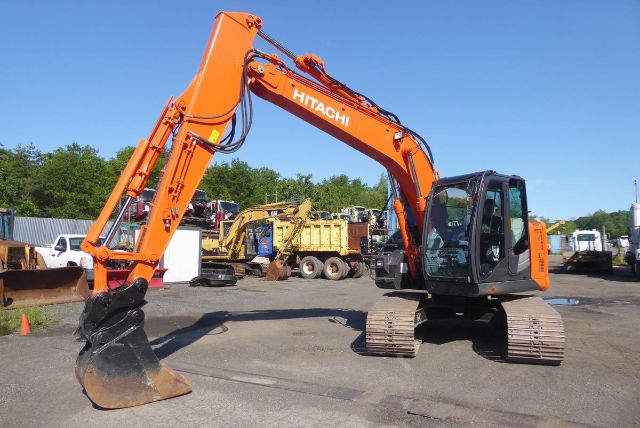
Have hitachi excavators trucking equipment to sell? List it here to reach thousands of buyers.
About Hitachi Excavators
One of the biggest buying decisions is machine size. Compact and reduced-tail-swing Hitachi excavators fit tighter jobsites, road work, and urban utility excavation where clearance matters. Mid-size machines often strike the best balance for general excavation, trenching, grading, and loading tandem dumps or larger on-highway trucks. On used units, pay close attention to track condition, roller wear, sprockets, idlers, pad style, and overall undercarriage life, because that is one of the highest replacement cost areas on any excavator. Boom, stick, and bucket pin play also matter, especially if the machine has spent time with a hammer, thumb, or heavy trenching attachment.
Hydraulic configuration is another major factor. Many Hitachi excavators are equipped with auxiliary lines for thumbs, breakers, grapples, or specialty buckets, and a hydraulic quick coupler can add real value if the machine changes attachments often. Buyers should verify pump response, swing smoothness, travel power, cylinder seepage, and how well the machine holds grade under load. Cab features such as air conditioning, visibility, monitor functions, and control pattern options affect operator comfort and daily productivity more than many first-time buyers expect. Service access, cooling package condition, and clean engine starts are also important indicators of how the machine has been maintained.
For transport and fleet planning, it helps to match the excavator’s shipping length, width, height, and operating weight to your trailer capacity and permit requirements. A machine in the 30,000-pound class, for example, can be a strong fit for general contractor fleets that need enough reach and bucket capacity for steady production without moving into a much heavier hauling category. Hitachi excavators hold value well when the structure is tight, the hydraulics are responsive, and maintenance history is clear. For many buyers, the right unit is not just about hours. It is about matching tail swing, boom and stick combination, bucket setup, and auxiliary hydraulic capability to the exact work the machine will do.
Frequently Asked Questions
What should I check first when buying a used Hitachi excavator?
Start with the undercarriage, hydraulic performance, and structural pin wear. Tracks, rollers, sprockets, and idlers can represent a major expense, so their condition matters as much as engine hours. Then check boom, stick, and bucket pins and bushings for excess movement, inspect cylinders for leaks, and confirm the machine travels straight, swings smoothly, and digs with full hydraulic power. A clean maintenance history and evidence of routine service are often more important than a low hour meter alone.
Are Hitachi excavators good for utility and site work?
Yes. Hitachi excavators are widely used for trenching, site preparation, pipe work, grading, and truck loading because they typically offer precise hydraulic control and good visibility from the cab. Reduced-tail-swing models are especially useful for utility contractors working near traffic lanes, buildings, or other equipment. The best fit depends on the trench depth, attachment needs, and whether the machine will spend more time digging, lifting, or working in confined spaces.
How important are auxiliary hydraulics on a Hitachi excavator?
Auxiliary hydraulics are critical if the excavator will run a thumb, breaker, grapple, auger, or specialty attachment. A machine already equipped with the correct hydraulic lines and controls can save time and money compared with adding them later. Buyers should verify not just that auxiliary lines are present, but that flow and pressure settings are appropriate for the intended attachment and that the couplers, hoses, and valve functions are in good working order.
What size Hitachi excavator is best for general construction work?
For many contractors, a mid-size Hitachi excavator offers the best balance of digging depth, lifting ability, transportability, and versatility. Machines in this range can handle trenching, foundation work, loading trucks, and general earthmoving without the transport burden of a larger production excavator. Compact models make more sense for tighter access jobs, while larger excavators are better suited to mass excavation, heavy demolition, or high-volume loading.
Do hours matter more than condition on a Hitachi excavator?
Condition usually matters more than hours by themselves. An excavator with higher hours but consistent service, tight pins, strong hydraulics, and a solid undercarriage can be a better buy than a lower-hour machine with neglected maintenance or attachment abuse. Hours should be viewed alongside wear patterns, service records, engine cold-start behavior, hydraulic strength, and overall structural condition.