
Case Agriculture - Tractors For Sale in New York
Browse Case agriculture tractors for sale, including utility and loader-ready models with PTO, 3-point hitch, 4WD, and diesel power.
Learn more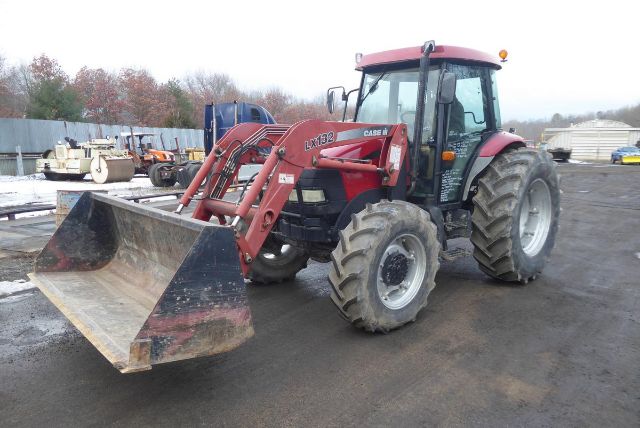
Have case agriculture - tractors trucking equipment to sell? List it here to reach thousands of buyers.
About Case Agriculture - Tractors in New York
A buyer should start with horsepower, drivetrain, and hydraulic setup. Case utility tractors are often found in the roughly 70 to 100 horsepower range, though specs vary by series and model. Common decision points include 2WD versus MFWD or 4WD, open station versus enclosed cab, and manual gear transmission versus shuttle configurations that make repeated forward-reverse loader cycles easier. If loader work is a priority, pay attention to front axle condition, steering response, hydraulic cycle times, loader pin and bushing wear, quick-attach style, and bucket edge condition. Rear tire size, ballast, and wheel weights also matter when the tractor will spend time lifting pallets, moving round bales, or handling feed.
For field and property work, the most important features are usually PTO type, lift capacity, and hydraulic remotes. A standard rear 540 PTO is common in this segment, and many buyers also want enough hydraulic flow to run implements efficiently. Check the 3-point hitch category, draft control function, remote valve count, and drawbar condition if the tractor will pull mowers, discs, spreaders, or small tillage tools. Cab tractors can add real value in New York conditions where snow removal, winter feeding, and shoulder-season field work demand heat, visibility, and operator protection. Tire condition is a major cost item on used agricultural tractors, so tread depth, sidewall cracking, matching tire sizes, and rim corrosion should be evaluated carefully.
Case tractors also appeal to buyers who want a practical machine that is serviceable without excessive electronics. On used units, hour meter reading should be weighed alongside maintenance records, cold-start behavior, clutch engagement, PTO operation, hydraulic leaks, and wear in pedals, seat, and hitch components. A clean-running diesel, stable coolant temperature, strong lift at the loader and 3-point, and tight front-end components usually tell more than paint condition. For farms, horse properties, municipalities, and large-acreage owners, a well-matched Case tractor can cover a wide range of daily jobs with one machine.
Frequently Asked Questions
What are the most important specs to compare when buying a used Case agriculture tractor?
The key specs are engine horsepower, PTO horsepower, drivetrain, transmission type, hydraulic flow, 3-point hitch capacity, and operating weight. Buyers should also compare whether the tractor has MFWD or 4WD, the number of rear remotes, cab versus open station configuration, and loader compatibility. Those specs determine how well the tractor will handle mowing, bale work, snow removal, tillage, and transport tasks.
Is a Case utility tractor suitable for loader work and material handling?
Yes, many Case utility tractors are commonly used with front loaders for pallets, manure, feed, gravel, and round bales. The best loader tractors have adequate front axle capacity, responsive power steering, proper rear ballast, and a transmission suited for repeated directional changes. On a used machine, inspect loader frame mounts, pins, bushings, cylinder seals, and bucket wear, because those areas show how hard the tractor has been worked.
What should I inspect on a used Case tractor before purchase?
Focus on cold-start performance, exhaust smoke, engine blow-by, clutch feel, transmission engagement, PTO operation, steering play, brake response, and hydraulic lift strength. Check for leaks at hoses, remotes, axle seals, and loader cylinders. Tire condition, rim rust, hour meter credibility, and wear at the drawbar, hitch arms, and operator controls can reveal the tractor's real use level better than cosmetic appearance alone.
Are cab tractors worth the extra cost in New York?
For many buyers, yes. A cab tractor can improve year-round productivity during snow work, cold-weather feeding, roadside mowing, and wet spring or fall conditions. Heat, defrost, better visibility, and operator protection can make a meaningful difference in daily use. Buyers should still confirm that the HVAC system, door seals, glass, lights, and wiper systems are all working, because cab repairs can add cost quickly.