
Capacity Yard Trucks For Sale in Pennsylvania
Shop Capacity yard trucks for sale in Pennsylvania. Compare Sabre terminal tractors, DOT-ready specs, hydraulic fifth wheels, and low-hour options.
Have capacity yard truck to sell? List it here to reach thousands of buyers.
Capacity Yard Trucks in Pennsylvania
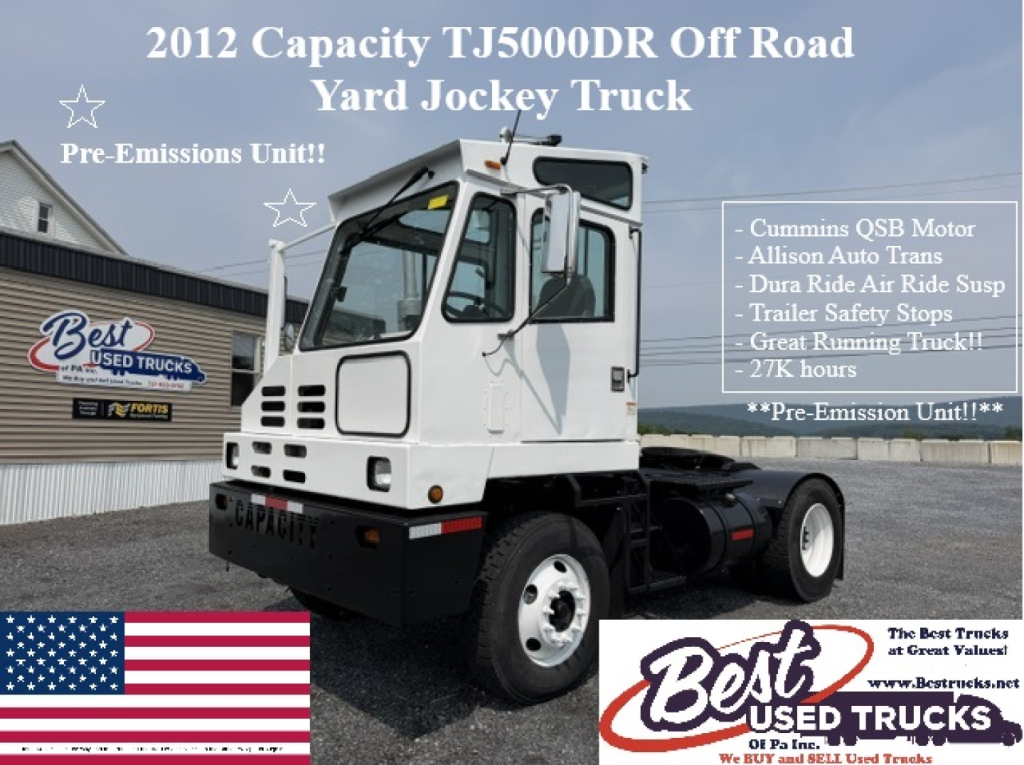
For most buyers, the big decisions start with road legality, drivetrain, and fifth wheel setup. In Pennsylvania, that often means deciding between a pure off-road terminal tractor and a DOT-spec unit that can legally run short distances on public roads between facilities. Many Capacity yard trucks are equipped with single-axle 4x2 configurations, automatic Allison transmissions, and Cummins diesel power in the 200 hp range, which is a common sweet spot for yard work where low-speed control matters more than highway speed. A hydraulic elevating fifth wheel is one of the key features in this category because it speeds trailer spotting, reduces landing gear cranking, and helps drivers manage uneven trailer heights. Buyers should also pay attention to front and rear axle ratings, rear ratio, wheelbase, and cab entry design, since these directly affect maneuverability, durability, and trailer handling.
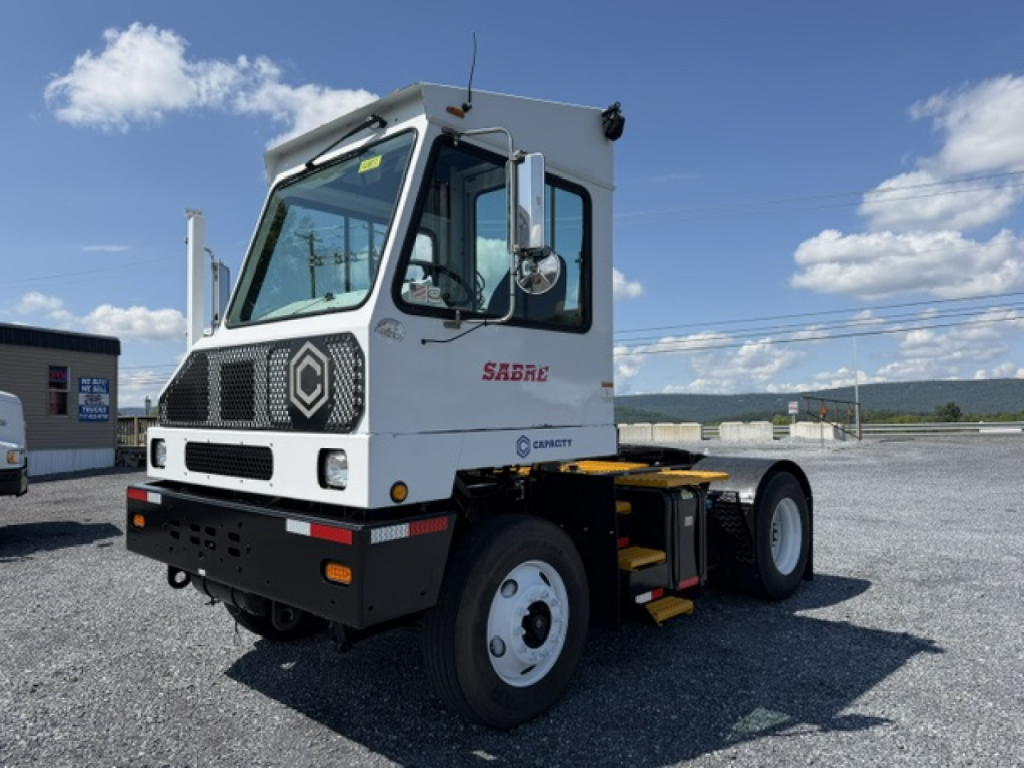
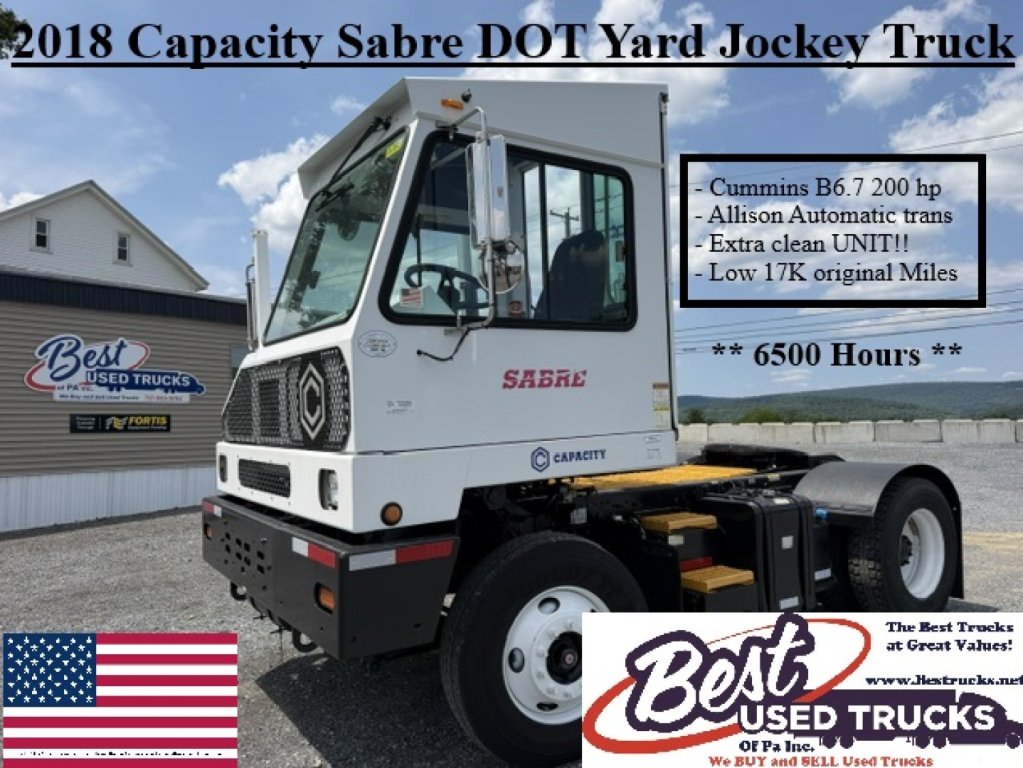
A Capacity Sabre or similar model is typically selected for operations that need strong visibility from the cab, easy left-right entry, and dependable stop-and-go performance over long shifts. Common specs in this class include a 12,000 lb front axle, around a 30,000 lb rear axle, 11R22.5 tires, all-steel wheels, and air-ride seating or cab features to improve operator comfort. Hours matter more than mileage on a yard truck, so engine hours, idle time, and maintenance history deserve close review. Transmission condition, hydraulic fifth wheel operation, brake performance, cooling system health, and wear at the rear frame and trailer contact points are especially important on used switchers because these trucks live in reverse, in tight turns, and under constant trailer impacts.
Buyers in Pennsylvania should also think about cold-weather starts, corrosion exposure, and site conditions. A unit that spent time in a dry climate may show less rust on the frame, cab structure, and fifth wheel assembly than one that worked in heavy road salt. If the truck will cross public roads, confirm lighting, mirrors, tires, emissions equipment, and registration requirements for local use. If it will stay inside a yard, uptime, turning radius, operator visibility, and fifth wheel lift speed usually matter most. The best Capacity yard truck for sale is the one matched to trailer volume, shift length, pavement conditions, and whether the operation needs true DOT capability or a dedicated off-road spotter.
Frequently Asked Questions about Capacity Yard Trucks in Pennsylvania
What is a Capacity yard truck used for?
A Capacity yard truck is used to move semi-trailers around a yard, terminal, warehouse campus, or industrial site. Its primary job is spotting trailers at docks, staging loaded and empty trailers, and handling frequent hook-and-drop moves faster than a conventional road tractor. The elevated hydraulic fifth wheel, short wheelbase, and high-visibility cab make it well suited for repetitive low-speed trailer handling.
What is the difference between a DOT yard truck and an off-road terminal tractor?
A DOT yard truck is equipped to operate legally on public roads, usually for short trips between nearby facilities or across local routes. That typically means it has the required lighting, mirrors, braking equipment, safety systems, and registration support for on-road use. An off-road terminal tractor is intended strictly for private property and yard work, which can reduce complexity, but it limits where the unit can legally travel.
What specs matter most when buying a used Capacity Sabre or other Capacity switcher?
The most important specs are engine hours, drivetrain condition, axle ratings, transmission type, rear ratio, and fifth wheel configuration. Buyers should verify that the hydraulic fifth wheel lifts and locks correctly, the transmission shifts cleanly in stop-and-go service, and the cooling and air systems are healthy. Wheelbase, cab layout, and visibility are also important because they affect maneuverability and driver productivity in tight yards.
Why do yard trucks usually have automatic transmissions and high rear ratios?
Automatic transmissions are common in yard trucks because they simplify operation during constant starts, stops, and reverse maneuvers. They reduce driver effort and help improve consistency across multiple operators. Higher numerical rear axle ratios are used to provide strong low-speed pulling power and precise control when moving heavy trailers in confined areas, even though that setup is not intended for sustained highway speeds.
Should I focus on miles or hours when evaluating a used yard truck?
Hours are usually more important than miles on a yard truck because these units spend most of their life working at low speed, idling, reversing, and making short moves. A switcher can have modest mileage but still show heavy wear if it has high engine hours and a hard-duty service history. Review hours alongside maintenance records, hydraulic fifth wheel wear, brake condition, and frame stress around the rear of the truck.