
Mack Water Trucks For Sale in Washington
Shop Mack water trucks for construction, dust control, and municipal work. Compare tank size, axle ratings, pump setup, and CDL requirements.
Learn more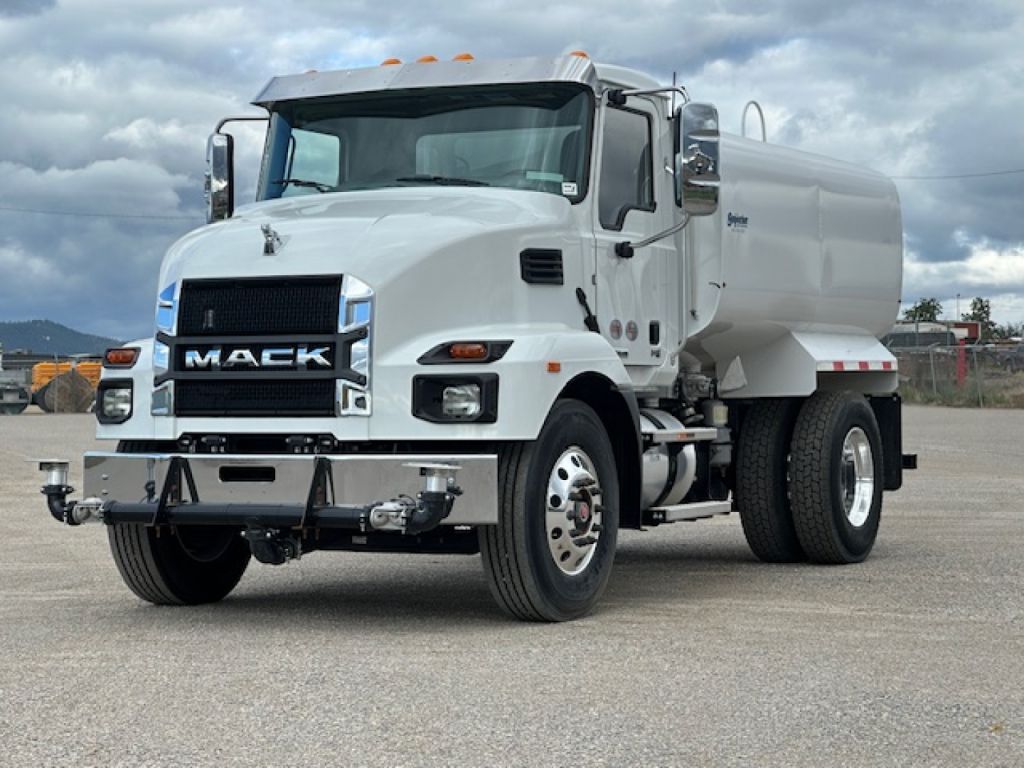
Have mack water truck to sell? List it here to reach thousands of buyers.
About Mack Water Trucks in Washington
A typical Mack water truck for sale may be spec'd with a steel tank, rear hydrant fill, spray heads, hose reel, and ladder access, with common medium-duty and heavy-duty chassis depending on the application. Buyers should look closely at tank material and thickness, internal baffles, frame reinforcement, PTO and pump setup, and how the body builder integrated the tank with the chassis. Steel tanks remain common for rugged construction use, while some applications may favor lighter configurations to preserve payload or improve maneuverability. On newer Mack models, buyers will often see automatic Allison transmissions, diesel engines in the medium-duty range, and axle ratings chosen to balance water weight with local bridge, road, and licensing limits.
The most important buying decision is how the truck will actually discharge water. Some operators need basic gravity spray for dust control on subdivisions, gravel lots, and access roads. Others need pressurized front, side, and rear spray bars, a hose reel for targeted washdown, or a pump system capable of filling equipment, trenching support, or fire-control standby. In hilly or remote parts of Washington, traction, suspension type, turning radius, and cold-weather details such as block heaters can matter just as much as tank size. If the goal is a non-CDL or lower-threshold operating setup, pay close attention to actual GVWR, registered weight, tank capacity, and the weight of the finished body with full water load.
Mack has a strong reputation in vocational trucking, and that matters with water trucks because these units spend their lives starting, stopping, idling, filling, and operating in dirt, mud, and mixed on-road and off-road conditions. A good Mack water truck should be evaluated as a complete package: chassis, engine, transmission, tank builder, pump system, spray controls, and service access. Buyers comparing listings should verify tank gallons, baffling, discharge equipment, corrosion condition, rear axle ratio, wheelbase, and how the truck was originally spec'd for construction, municipal, or utility service. The right setup is the one that delivers enough water per cycle, stays legal on the road, and is simple for the crew to operate and maintain.
Frequently Asked Questions
What should I look for first when buying a Mack water truck?
Start with legal loaded weight, tank capacity, and intended use. Water weighs about 8.34 pounds per gallon, so tank size directly affects axle loading, CDL exposure, and road legality. After that, look at the tank construction, internal baffles, PTO and pump system, spray configuration, and whether the chassis was spec'd for municipal road work, construction dust control, or mixed off-road service.
Are Mack water trucks good for construction and dust control work?
Yes. Mack chassis are widely used in vocational applications because they handle repeated stop-and-go operation, rough jobsite access, and high-idle PTO work well. For dust control, the most important factors are reliable spray bars, adequate pump pressure, proper baffling to control surge, and axle ratings that can safely carry a full water load across the jobsite and public roads.
How do I know if a Mack water truck can be operated without a CDL?
You need to verify the truck's GVWR, registered weight, and the finished operating weight with the tank body installed and full of water. Some medium-duty Mack water trucks are built to target non-CDL operation, but the final configuration is what matters. A truck may have a chassis capable of more weight than the intended registration class, so buyers should confirm the actual label ratings and local state requirements before purchase.
What tank and spray features matter most on a used water truck?
Focus on the condition of the tank shell, welds, baffles, sump area, plumbing, valves, and pump components. Check for corrosion, leaks, cracked mounts, and uneven spray performance. Rear hydrant fill, front and rear spray heads, side sprays, hose reels, and in-cab controls all add value when they match the work. A simple setup can be easier to maintain, but a more complete spray package improves versatility on larger sites.
Why does wheelbase and axle rating matter on a water truck?
Wheelbase affects turning radius, body fit, and how weight is distributed across the axles. Axle ratings determine how much water the truck can legally and safely carry. On a water truck, poor weight distribution can create front axle lightness, rear axle overload, or unstable handling when the tank is partially full. The chassis and tank need to be matched so the truck stays balanced and predictable in real operating conditions.