
Mack Vacuum Tank Trucks For Sale in New Mexico
Browse Mack vacuum tank trucks built for oilfield, industrial and waste hauling work, with heavy-duty specs, strong PTO performance and tandem axles.
Learn more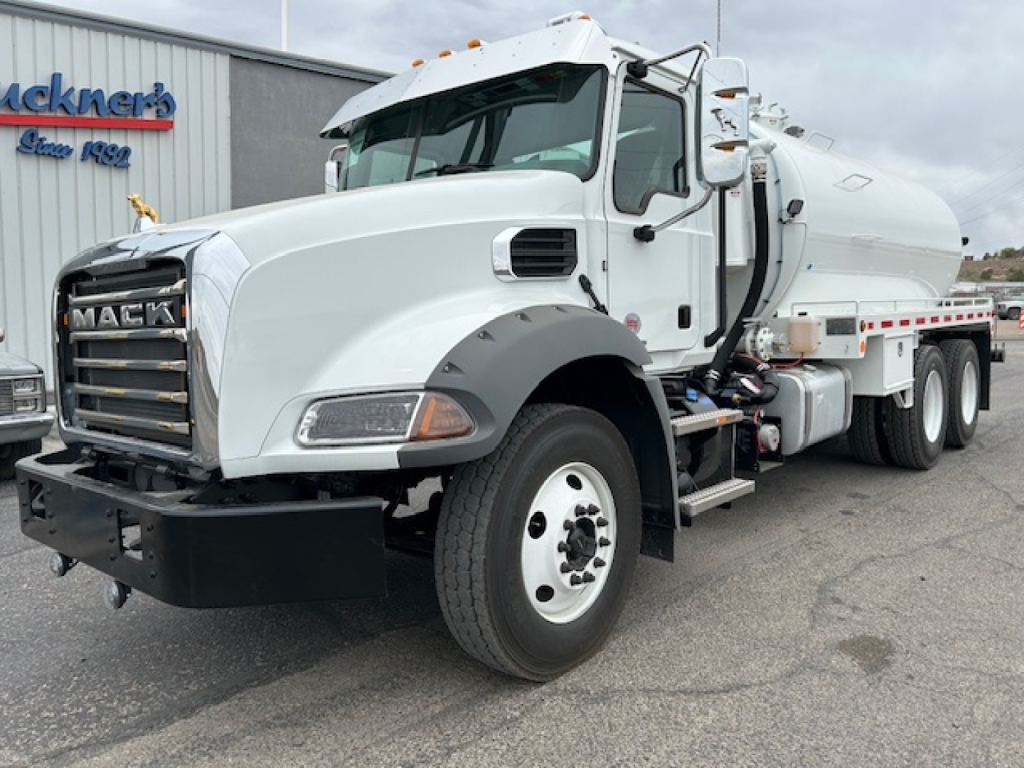
Have mack vacuum tank truck to sell? List it here to reach thousands of buyers.
About Mack Vacuum Tank Trucks in New Mexico
A common setup in this class is an 80-barrel vacuum tank on a tandem axle Mack chassis, often paired with a high-output vacuum pump and a heavy rear suspension. Mack models used for vacuum tank work are typically selected for strong vocational frames, good steering cut, and solid powertrain integration. Engines in the 400 to 500 horsepower range are common, often backed by automated manual transmissions or multi-speed vocational transmissions that help with crawling, backing, and stop-and-go jobsite work. Tandem rear axles in the 46,000-pound range, front axles around 14,000 pounds or more, differential locks, and pintle hitch setups are all relevant specs for operators pulling pup trailers or working on loose surfaces.
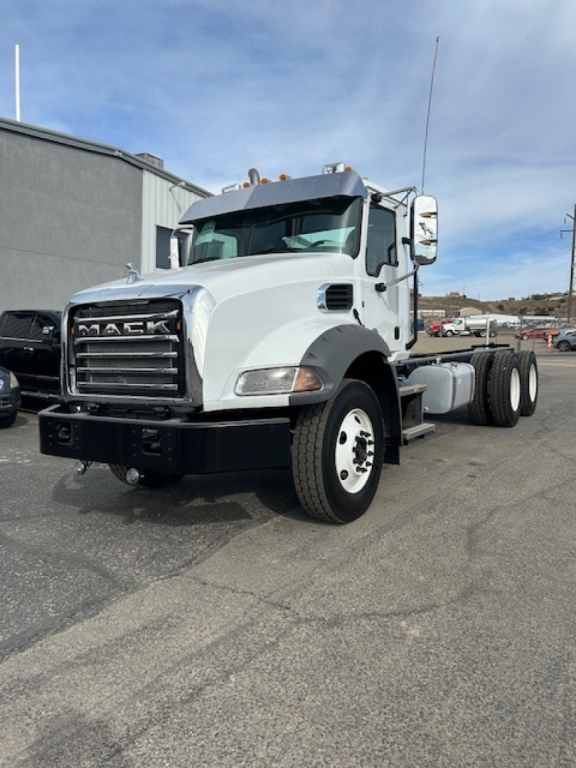
Tank details deserve close attention because they drive service life and application fit. Some vacuum tanks are non-code and intended for standard fluid hauling, while others may be built for more specialized service. Barrel size, internal lining, and the condition of the shell are especially important if the truck is going into corrosive or abrasive work. In oilfield service, buyers should confirm the vacuum pump model, suction and discharge plumbing, hose storage, rear work lights, and any hydraulic or PTO-driven support systems. If a listing involves a chassis prepared for retrofit, the key questions are wheelbase, frame spacing, PTO compatibility, axle placement, and whether the truck is already set up to accept an existing tank.
Mack vacuum tank trucks appeal to fleets that want a durable vocational platform with strong parts support and a reputation for staying productive in punishing environments. A setback front axle can improve maneuverability on tight leases and crowded industrial sites, while a heavy suspension and proper gearing help the truck manage soft ground and repeated loaded starts. When comparing listings, buyers should look beyond year and mileage and verify pump hours, tank builder, lining status, suspension spec, transmission programming, and overall legality at target operating weights. The best truck in this category is the one whose tank, pump, chassis, and axle package are aligned with the exact fluid, route, and terrain it will face every day.
Frequently Asked Questions
What should I look at first when buying a Mack vacuum tank truck?
Start with the tank and pump specification, not just the chassis. Barrel capacity, tank construction, lining, plumbing layout, and pump output determine what material the truck can handle and how efficiently it can load and unload. After that, confirm the Mack chassis has the right axle ratings, wheelbase, suspension, PTO setup, and legal GVWR for the application. A strong chassis cannot make up for the wrong tank spec, and a good tank package can be limited by poor axle or transmission selection.
Are Mack vacuum tank trucks a good fit for oilfield work in New Mexico?
Yes, Mack vacuum tank trucks are commonly well-suited for New Mexico oilfield service because the platform is designed for vocational duty and can be spec'd with heavy front and rear axles, locking differentials, and gearing that works well on lease roads and job sites. Buyers in this region should pay attention to turning radius, suspension durability, cooling performance, and how the truck is set up for produced water or drilling fluid service. Local operating conditions often reward simple, durable specs with enough traction and pump capacity to stay productive in remote areas.
What is the most common vacuum tank size on this type of truck?
An 80-barrel tank is one of the most common configurations on a tandem axle Mack vacuum truck used in oilfield service, but the right size depends on your payload targets, fluid type, and state weight laws. Larger barrel capacity can improve trip efficiency, but only if the axle package, bridge spacing, and route weights support it legally. Buyers should compare barrel rating to actual loaded weight and not assume a larger tank automatically means better productivity.
Does an unlined vacuum tank matter?
Yes, lining can matter significantly depending on what the truck will haul. An unlined tank may be acceptable for some general fluid applications, but corrosive service can shorten tank life and increase maintenance costs if the interior is not protected. Buyers should verify the expected product type, check whether the tank is lined or lineable, and inspect overall shell condition, especially if long-term durability is a priority. Matching lining to service is a practical cost-control decision, not just a preference.
Can a Mack chassis be used for an 80-barrel vacuum tank retrofit?
In many cases, yes, provided the chassis dimensions and mechanical setup are compatible with the tank being installed. Wheelbase, frame rail condition, axle placement, PTO provisions, suspension capacity, and driveline layout all need to match the retrofit plan. A buyer using an existing tank should confirm mounting requirements and weight distribution before purchase. A retrofit-ready Mack chassis can be a smart option when the goal is to reuse a serviceable tank and replace an aging truck underneath it.