
Freightliner Tank Trucks For Sale in Tennessee
Shop Freightliner tank trucks for sale in Tennessee. Compare chassis, tank specs, PTO setups, axle ratings, and application fit.
Learn more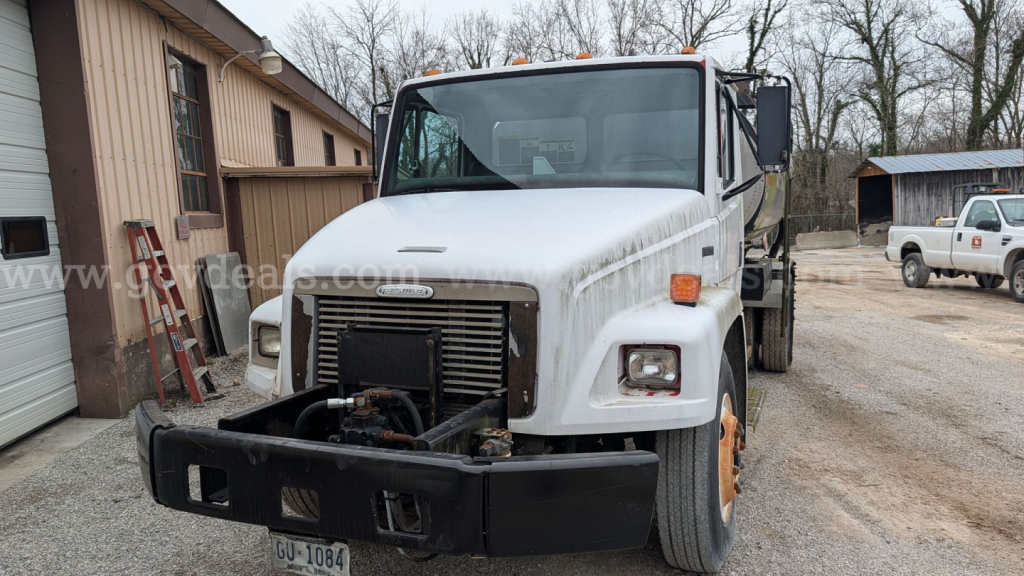
Have freightliner tank truck to sell? List it here to reach thousands of buyers.
About Freightliner Tank Trucks in Tennessee
A buyer should start with tank capacity, product type, and weight distribution. A tank truck may carry petroleum, water, fertilizer, waste, or other liquid loads, and each use drives different requirements for baffling, compartment layout, pump equipment, plumbing, and material compatibility. Aluminum tanks help save weight in fuel and refined product service, while steel or stainless construction may be preferred for durability or chemical compatibility. Axle ratings, wheelbase, suspension, and brake setup need to match the fully loaded tank, not just the empty chassis. On older Freightliner tank trucks, it is especially important to verify PTO operation, pump condition, tank certification status, and the condition of valves, hoses, manways, and internal baffles.
Freightliner tank trucks used in regional and municipal work are often spec'd for tight turning radius, predictable handling, and straightforward maintenance access. That makes them practical for farm supply routes, construction water service, roadside fueling, and utility support across urban and rural Tennessee. Buyers should pay close attention to transmission type, engine rating, front axle capacity, and any evidence of frame modification related to tank installation. If the truck is a former government or municipal unit, service records can be valuable, but inspection should still include corrosion around tank mounts, signs of product contamination, pump wear, and compliance items tied to the intended cargo.
The best Freightliner tank truck is the one matched to the product, route, and loading cycle. A short local delivery truck may prioritize maneuverability and multiple compartments, while a service truck may need hydraulic or PTO-driven accessories and easier ground-level access to controls. Tank shape, center of gravity, surge control, and legal weight on Tennessee roads all affect day-to-day performance. Buyers comparing listings should focus on the complete package: chassis model, engine and transmission, tank material, capacity, compartment count, pump system, and documented inspections. That approach gives a clearer picture of real operating value than chassis year alone.
Frequently Asked Questions
What should I check first on a used Freightliner tank truck?
Start with the truck's intended product and tank specification. Tank material, total capacity, compartment layout, baffling, and pump or PTO equipment need to match the job. After that, inspect axle ratings, suspension, brake system, and wheelbase to confirm the chassis is properly matched to the loaded tank. On used units, buyers should also verify tank integrity, valve and hose condition, pump operation, and any required inspection or certification history.
Are Freightliner tank trucks good for local and regional routes?
Freightliner tank trucks are widely used in local and regional service because the chassis is generally easy to maintain and available in a wide range of configurations. Medium-duty and vocational Freightliner models are common in fuel, water, septic, and utility applications where maneuverability, service access, and dependable PTO operation matter. The right fit depends on tank size, product weight, and route density more than the brand name alone.
What tank materials are common on Freightliner tank trucks?
Aluminum, carbon steel, and stainless steel are the most common tank materials. Aluminum is often used where lower tare weight is important, especially in petroleum service. Carbon steel is common in water, waste, and general-duty applications where ruggedness matters. Stainless steel is typically chosen for chemical compatibility, sanitation-sensitive work, or corrosion resistance. The correct material depends on the cargo and the cleaning or maintenance requirements.
How important is PTO and pump condition on a tank truck?
PTO and pump condition are critical because many tank trucks rely on them for loading, unloading, spraying, or transfer operations. A truck that drives well but has weak pump performance can still become an expensive repair case. Buyers should confirm the PTO engages properly, the pump builds and holds expected performance, and the plumbing, seals, valves, and controls operate without leaks or excessive wear.
Do older Freightliner tank trucks still make sense for buyers?
Older Freightliner tank trucks can still be a practical buy if the chassis has been maintained and the tank system is sound. Many buyers accept an older truck for municipal, agricultural, or seasonal service if parts availability is solid and the tank, pump, and plumbing are in usable condition. The real value comes from maintenance history, corrosion level, and application fit, not simply model year.