
Freightliner Sweeper Trucks For Sale in Washington
Shop Freightliner sweeper trucks for sale in Washington. Compare M2-based street sweepers, chassis specs, broom setups, and municipal-ready options.
Learn more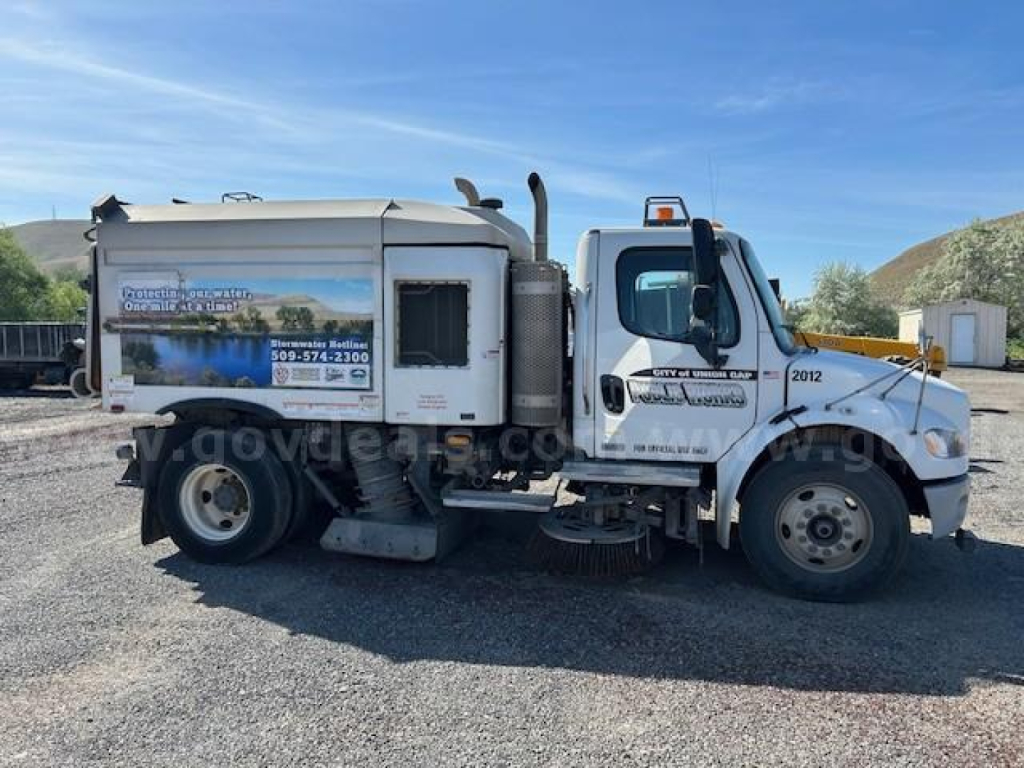
Have freightliner sweeper truck to sell? List it here to reach thousands of buyers.
About Freightliner Sweeper Trucks in Washington
The first decision is usually the sweeper type, not just the truck make. Mechanical broom sweepers are popular for heavier debris, milling cleanup, and municipal routes where operators need strong gutter broom performance and simple service access. Regenerative air sweepers are often chosen for fine dust pickup, parking lots, and road construction cleanup where air quality and pickup efficiency matter. Vacuum sweepers can be a fit for specialized debris and fine material removal. A Freightliner sweeper truck may also be configured with dual steering, which is common on street sweepers because it improves curb visibility and operator control while sweeping the gutter line.
On the chassis side, Freightliner sweepers are typically built on medium-duty platforms such as the M2 106, with diesel power, automatic transmissions, PTO-driven hydraulic systems, and GVWR ratings suited to the weight of the hopper, water system, and debris load. Buyers should look closely at engine hours, idle hours, hydraulic condition, broom wear, water pump operation, hopper corrosion, and the condition of the conveyor or suction system depending on sweeper design. In Washington, rust is usually less severe than in heavy salt regions, but moisture exposure still makes it important to inspect the hopper, subframe, wiring, and body mounts. Dual steer components, gutter brooms, suction tubes, blast orifice parts, and spray nozzles should all be checked for wear and service history.
A good Freightliner sweeper truck is not just about the chassis running well. The value is in the complete package of chassis, sweeper body, hydraulics, controls, and supportability. Buyers comparing listings should confirm left-hand or dual-steer layout, broom configuration, hopper capacity, water tank size, dump style, emissions system type, and whether the unit was fleet-maintained by a city, county, airport, or contractor. Service records can be as important as mileage because sweepers often accumulate low road miles and high work hours. For many buyers, the best unit is the one with a proven sweeper body, clean hydraulic performance, and a Freightliner chassis that local technicians already know how to keep on route.
Frequently Asked Questions
What should I inspect first on a used Freightliner sweeper truck?
Start with the sweeper system before focusing only on cab condition or odometer miles. Check hydraulic performance, broom motors, gutter brooms, water spray system, hopper condition, conveyor or suction components, and all in-cab controls. Then review engine hours, idle hours, transmission operation, PTO engagement, steering components, and brake condition. On a sweeper truck, work hours and body condition often tell more than mileage alone.
Are Freightliner M2 sweeper trucks good for municipal use?
Yes. The Freightliner M2 106 is a widely used platform for municipal sweeper applications because it offers a proven medium-duty chassis, good service network coverage, and straightforward parts support. That makes it practical for city and county fleets that need predictable maintenance and easy driver familiarity. It is commonly used under mechanical broom, regenerative air, and vacuum sweeper bodies.
What is the benefit of dual steering on a sweeper truck?
Dual steering gives the operator a better view of the curb line and gutter broom while sweeping. That can improve productivity, reduce missed debris along the edge of the roadway, and make tight curb work safer and more accurate. It is especially useful on municipal street routes where consistent curb pickup is part of the job.
Do sweeper trucks need different maintenance planning than regular medium-duty trucks?
Yes. A sweeper truck has the normal maintenance needs of a diesel medium-duty chassis, but it also has a second layer of service for the sweeper body and hydraulic systems. Brooms, nozzles, suction hoses, fans, conveyors, filters, and spray systems are wear items that directly affect performance. Maintenance planning should account for route hours, dust exposure, water system use, and seasonal workload, not just miles traveled.
Is mileage less important than hours on a Freightliner sweeper truck?
In many cases, yes. Sweeper trucks can spend long periods operating at low speed or idling while the sweeping system does most of the work. A unit with modest mileage may still have substantial engine hours and significant wear on the hydraulic and sweeper components. Buyers should compare mileage, engine hours, PTO usage, and maintenance records together to judge overall value.