
Used Mack Service/Utility Trucks For Sale in Texas
Used Mack service and utility trucks for sale in Texas. Compare MD6 chassis, crane bodies, PTO systems, storage, and jobsite-ready specs.
Learn more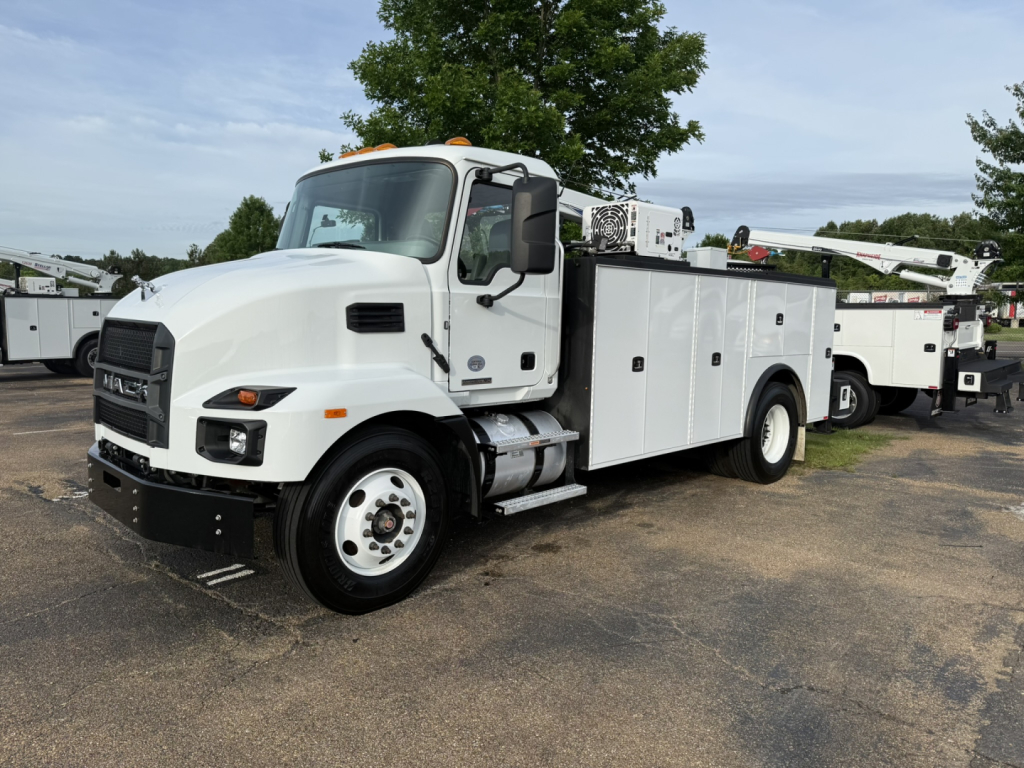

Have used mack service/utility truck to sell? List it here to reach thousands of buyers.
About Used Mack Service/Utility Trucks in Texas
A common Mack service truck configuration uses an 11-foot to 14-foot steel service body with multiple locking compartments, workbench space, and a rear work area designed for tools, parts, hose reels, and welders or compressors. Many units are equipped with a telescopic or articulating service crane from builders like Stellar, often in the 77,000 ft-lb class, which is enough capacity for lifting engines, pumps, gearboxes, and jobsite components without moving up to a much larger chassis. Hydraulic air compressors, remote controls, power rotation, and sizable hydraulic reservoirs are also common because these trucks are expected to run air tools and lifting equipment in the field with minimal support.
On the chassis side, Mack medium-duty trucks are known for solid frame strength, straightforward vocational spec options, and a cab layout that works well for municipal fleets, contractors, oilfield support, and equipment service operations. When comparing used Mack utility trucks, pay attention to GVWR, front axle capacity, wheelbase, PTO hours if available, crane certification status, and whether the body was installed for general fleet service or a more specialized role such as railroad, utility line, or heavy equipment maintenance. Suspension type, brake setup, fuel tank placement, and cab-to-axle dimensions can all affect how usable the truck is once loaded with tools, fluids, and replacement parts.
For Texas buyers, application fit is especially important because service trucks may split time between paved roads, construction sites, energy corridors, and rural service routes. A shorter body can improve maneuverability in tighter urban or industrial areas, while a longer body usually provides better compartment volume and more flexible crane placement. Condition matters well beyond engine and transmission. Inspect the outriggers, crane boom wear points, hose condition, compressor performance, body floor, compartment latches, and signs of rust or cracking around mounts and subframe components. A well-spec'd used Mack service truck can be a productive one-truck maintenance fleet if the upfit matches the work and the hydraulic system has been maintained correctly.
Frequently Asked Questions
What should I look for first on a used Mack service or utility truck?
Start with the upfit, not just the chassis. The body, crane, PTO, hydraulic reservoir, compressor, and storage layout determine how useful the truck will be in daily service work. Verify the crane rating, reach, remote functions, outrigger condition, and body compartment design, then confirm the Mack chassis has the right GVWR, axle ratings, and wheelbase to support that equipment safely.
Is a Mack MD6 a good platform for a service truck body?
Yes. The Mack MD6 is a common medium-duty platform for service and utility bodies because it offers a vocational-friendly chassis, good maneuverability, and enough capacity for many mechanic truck and crane body applications. It is typically a strong fit for contractors, municipal departments, equipment dealers, and field service operations that need a truck large enough to carry tools and lifting equipment without stepping into a full heavy-duty chassis.
How important is crane capacity on a used utility truck?
Crane capacity is one of the most important buying factors because it determines what the truck can actually service in the field. Buyers should look at both the crane's maximum lifting rating and its capacity at full or near-full reach, since those are often very different numbers. Horizontal reach, vertical lift, rotation, line speed, and remote-control operation all affect productivity and safety just as much as the headline lifting number.
What job types are Mack service trucks commonly used for in Texas?
These trucks are commonly used for construction equipment repair, oilfield and energy support, municipal maintenance, utility service, agricultural equipment work, and contractor fleet repair. Texas applications often demand a truck that can handle long travel distances, heat, dusty jobsites, and mixed on-road and off-road use. That makes cooling system condition, hydraulic reliability, compartment sealing, and overall chassis durability especially important.
What condition items matter most on a used service body truck?
Beyond normal engine and transmission checks, inspect the vocational components carefully. Focus on crane inspection records, PTO engagement, hydraulic leaks, hose age, outrigger operation, compressor output, reel function, body mount integrity, and compartment door condition. A used service truck can look clean cosmetically but still need expensive hydraulic or crane repairs, so the condition of the working equipment should carry as much weight as the truck's mileage.