
Mack Rolloff Trucks For Sale in Alaska
Shop Mack rolloff trucks for sale in Alaska. Compare MP8 power, axle ratings, hooklift specs, wheelbase, and severe-duty refuse setups.
Learn more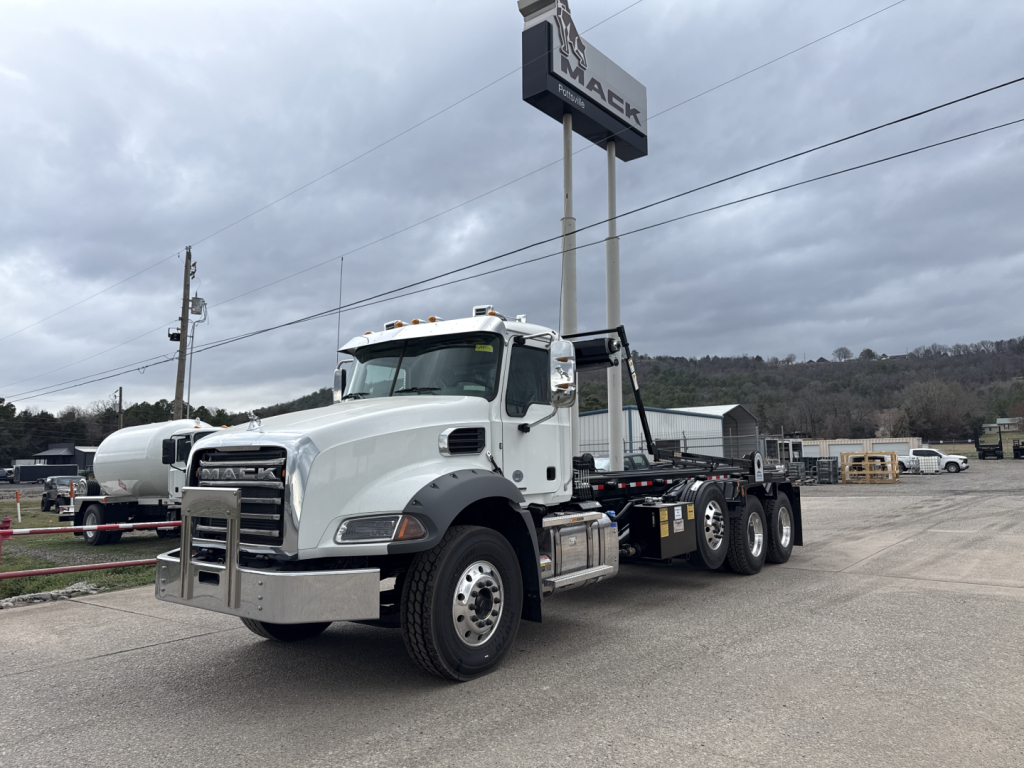
Have mack rolloff truck to sell? List it here to reach thousands of buyers.
About Mack Rolloff Trucks in Alaska
A typical Mack rolloff setup starts with a heavy vocational platform such as a Granite series chassis, often spec'd with the Mack MP engine family and an automatic or automatic-shift transmission. In this category, horsepower commonly lands in the 400 to 500 plus range, with torque matched to frequent launches, steep grades, and loaded container pulls. Allison automatics are common on rolloff applications because they simplify operation on tight job sites and in urban pickup routes. Front axle ratings around 18,000 to 20,000 pounds and rear ratings in the 40,000 to 46,000 pound range are common, with GVWR often reaching the mid-60,000-pound class on tri-axle trucks. Wheelbase, rear ratio, and suspension choice all affect bridge compliance, maneuverability, hoist placement, and legal payload.
The hoist itself matters as much as the cab and chassis. Buyers should verify hoist brand, cable or hook style, container compatibility, tarp system, and hydraulic tank and pump specifications. Frame rail reinforcement, body upfitter integration, and clean PTO plumbing are especially important on a used Mack rolloff truck because cracking, misalignment, and poor installation can create expensive downtime. Camelback and other heavy-duty rear suspensions remain popular for demanding off-road and transfer station service, while lift axle configuration can make a major difference in payload distribution and local weight law compliance. In Alaska, tire selection, locking differentials, block heater setup, battery capacity, and heated hydraulic considerations can be just as important as engine output.
A good Mack rolloff truck should feel purpose-built, not just heavy on paper. Look at service history, idle hours, steering and brake wear, hoist cycle condition, and evidence of frame stress around the hoist mounts and rear tail section. If the truck will run municipal refuse, construction debris, scrap, or remote-site cleanup, the right spec usually comes down to matching container size, route density, terrain, and legal axle weights. Mack remains a strong fit for buyers who want a vocational chassis with proven durability, straightforward parts support, and the kind of rugged drivetrain and suspension options that hold up in severe-duty rolloff service.
Frequently Asked Questions
What should I look for first when buying a Mack rolloff truck?
Start with the chassis and hoist match. Confirm the truck’s GVWR, axle ratings, wheelbase, suspension, and transmission are appropriate for the container sizes and material weights you plan to haul. Then inspect the rolloff system itself, including hoist rails, rollers, hydraulic cylinders, PTO operation, tarp system, and any frame reinforcement. On a Mack, buyers also pay close attention to MP engine specs, rear ratio, and severe-duty suspension because those directly affect launch performance, gradeability, and long-term durability.
Are Mack rolloff trucks good for Alaska operating conditions?
Mack rolloff trucks are a strong fit for Alaska when they are spec'd correctly for climate and terrain. Cold-weather options such as engine block heaters, high-capacity batteries, proper fuel system treatment, and winter-appropriate hydraulic fluid can make a major difference in reliability. Buyers should also look for corrosion protection, aggressive tire spec, differential lock configuration, and enough horsepower and torque for grades, mud, snow, and unpaved transfer or construction sites.
What axle and suspension specs are common on a Mack rolloff truck?
Many Mack rolloff trucks are built on tandem or tri-axle vocational chassis with front axles around 18,000 to 20,000 pounds and rear axle ratings from 40,000 to 46,000 pounds or higher depending on configuration. GVWR in the 56,000 to 66,000 pound range is common in heavier applications. Mack Camelback and similar heavy-duty suspensions are widely used because they handle concentrated loads, rough job sites, and repetitive container loading well, although exact needs depend on local weight laws and the type of material being hauled.
Is an automatic transmission a good choice for a rolloff truck?
Yes, an automatic transmission is common and often preferred in rolloff service. Allison automatics are especially popular because they reduce driver fatigue, improve control in tight spaces, and handle repeated stop-and-go cycles well. This matters on routes with frequent container pickups, transfer station traffic, and backing into confined job sites. The right transmission still needs to be matched to engine torque, rear ratio, and expected payload, especially in hilly or off-road conditions.
How do I know if a used Mack rolloff truck has been worked too hard?
Look beyond mileage. Check engine hours, PTO hours if available, hoist cycle wear, frame condition around the body mounts, suspension wear, brake life, steering play, and signs of hydraulic leaks or slow hoist response. Uneven tire wear, cracked paint near stress points, and weld repairs around the hoist area can indicate hard use or poor upfitter work. A used rolloff truck can still be a solid buy if the maintenance history is strong and the chassis, hydraulics, and frame show consistent care.