
Freightliner Rolloff Trucks For Sale in Oklahoma
Shop Freightliner rolloff trucks for sale in Oklahoma. Compare M2 setups, hoist capacities, axle ratings, PTO systems, and container handling specs.
Learn more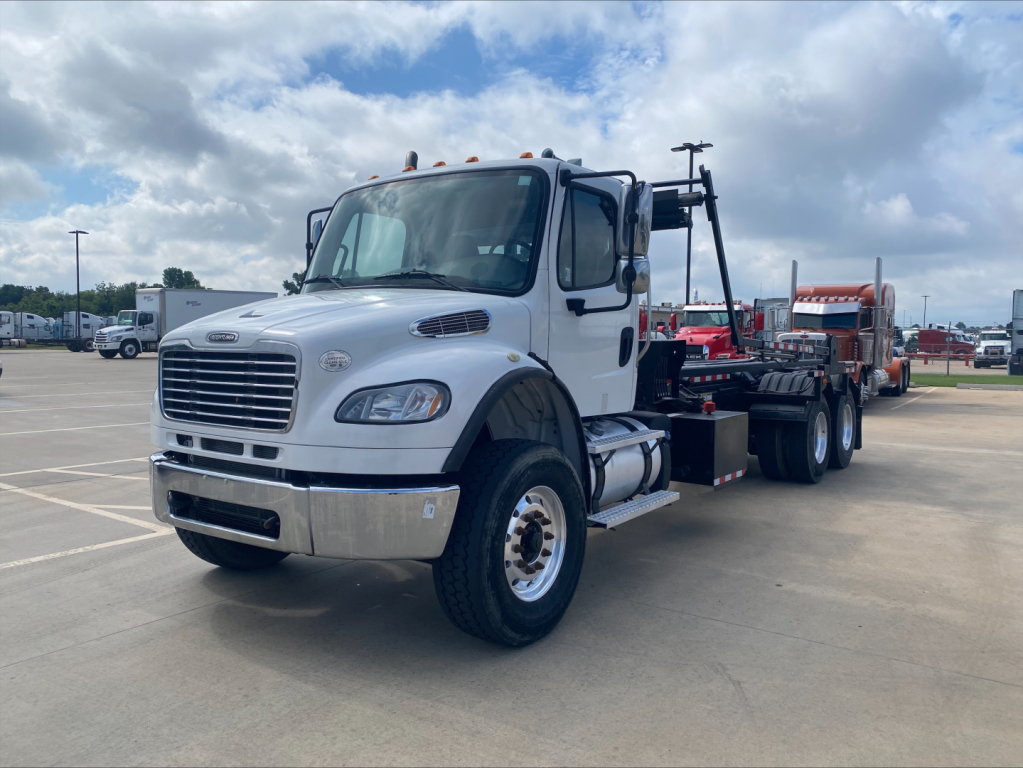
Have freightliner rolloff truck to sell? List it here to reach thousands of buyers.
About Freightliner Rolloff Trucks in Oklahoma
The most important buying decisions are tied to the hoist and the cans you plan to handle. Roll-off trucks are typically spec'd with cable hoists or hooklift-style systems, though a true rolloff setup usually refers to a cable hoist with rails and a winch system for loading open-top containers. Check hoist capacity, rail length, hoist brand, container compatibility, and the body install quality on the chassis. Suspension type, rear axle ratio, and bridge law considerations also matter if the truck will haul heavy debris, concrete, roofing tear-off, or scrap metal. Buyers should also pay attention to PTO engagement, hydraulic tank placement, pump condition, and whether the truck has an automatic or manual transmission suited to stop-and-go vocational use.
Freightliner rolloff trucks are often powered by proven medium-duty and severe-service diesel platforms, with engine ratings selected around local route speed, payload, and terrain. For Oklahoma operators, a practical spec often includes good cooling capacity, a vocational bumper, air brakes, and enough front axle capacity to manage loaded container weight transfer during pickup and set down. Cab configuration is another factor. A regular cab can keep overall length tighter for urban work, while a crew cab may fit municipal or multi-worker crews. Inside the cab, vocational buyers usually value visibility, switch placement, and simple controls over cosmetic features.
A strong used Freightliner rolloff truck should be evaluated beyond engine hours and odometer reading. Look at frame condition around the hoist mounts, crossmember integrity, hydraulic hose routing, roller and rail wear, winch performance, tarp system condition, and signs of body twist or repeated overload. Tire size, tread wear pattern, and brake life can also tell you a lot about prior service. If the truck will stay in Oklahoma service, it is smart to match the setup to the containers already in your fleet and the disposal or transfer locations you run most often. The right Freightliner rolloff truck is less about badge alone and more about how well the chassis, hoist, hydraulic system, and axle package are matched to your container sizes and daily tonnage.
Frequently Asked Questions
What should I look for when buying a used Freightliner rolloff truck?
Start with the chassis and hoist as a matched system. Check GVWR, front and rear axle ratings, wheelbase, frame condition, PTO operation, hydraulic pump performance, and hoist capacity. On a used unit, inspect hoist mounts, rails, rollers, cable condition, winch function, hydraulic cylinders, and signs of frame cracking or body twist. Service records are especially valuable on vocational trucks because hydraulic and suspension maintenance often matters as much as engine history.
Are Freightliner M2 trucks a good platform for rolloff applications?
Yes. The Freightliner M2 is a widely used rolloff platform because it offers good maneuverability, broad service support, and flexible vocational spec options. It is commonly used for waste, scrap, and construction debris work where operators need a medium-duty chassis that can handle frequent stops and container loading cycles. The exact fit depends on axle ratings, frame spec, and the installed hoist, so buyers should verify the truck is built for the container sizes and payloads they expect to haul.
What is the difference between a cable rolloff and a hooklift?
A cable rolloff uses rails, a winch, and a cable system to pull a container onto the truck. A hooklift uses a hydraulic lifting arm with a hook to load and unload compatible bodies or containers. Cable rolloffs are common in debris, waste, and scrap applications with standard open-top cans. Hooklifts offer more body versatility, but they require compatible container designs. Buyers should make sure the truck matches the container style already used in their operation.
Which specs matter most for rolloff work in Oklahoma?
For Oklahoma operations, buyers usually focus on axle capacity, suspension durability, cooling performance, brake type, tire spec, and overall maneuverability. Route conditions can vary from tight city pickup points to rough construction entrances and longer rural hauls, so the truck needs the right balance of turning radius and payload support. A well-matched rear axle ratio, dependable PTO and hydraulics, and a hoist rated for the intended cans are often more important than extra cab features.
How do I know if a rolloff truck can handle my containers?
Confirm the hoist rating, rail length, cable or winch setup, and the container lengths the body manufacturer designed the system to handle. Container weight is only part of the equation. The truck also needs enough axle capacity, frame strength, and hydraulic performance to safely load, transport, and unload the can. Buyers should compare the truck's hoist and chassis specs to the dimensions and loaded weights of the containers already in service.