
New Plow Trucks For Sale
Shop new plow trucks with snow and ice specs, axle ratings, hydraulic options, and municipal-ready configurations for winter road service.
Learn moreBrowse Plow Trucks by Make
Have new plow truck to sell? List it here to reach thousands of buyers.
About New Plow Trucks
Powertrain selection should match low-speed pushing, stop-and-go route work, and cold-weather reliability. Diesel engines in the mid-horsepower range paired with automatic transmissions, especially Allison automatics, are common because they handle repeated direction changes and plow-cycle operation well. Rear axle ratios are usually set up for traction and controlled road speed rather than fuel mileage alone. On many new plow truck specs, you will also see higher-capacity alternators, engine block heaters, snow shields, heated mirrors, and severe-service cooling systems. If the truck will carry a salt spreader or combination dump body, pay attention to GVWR, wheelbase, body length compatibility, PTO provisions, and available hydraulic flow.
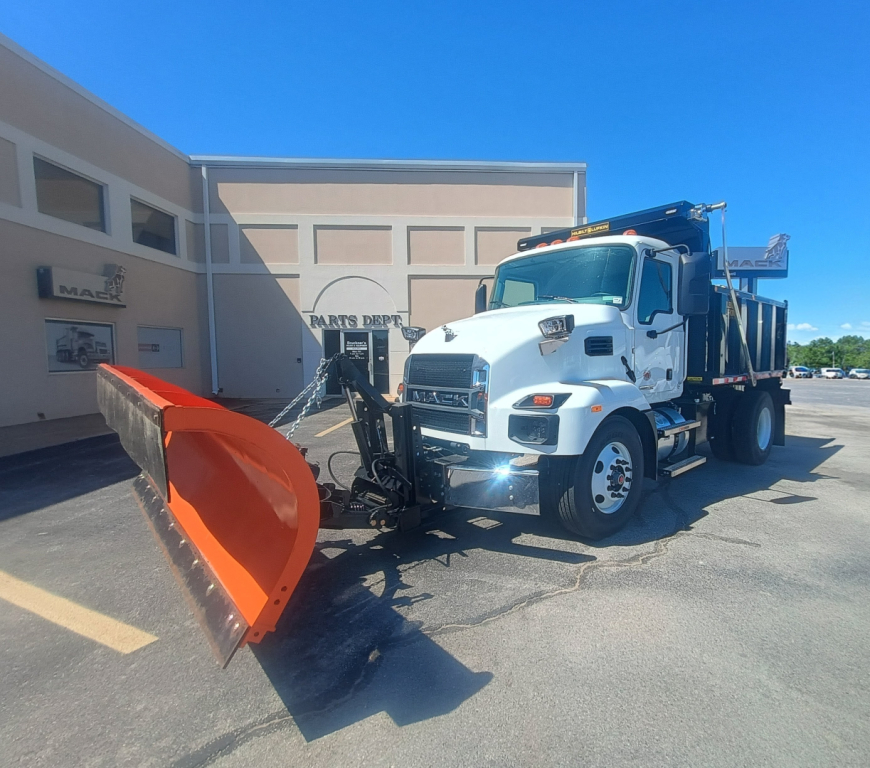
The plow package itself can vary significantly. Some trucks are configured for front straight blades, while others are built for V-plows, one-way plows, reversible plows, or include wing plow controls for wider lane coverage. Municipal buyers often look for integrated lighting, beacon packages, stainless steel hydraulic plumbing protection, corrosion-resistant wiring practices, and easy service access around the front hitch and pump system. Cab layout matters too. Operators spending long shifts in storms benefit from good visibility, heated windshields or wiper park areas, ergonomic joystick placement, and switchgear that can be used with gloves. If the truck will run in dense urban traffic, turning radius, cab-to-axle dimension, and sightlines around the plow frame deserve close attention.
A new plow truck also offers an advantage in upfitter compatibility and lifecycle planning. It is easier to spec the truck correctly from the start for spreader controls, central hydraulics, backup cameras, pre-wet tanks, and anti-ice application equipment than to retrofit later. Buyers comparing listings should look closely at axle ratings, wheelbase, transmission model, PTO or hydraulic readiness, and whether the chassis is intended for municipal snow service or more general vocational use. The best plow truck is not simply the biggest chassis available. It is the one with enough front axle, enough cooling, the right transmission, and the correct body and hydraulic provisions for the exact routes and winter service demands it will face.
Frequently Asked Questions
What is the most important chassis spec on a new plow truck?
Front axle capacity is usually the first number to verify because the plow, mounting hardware, and hydraulic components place substantial weight on the nose of the truck. A chassis can have adequate GVWR on paper and still be a poor plow spec if the front axle, frame, and front suspension are not rated for the installed equipment. Buyers should also confirm that the cooling system, bumper and hitch setup, and front frame reinforcement are designed for snowplow service rather than standard vocational duty.
Are automatic transmissions better for plow trucks?
In many snow and ice applications, yes. Automatic transmissions are widely used in plow trucks because they handle constant shifting, low-speed maneuvering, and repeated forward-reverse cycles more efficiently than most manual setups. They also reduce operator fatigue during long storm events. Models such as the Allison 3000 series are common on medium-duty and municipal plow specs because they are well suited to severe stop-and-go work.
What size plow truck is best for municipal snow removal?
The right size depends on the route and the equipment package. Medium-duty single-axle trucks are often a strong fit for city streets, subdivisions, and parking areas because they are easier to maneuver and can still support a front plow and spreader body. Heavier severe-duty trucks are better for wider roads, higher snowfall regions, wing plow use, and longer shifts where greater durability, axle capacity, and payload are needed.
Can a new plow truck also be used as a salt spreader truck?
Yes, many plow trucks are set up as multi-function snow and ice units. A common configuration combines a front plow with a dump body or purpose-built spreader body for salt, sand, or treated material. To do that well, the truck needs the correct wheelbase, body clearance, GVWR, PTO or hydraulic provisions, and electrical capacity for controls and lighting. Buyers should make sure the chassis was designed for both front-end plowing loads and rear payload demands.
What should buyers look for in a new plow truck for corrosion resistance?
Corrosion control is a major factor in plow truck longevity because road salt attacks wiring, hydraulics, frames, and body components. Good specs often include sealed electrical connectors, protected harness routing, corrosion-resistant fasteners, stainless or well-coated hydraulic components, and body materials suited to de-icing exposure. Trucks used in aggressive salt environments also benefit from easy washout access and upfit designs that do not trap brine around brackets, crossmembers, and mounting points.