
New Mack Plow Trucks For Sale
Shop new Mack plow trucks built for snow and ice control with durable chassis specs, PTO-ready setups, and municipal-grade winter performance.
Learn more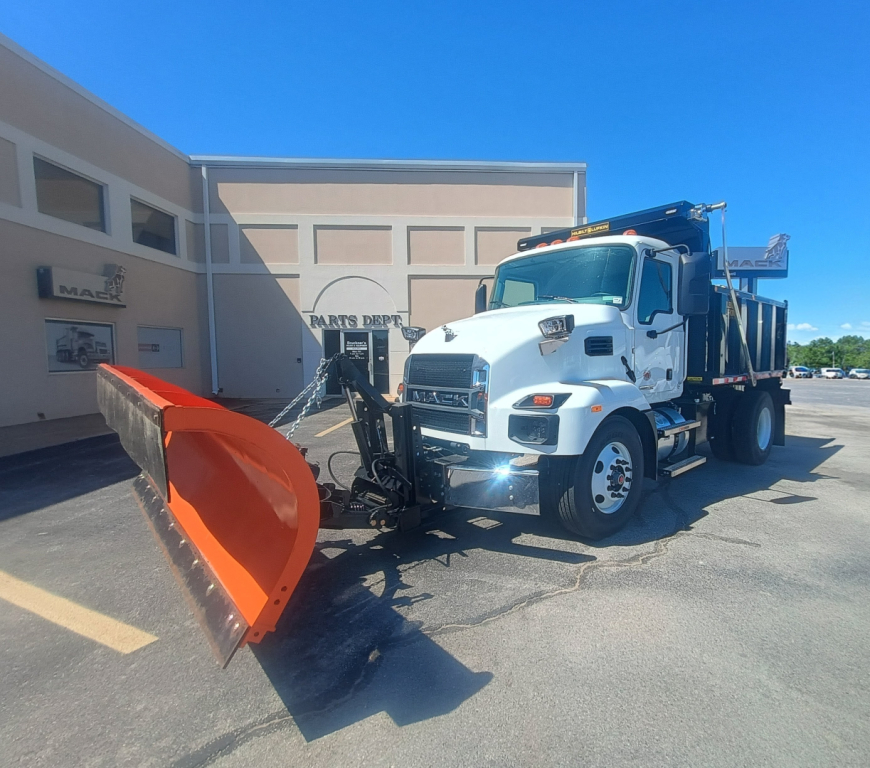
Have new mack plow truck to sell? List it here to reach thousands of buyers.
About New Mack Plow Trucks
A buyer comparing new Mack plow trucks should pay close attention to axle ratings and frame setup. Snowplow work places a heavy concentrated load on the front end, so a 12,000-lb front axle or higher is an important baseline on many medium-duty plow applications. Rear axle ratings around 21,000 lbs on a 33,000-lb GVWR chassis are common for single-axle units carrying a dump body, under-tailgate spreader, or combination dump and sander package. Wheelbase also matters because it influences turning radius, bridge formula considerations, and how well the truck handles a loaded body without becoming nose-heavy. A shorter wheelbase improves maneuverability in urban work, while a longer setup can better support body length and material distribution.
The drivetrain on a new Mack plow truck is usually selected for stop-and-go winter service, not long-haul duty. Cummins power is common in this segment, and many buyers prefer an Allison automatic for easy driver operation, smooth engagement during repeated forward-reverse cycles, and reliable PTO integration for hydraulic plow and spreader functions. Rear suspension choice matters too. Multi-leaf spring suspensions remain popular because they are durable, predictable under shifting loads, and easy to service in municipal fleets. Buyers should also review cold-weather details that do not always show up in basic specs, including lighting packages, heated mirrors, corrosion protection, battery capacity, alternator output, hydraulic reservoir placement, and cab switch layouts for gloves-on use.
Mack plow trucks are often spec'd as turnkey snow trucks or as chassis ready for upfit with front plows, wing plows, dump bodies, liquid tanks, and salt spreaders. The best choice depends on route type and duty cycle. Tight city streets call for visibility, short overall length, and quick hydraulic response. County and state work may require more body capacity, stronger front frames, and provision for wing plow equipment. New units appeal to buyers who want current emissions systems, factory warranty coverage, and a fresh chassis life cycle before the corrosion and hydraulic wear that come with multiple winter seasons. When comparing listings, focus on the truck's axle and frame ratings first, then confirm the plow and spreader package matches your target snow volume, route density, and operator experience level.
Frequently Asked Questions
What is the most important spec to check on a new Mack plow truck?
Front axle capacity is one of the most important specs because the plow mount, plow assembly, and front frame loads all work through that axle. A plow truck also needs the right wheelbase, GVWR, and rear axle rating to carry salt, sand, or liquid deicing material without compromising steering control or legal weight distribution. Buyers should confirm the complete truck is rated for both the front plow equipment and the rear body or spreader package, not just the base chassis.
Why are Allison automatic transmissions common in Mack plow trucks?
Allison automatics are widely used in plow trucks because snow work involves constant shifting between forward and reverse, low-speed pushing, and PTO-driven hydraulic operation. An automatic reduces driver fatigue, provides smooth engagement in slippery conditions, and helps new operators work more consistently. For many fleets, that combination of ease of use and durability is a better fit than a manual transmission in winter service.
Is a single-axle Mack plow truck enough for municipal snow work?
A single-axle Mack plow truck is often the right choice for municipal streets, county roads, parking areas, and contractor routes where maneuverability matters and material payload demands stay within medium-duty limits. A Class 7 chassis with around 33,000-lb GVWR can handle a front plow and a rear spreader or dump body in many applications. Larger routes, wing plow use, or higher material volumes may push a buyer toward a heavier tandem-axle setup instead.
What body and upfit options are common on new Mack plow trucks?
Common upfits include front snowplows, reversible plows, underbody scrapers, dump bodies, under-tailgate spreaders, V-box spreaders, pre-wet systems, and liquid brine tanks. Some trucks are configured for wing plows and additional hydraulic circuits. Buyers should make sure the hydraulic system, electrical controls, frame rails, and axle ratings are matched to the intended upfit so the truck performs correctly under winter load.
What makes a new plow truck a better choice than a used one?
A new plow truck gives the buyer a clean chassis life cycle, current warranty coverage, and the ability to start with known specs instead of inherited corrosion, hydraulic wear, or prior-season damage. That matters in snow service because plow trucks operate in salt, slush, and repeated impact conditions that accelerate wear on frames, wiring, hydraulics, and body equipment. For fleets trying to reduce downtime during storms, a new unit can provide more predictable reliability and maintenance planning.