
New Moving Van Trucks For Sale
New moving van trucks for sale with 16-26 ft bodies, attic storage, dock-ready specs, and buyer guidance on chassis, payload, and access.
Learn moreBrowse Moving Van Trucks by Make
Have new moving van truck to sell? List it here to reach thousands of buyers.
About New Moving Van Trucks
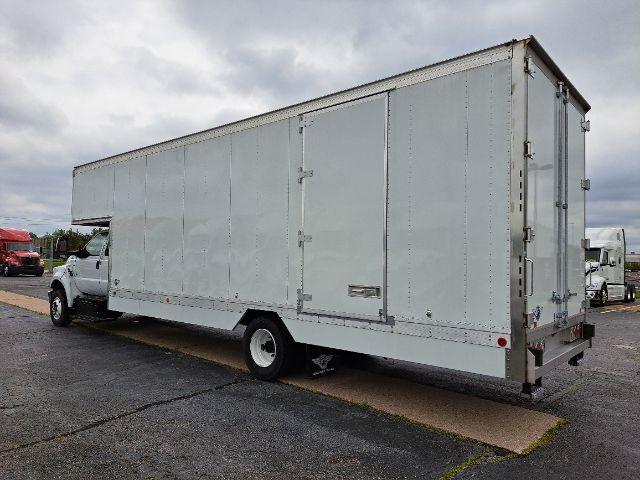
The body specification is where most buying decisions are made. Interior height is a major factor because movers need stackable cube for cartons, wardrobe boxes, and furniture pads, and many buyers target around 96 to 103 inches inside height. Floor construction matters just as much. Hardwood or laminated oak floors are common because they handle concentrated point loads from dollies, appliance hand trucks, and pallet jacks better than lighter-duty materials. Buyers should also look closely at side door placement, rear frame construction, roof design, and wall lining. Scuff liners, logistics track, grab handles, walkboards, dock bumpers, and non-slip entry surfaces all improve day-to-day usability. If the truck will spend time in urban neighborhoods, curbside access and body width can affect how easily crews load from tight streets and apartment complexes.
On the chassis side, new moving van trucks are often built on Class 6 and Class 7 platforms from manufacturers such as Ford, Freightliner, International, and Isuzu, depending on body size and duty cycle. Gas engines can make sense for local movers with lower annual miles and easier service access, while diesel still appeals to fleets that need higher GVWR, stronger torque under load, and longer-route durability. Transmission choice is usually automatic, and suspension setup should match the cargo profile. Household goods are bulky but not always especially heavy, so the right spec is about balancing payload, ride quality, turning radius, and dock-height compatibility. Front and rear axle ratings, wheelbase, fuel capacity, tire size, and cab configuration all affect how the truck behaves in residential work, downtown deliveries, and interstate repositioning.
A new moving van truck also gives buyers the advantage of current safety and uptime features from day one. Rear cameras, backup alarms, ABS, modern cab ergonomics, and factory warranty coverage can reduce training time and unplanned downtime for growing fleets. The right truck depends on route density, labor style, and the type of freight being handled. A local moving company may prioritize side access, attic storage, and maneuverability, while a commercial furniture or records mover may focus more on secure tie-down points, floor durability, and predictable cube. When comparing listings, the smartest approach is to evaluate the entire package: chassis GVWR, body dimensions, inside height, floor spec, access points, and the practical loading features that crews use on every stop.
Frequently Asked Questions
What is the difference between a moving van truck and a standard box truck?
A moving van truck is a type of box truck, but it is typically spec'd specifically for household goods and furniture handling. Common differences include attic storage above the cab, side doors for mid-body access, hardwood or laminated flooring, scuff protection, walkboards, and other features that help crews load, secure, and unload mixed residential cargo efficiently. A standard dry freight box may have the same general shape, but it is often built around basic enclosed transport rather than mover-focused access and cargo handling.
What body length is most common for a new moving van truck?
A 26-foot body is one of the most common configurations because it offers strong cubic capacity for residential moving while remaining a straight truck that is easier to route and park than a tractor-trailer. Smaller 16-foot to 24-foot bodies are also common for city delivery, apartment moves, and tighter residential service areas. The best length depends on route density, crew size, parking conditions, and the average shipment size your operation handles.
Is a gas or diesel engine better for a moving van truck?
Gas engines are often a good fit for local and regional operations that run moderate annual miles, return to base regularly, and want a simpler upfront purchase. Diesel engines are still preferred by many buyers who need higher GVWR options, stronger low-end torque, and durability for heavier or more sustained commercial use. The choice should be based on payload requirements, annual mileage, service network, and total operating cost rather than engine preference alone.
What specifications matter most when comparing moving van truck listings?
Body dimensions should be at the top of the list, especially overall body length, interior width, and inside height. Buyers should then evaluate floor construction, rear opening design, side door layout, attic configuration, axle ratings, wheelbase, and GVWR. Operational details such as dock bumpers, backup camera systems, tie-down options, and step or walkboard design also matter because they directly affect crew productivity and damage prevention.
Do new moving van trucks work well for furniture delivery and final-mile service?
Yes. New moving van trucks are commonly used for furniture delivery, appliance haul-away, office relocation, hospitality installation, and other final-mile applications that need enclosed cube and controlled handling. They are especially effective when the body includes side access, securement points, durable flooring, and a loading setup that supports repeated hand-loading throughout the day. The key is matching the body and chassis spec to the stop frequency, cargo size, and route environment.