
Used Mack Hooklift Trucks For Sale in Texas
Shop used Mack hooklift trucks in Texas. Compare chassis, hoist capacity, CDL class, PTO setup, and body compatibility for container work.
Learn more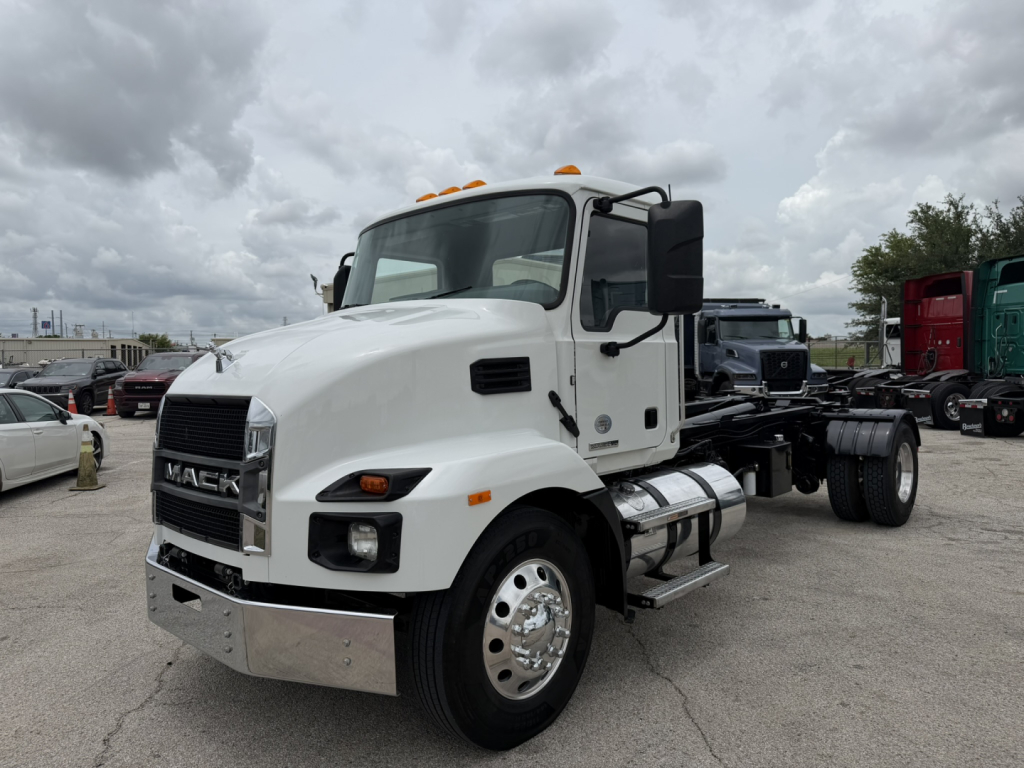
Have used mack hooklift truck to sell? List it here to reach thousands of buyers.
About Used Mack Hooklift Trucks in Texas
The first decision is usually capacity and truck class. Buyers should match hooklift rating to the actual container and payload mix, not just the biggest box the truck might ever touch. Common considerations include hooklift capacity, rail length, hook height, dump angle, and whether the unit is set up for tarping, pintle towing, or auxiliary hydraulics. On medium-duty Mack models such as the MD6, buyers often focus on under-CDL or CDL threshold requirements, wheelbase, and maneuverability in tighter jobsites. Powertrain details matter too. A Cummins diesel paired with an Allison automatic is a common medium-duty combination because it works well with stop-and-go routes and PTO-driven hydraulic systems. Check PTO engagement type, clutch pump or transmission-driven setup, hydraulic reservoir condition, and cycle speed under load.
Body compatibility is just as important as the truck itself. A hooklift only performs well when the hoist geometry matches the containers or bodies your operation already owns or plans to buy. Verify hook height, body length range, rear roller setup, and clear frame dimensions before assuming interchangeability. Frame condition deserves a close look on any used unit, especially around hoist mounts, crossmembers, rear hinge areas, and suspension attachment points. In Texas service, buyers should also inspect for corrosion inside rails, hydraulic hose wear from heat and debris exposure, and signs of repeated off-pavement use. Tires, brakes, steer axle ratings, rear axle ratios, and suspension type all affect how the truck handles loaded containers on mixed city and highway routes.
Mack hooklift trucks appeal to buyers who want a vocational chassis with straightforward serviceability and strong upfitter support. The best used truck for this category is not simply the newest one. It is the one with the right hoist rating, wheelbase, PTO configuration, axle capacity, and container compatibility for the work. Buyers comparing listings should pay close attention to GVWR, usable payload after upfit weight, cab-to-axle dimensions, body rail specs, and maintenance history on both the chassis and the hooklift system. A well-matched used Mack hooklift can replace dedicated body trucks, improve asset utilization, and cut downtime between pickup, dump, and return cycles.
Frequently Asked Questions
What should I check first on a used Mack hooklift truck?
Start with the match between the truck, the hooklift, and the bodies you plan to run. Confirm the hooklift rating, hook height, body length range, GVWR, axle ratings, and wheelbase before looking at cosmetic condition. After that, inspect the hydraulic system, PTO operation, frame rails, hoist mounts, rear rollers, and crossmembers. On a used truck, a clean maintenance record and smooth loaded cycle performance usually tell you more than paint or cab appearance.
Are Mack MD6 hooklift trucks a good choice for under-CDL applications?
They can be, depending on the final GVWR and the weight of the hooklift and bodies installed. Many buyers look at the MD6 because it offers a maneuverable medium-duty chassis that can be configured to stay near under-CDL limits while still handling container work. The key is payload math. You need to subtract the chassis weight, hooklift upfit weight, body weight, fuel, driver, and tools from the truck's GVWR to see what legal payload remains.
How important is PTO and hydraulic setup on a hooklift truck?
It is critical because the PTO and hydraulic system control the truck's actual working performance. Buyers should verify whether the truck uses a clutch pump or another PTO-driven arrangement, how quickly the hoist cycles, and whether the system operates smoothly under load. Check for pump noise, hose abrasion, cylinder leaks, heat-related wear, and any delay in engagement. A strong chassis is only part of the package. Weak hydraulic performance will slow every pickup and drop.
Can one Mack hooklift truck run different containers or bodies?
Yes, but only if the body dimensions and hooklift geometry are compatible. Hook height, body rail width, container length, rear roller placement, and the truck's clear frame space all need to line up. Many operators use one hooklift chassis for dumpsters, flatbeds, chip bodies, storage boxes, or specialty bodies, but interchangeability should never be assumed. Measuring your existing containers against the truck and hoist specs is the safest way to avoid loading problems and uneven weight distribution.
What makes a used hooklift truck a strong fit for Texas operations?
Texas fleets often need a truck that can handle mixed-duty work across urban routes, open highways, and rough jobsites. That makes wheelbase, turning radius, cooling performance, brake condition, suspension, and axle capacity especially important. Buyers should also consider heat exposure on hydraulic hoses and seals, dust-related wear, and the distance between service locations. A properly spec'd Mack hooklift truck can work well in construction, waste, municipal, and material-handling applications where quick body swaps improve daily utilization.