
Used Mack Hooklift Trucks For Sale
Shop used Mack hooklift trucks, including MD-series models, built for roll-off container handling, municipal work, and site service fleets.
Learn more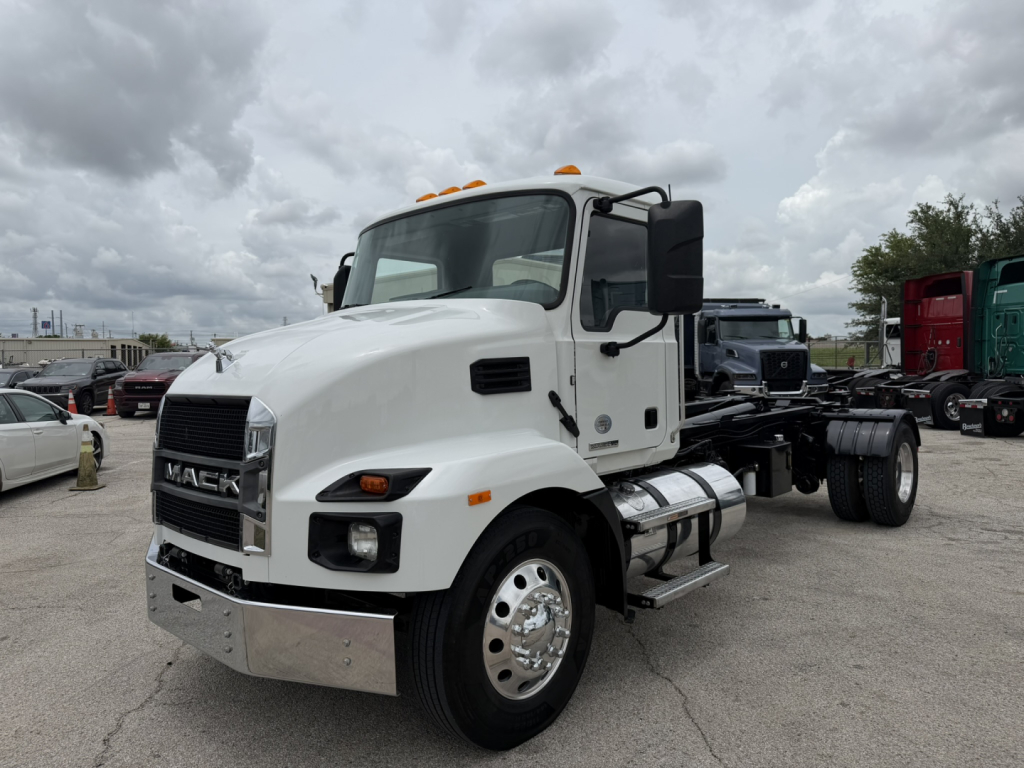
Have used mack hooklift truck to sell? List it here to reach thousands of buyers.
About Used Mack Hooklift Trucks
For many buyers, the first decision is chassis size and payload target. Mack medium-duty platforms such as the MD6 are common in hooklift applications where maneuverability, lower operating weight, and in some cases under-CDL registration are important. Buyers should compare gross vehicle weight rating, front and rear axle ratings, wheelbase, and usable cab-to-axle dimensions against the hooklift hoist capacity and the container lengths they plan to run. A truck that is well-matched on paper will load more smoothly, steer better with a full can, and avoid constant axle loading issues in real service.
The hooklift system itself deserves as much attention as the truck. Common points to verify include hoist capacity, hook height, body length range, hydraulic pressure, live PTO operation, and cycle speed. Many used units are equipped with systems from established brands such as SwapLoader, and that matters for parts support, controls, and container compatibility. Inspect the rear rollers, jib, hook, body locks, hydraulic cylinders, subframe, and hoist pivots for wear or repairs. If the truck will be used for dumpsters, debris boxes, flatbeds, equipment bodies, or salt spreader platforms, confirm that the lift geometry and container specs match the bodies already in your fleet.
Mack is a strong fit for hooklift work because the brand is known for vocational durability, stable steering feel, and chassis layouts that hold up in stop-and-go service. Engine and transmission combinations on used Mack hooklift trucks often favor straightforward vocational drivability, commonly with diesel power and an Allison automatic for easy PTO integration and urban route work. Buyers should pay close attention to PTO setup, frame condition, suspension type, brake spec, tire size, and signs of hard off-road use. Service records, hydraulic maintenance history, and evidence of proper upfitting usually tell you more about long-term value than mileage alone.
Frequently Asked Questions
What should I check first on a used Mack hooklift truck?
Start with the match between the chassis and the hooklift system. Verify the truck’s GVWR, axle ratings, wheelbase, and cab-to-axle dimensions, then compare those numbers to the hoist rating and the container lengths the unit is designed to handle. After that, inspect the hydraulic system, PTO operation, hook and jib wear, rear rollers, body locks, and subframe condition. A hooklift truck can look clean and still be poorly matched for the bodies you intend to run.
Are Mack MD6 hooklift trucks suitable for under-CDL applications?
Some Mack MD6 hooklift configurations can be set up to stay in an under-CDL weight class, but that depends on the exact chassis spec, body weight, hoist weight, and intended payload. Buyers should review the door sticker GVWR and calculate the real operating weight with fuel, driver, and the container or body being used. A truck advertised as under CDL still needs to be evaluated against your state rules and your actual work cycle.
What industries commonly use Mack hooklift trucks?
Mack hooklift trucks are commonly used in waste handling, demolition, scrap recycling, municipal public works, tree service, construction support, and landscape material delivery. The value of the hooklift design is that one truck can swap between debris containers, flatbeds, equipment carriers, storage boxes, and specialty bodies. That flexibility helps improve chassis utilization and reduce the need for multiple dedicated trucks.
How important is PTO and hydraulic setup on a used hooklift truck?
It is critical because the PTO and hydraulic package directly affect lifting performance, cycle speed, and reliability. Buyers should confirm whether the truck uses a clutch pump or transmission-mounted PTO, whether it supports live PTO operation, and whether the pump, valves, hoses, and reservoir are sized correctly for the hoist. Weak hydraulic performance, oil leaks, noisy operation, or slow cycle times can point to expensive repairs or an upfit that was never properly dialed in.
Does mileage matter more than service history on a used hooklift truck?
Service history usually matters more. Hooklift trucks often spend their lives in start-stop vocational work where hydraulic cycles, loading technique, and maintenance discipline have a bigger impact than odometer reading alone. A higher-mile Mack with documented maintenance, clean hydraulics, and a straight frame can be a better buy than a lower-mile truck that has seen overloads, poor lubrication, or repeated body impact damage.