
Used Autocar Garbage Trucks For Sale in Texas
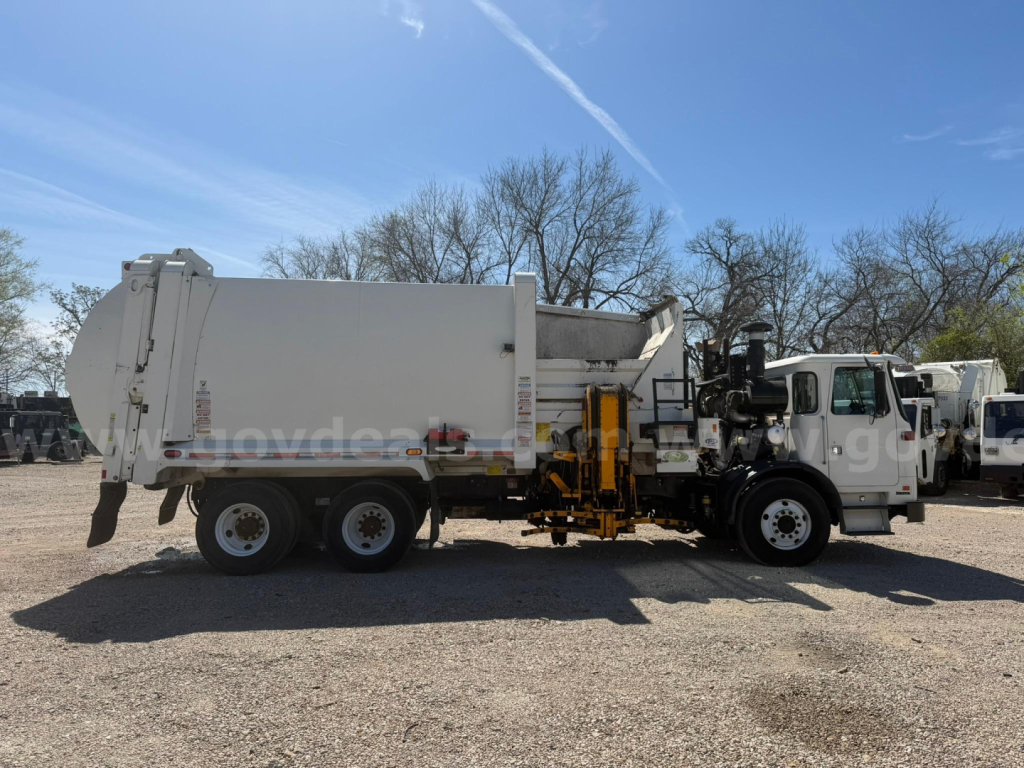

Have used autocar garbage truck to sell? List it here to reach thousands of buyers.
Used Autocar Garbage Trucks in Texas
For residential collection, many used Autocar garbage trucks are configured as automated side loaders with bodies such as the Heil DuraPack 7000. Common details include 26 to 33 yard body capacity, cart tippers, full eject systems, and automated arms for one-person collection. Dual-steer setups are especially relevant for neighborhood routes because they improve visibility and curbside operation while reducing driver strain on repetitive pickup work. For commercial service, front loader configurations with 30-yard bodies are common, and these trucks need the right front axle capacity, fork condition, and packer performance to handle dumpsters and dense loads. A buyer should inspect arm wear, hopper floors, body mounts, hydraulic lines, and cycle times, because the refuse body often tells you more about remaining service life than the cab does.
Powertrain choice matters with used Autocar refuse trucks. Cummins ISL9 and ISL-G engines are common, paired with Allison automatic transmissions such as the 3000 or 4500 series. In Texas, CNG-powered garbage trucks can make sense for municipal or fleet buyers with fueling access, but fuel system condition, tank certification dates, and emissions component history need close review. Diesel units may offer simpler fuel logistics for independent operators and contractors. In either case, pay attention to engine hours, PTO engagement quality, cooling system performance, and electrical faults. Refuse trucks accumulate wear from idling, packing cycles, and hydraulic demand, so engine hours and body hours can be as important as odometer readings. Rear ratios, suspension type, and brake spec also matter because these trucks spend their lives in low-speed, high-cycle service rather than steady highway miles.
The best used Autocar garbage truck is the one matched to the route. A residential side loader needs arm reliability, visibility, and tight maneuverability. A commercial front loader needs lift capacity, frame strength, and stable axle loading. Buyers in Texas should also consider A/C performance, cab condition, and cooling reserve because heat affects driver comfort and uptime. Review maintenance records for hydraulic repairs, body wiring harness work, air leaks, transmission service, and steering or suspension wear. When the chassis, body, and route are matched correctly, an Autocar refuse truck can still deliver strong service life in demanding municipal and private sanitation work.
Frequently Asked Questions about Used Autocar Garbage Trucks in Texas
What makes Autocar garbage trucks popular in refuse service?
Autocar garbage trucks are popular because the chassis is purpose-built for vocational work rather than adapted from a general on-highway platform. The cabover design gives operators strong visibility and a tight turning radius, which matters on residential streets, alleys, and transfer station approaches. They are also commonly spec'd with proven refuse components such as Cummins engines, Allison automatic transmissions, and body packages from major refuse equipment manufacturers.
What should I check first on a used Autocar garbage truck?
Start with the refuse body and hydraulic system before focusing on cosmetics or mileage. Inspect the packer, arm assemblies, forks, hopper, ejector, hydraulic cylinders, hoses, and body mounts for wear, leaks, cracks, and uneven operation. Then review engine hours, PTO function, transmission shifting, axle ratings, suspension wear, brake condition, and any active fault codes. A used refuse truck can look decent in the cab and still need major body or hydraulic work.
Are CNG Autocar garbage trucks a good choice in Texas?
CNG Autocar garbage trucks can be a strong fit in Texas for municipalities and fleets that already have reliable fueling access and technicians familiar with natural gas systems. They are common in refuse service because routes return to base and fueling can be centralized. The key buying points are tank age, fuel system inspection history, engine fault history, and local service support. If fueling access is limited, a diesel truck may be the simpler operational choice.
What is the difference between an Autocar front loader and side loader garbage truck?
A front loader is typically used for commercial dumpster service and lifts containers over the cab into the hopper. It needs strong front-end structure, good fork condition, and the right axle capacity for heavy repetitive lifts. An automated side loader is usually used for residential cart collection and relies on a hydraulic arm to grab and dump carts from the curb. Side loaders prioritize arm speed, visibility, and maneuverability, while front loaders prioritize lift strength and commercial route durability.
Do miles matter as much as hours on a used refuse truck?
No. On a garbage truck, hours often matter as much as or more than miles because refuse duty involves constant stopping, idling, PTO use, and hydraulic cycling. A truck with moderate miles but very high hours may have more wear than a higher-mile unit that saw lighter vocational use. Buyers should compare odometer reading, engine hours, maintenance records, and the condition of the body and hydraulic components to get a true picture of remaining life.