
Used International Flatbed Trucks For Sale in Texas
Shop used International flatbed trucks in Texas. Compare GVWR, bed length, engine options, axle setups, and body specs for local or regional work.
Learn more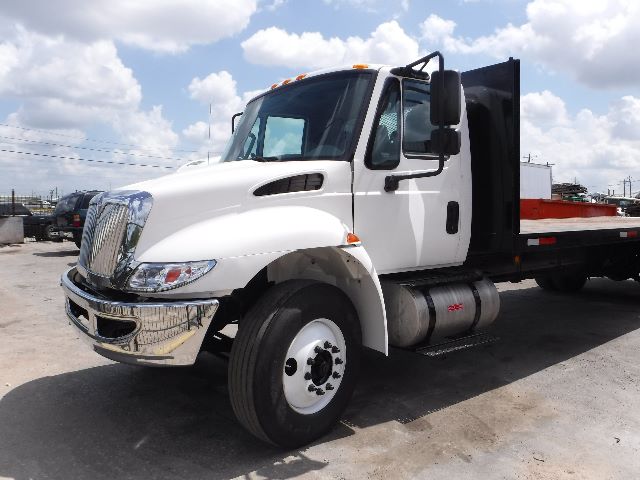
Have used international flatbed truck to sell? List it here to reach thousands of buyers.
About Used International Flatbed Trucks in Texas
The first decision is usually chassis class and payload, not paint or trim. Many used International flatbed trucks are spec'd with diesel engines, automatic transmissions, spring or air ride rear suspension, and wheelbases matched to common bed lengths. Buyers should look closely at GVWR, front and rear axle ratings, frame condition, and the actual body installation. Bed length, deck material, rub rail design, stake pockets, headache rack setup, and tie-down placement matter more on a flatbed than they do on many other body styles. If the truck will handle palletized freight every day, deck height and forklift access are important. If it will carry machinery or jobsite material, check for winches, D-rings, ICC bumper condition, and any signs of concentrated loading damage.
Texas operating conditions make cooling performance, brake condition, and tire spec especially important on a used flatbed truck. Regional routes, oilfield support, municipal work, landscaping supply, and construction delivery all put different demands on the chassis. A truck working around Houston or Dallas may benefit from a tighter turning setup and lower deck height for urban stops, while West Texas use may push buyers toward heavier suspension, stronger body mounting, and better protection against rough service. International trucks are commonly chosen because parts and service support are broad, cab ergonomics are straightforward, and the platform works well for vocational body applications.
A good used International flatbed should be evaluated as both a truck and a body package. Service history, engine hours if available, PTO or auxiliary equipment operation, rust around crossmembers, and signs of frame modification all deserve attention. Buyers should also confirm CDL implications, bridge law exposure by axle spacing, and whether the current setup matches the freight profile. A well-matched International flatbed truck can cover local delivery, contractor support, and regional hauling without the added weight and complexity of more specialized equipment.
Frequently Asked Questions
What should I look for first on a used International flatbed truck?
Start with GVWR, axle ratings, wheelbase, and bed length, then verify that the body and chassis are matched to the payload you plan to carry. On a used unit, inspect the frame rails, crossmembers, suspension, brake system, deck condition, and tie-down hardware. Flatbed trucks often see hard vocational use, so signs of overloading, uneven deck wear, cracked body mounts, and damaged rub rails can tell you more than mileage alone.
Are International 4300 flatbed trucks good for local delivery and contractor work?
Yes. The International 4300 is a common medium-duty platform for flatbed service because it balances maneuverability, payload, and serviceability well. It is often used for lumber yards, building supply delivery, equipment transport, and municipal or utility work. The exact capability depends on the engine, transmission, rear axle ratio, wheelbase, and body rating, so buyers should confirm the truck's actual payload capacity rather than relying only on model name.
What flatbed body features matter most on a used truck?
The most useful body features depend on cargo type, but buyers usually focus on bed length, deck material, rub rails, stake pockets, D-rings, headache rack design, and overall deck height. A forklift-loaded truck benefits from clean side access and durable deck construction. Freight that requires securement may call for more tie-down points, chain storage, or winch capability. The quality of the upfit and the condition of the mounting hardware are just as important as the base truck.
Do I need to think about CDL requirements when buying a used flatbed truck?
Yes. CDL requirements are tied to the truck's gross vehicle weight rating and how the truck is used, not simply the fact that it has a flatbed. Many medium-duty International flatbed trucks are spec'd to stay in non-CDL range, while others exceed that threshold once the chassis and body are rated. Buyers should verify GVWR on the door label, review any state and federal operating requirements, and make sure the intended payload does not push the operation into a different licensing or compliance category.
Why are used flatbed trucks popular in Texas?
Texas has strong demand for flatbed trucks because many industries there move freight that loads from the side or top, including construction materials, pipe, machinery, landscaping products, and oilfield-related supplies. A flatbed truck is easy to load with a forklift or crane and works well for short-haul and regional applications. That versatility makes a used International flatbed a practical option for fleets that need one truck to cover several types of work.