
Used Freightliner Flatbed Trucks For Sale in Pennsylvania
Shop used Freightliner flatbed trucks in Pennsylvania. Compare M2 specs, GVWR, bed lengths, tie-down options, and delivery-ready setups.
Learn more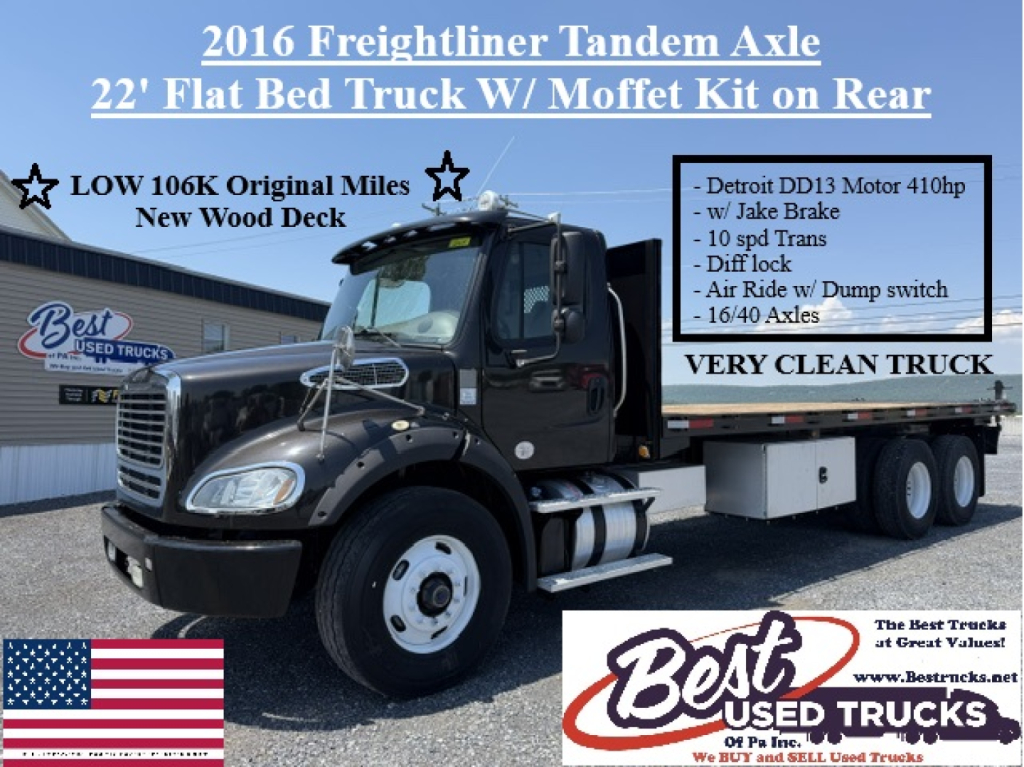
Have used freightliner flatbed truck to sell? List it here to reach thousands of buyers.
About Used Freightliner Flatbed Trucks in Pennsylvania
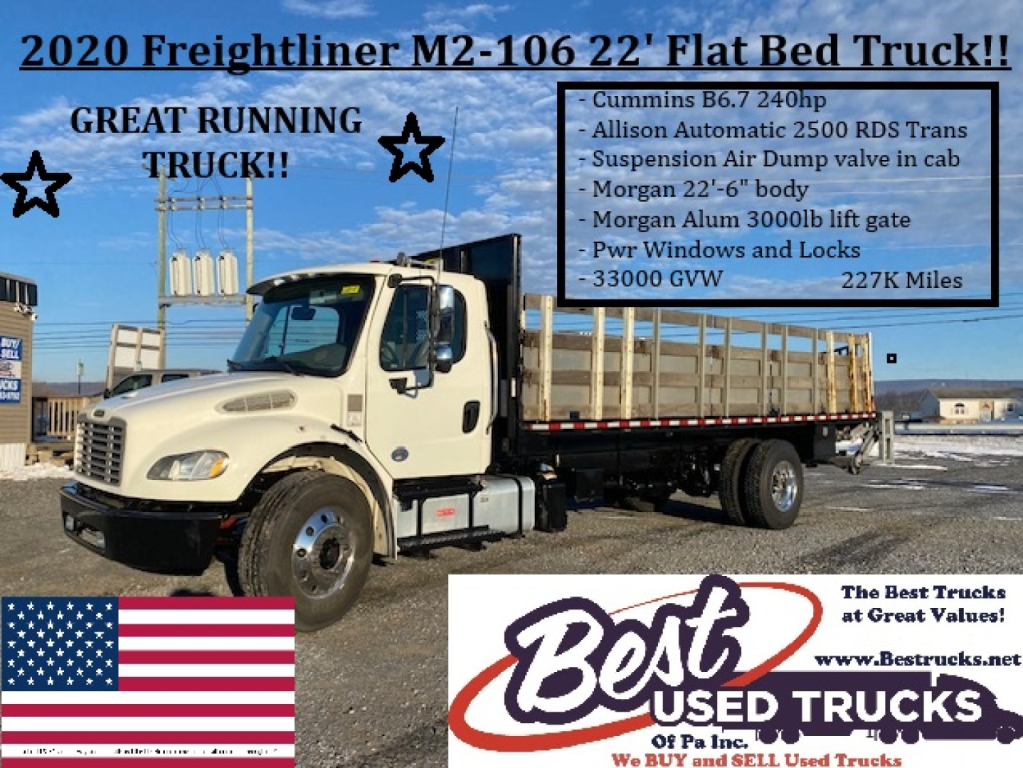
The first decision is usually chassis size and powertrain. An M2 106 is often spec'd for lighter regional delivery work with Cummins B6.7 power and an Allison automatic, while an M2 112 is more likely to show up with larger engines such as a Detroit DD13, heavier front and rear axle ratings, and a manual or heavier-duty transmission. On used units, pay close attention to GVWR, rear axle ratio, suspension type, and brake spec, because those details will determine how the truck performs on hilly Pennsylvania routes, urban stops, and jobsite access roads. Air ride suspension, differential lock, and cab-controlled air dump are all valuable features on flatbeds that see mixed pavement and uneven loading conditions.
Body spec matters as much as the truck itself. Many used Freightliner flatbed trucks in this class have wood floors, stake pockets, rub rails, winches or winch tracks, headache racks, and pop-up or side-mounted tie-downs. Stake bodies add flexibility for loose materials and palletized cargo, while a plain flatbed can be better for machinery, lumber, pipe, or oversized loads that need forklift access from multiple sides. Some trucks are also set up with Moffett kits for truck-mounted forklifts or liftgates for delivery applications. Buyers should inspect bed length, deck condition, floor replacement history, tie-down hardware, and rear frame setup to confirm the body matches the freight they haul every day.
A used Freightliner flatbed is often chosen because parts support is broad and the M2 platform is familiar to many fleets and independent shops. For buyers comparing listings, the high-value details are actual payload capacity, body builder quality, axle ratings, wheelbase, and how the truck was used previously. A clean delivery truck with lower miles may be ideal for local building supply work, while a heavier M2 112 with a larger engine and tandem axle setup is better suited for denser freight and more demanding duty cycles. The best truck in this category is the one with the right bed, right weight rating, and right tie-down package for the loads you secure every week.
Frequently Asked Questions
What is the most common Freightliner flatbed truck model on the used market?
The Freightliner M2 is the most common platform in the used flatbed truck market, especially the M2 106 and M2 112. The M2 106 is typically used for medium-duty local and regional delivery work, while the M2 112 is more often spec'd for heavier payloads, tandem axles, and higher-horsepower applications. Both are popular because they accept a wide range of flatbed and stake body configurations and are supported by a large service network.
What should I check first on a used Freightliner flatbed truck?
Start with GVWR, axle ratings, bed length, and body condition. Those four items tell you whether the truck can legally and practically handle your freight. After that, review engine and transmission specs, suspension type, rear axle ratio, and the tie-down setup, including stake pockets, rub rails, and winches. On used units, floor condition, frame corrosion, and signs of repeated overloading are especially important.
Is an automatic or manual transmission better in a used flatbed truck?
It depends on the route and driver mix. Allison automatic transmissions are common on flatbeds used for city delivery, building supply runs, and jobs with frequent stops because they reduce driver fatigue and are easy to operate. Manual transmissions are still valued in heavier-duty applications where buyers want more direct control and often pair them with larger engines and tandem axle specs. The better choice is the one that fits your load weight, terrain, and driver experience.
Are stake bodies and flatbeds the same thing?
A stake body is a type of flatbed truck with removable or fixed side stakes and often panel inserts. It gives the truck more flexibility for carrying palletized freight, bundled materials, and loads that benefit from side containment. A standard flatbed has an open deck without full side structure, which improves forklift access and can be better for equipment, steel, lumber, and irregular cargo. Many used Freightliner listings in this category will be one of these two body styles.
Why do axle ratio and suspension matter on a Freightliner flatbed?
Rear axle ratio affects launch, gradeability, and highway RPM, which directly influences how the truck performs under load. A lower gearing setup can help with heavier payloads and stop-and-go operation, while a faster ratio may be better for lighter highway work. Suspension also matters because air ride can improve ride quality and cargo protection, and features like an air dump valve help at docks and during loading. These details can make a major difference in real-world flatbed use.