
Used Peterbilt Dump Trucks For Sale in Texas
Browse used Peterbilt dump trucks for sale in Texas. Compare specs, body types, axle setups, engine options, and vocational features.
Learn more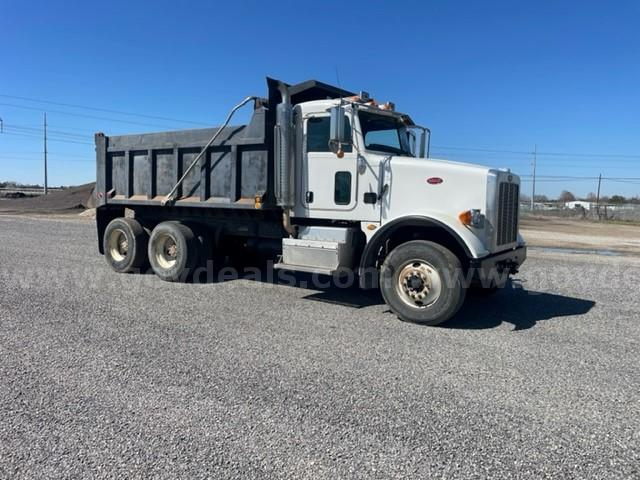
Have used peterbilt dump truck to sell? List it here to reach thousands of buyers.
About Used Peterbilt Dump Trucks in Texas
The most important buying decision is usually the chassis setup. Common used Peterbilt dump truck configurations include 10-wheel tandem axle trucks, tri-axles, and heavier vocational layouts with lift axles or pusher axles to increase legal carrying capacity. Buyers should compare wheelbase, frame rail specs, suspension type, front axle capacity, and rear axle ratios against the body that is installed. Dump bodies vary widely, including half-round and square bodies in steel or aluminum, with steel remaining the usual choice for rock, demo, and abrasive material. Hoist type, tailgate style, liner condition, tarp system, PTO operation, and hydraulic performance all matter because repair costs on vocational components can add up quickly after purchase.
Engine and transmission specs deserve a close look because a dump truck's duty cycle is very different from an over-the-road tractor. Many used Peterbilt dump trucks are equipped with heavy-duty diesel engines from PACCAR, Cummins, or Caterpillar in older models, paired with manual, automated, or fully automatic transmissions depending on the application. For stop-and-go hauling or municipal work, an automatic can reduce driver fatigue and clutch wear. For off-road work or steep grades, buyers may still prefer a manual or automated manual with the right low-end gearing. In Texas heat, cooling system condition, A/C performance, and idle management are practical concerns, especially for trucks running long days on jobsites.
A careful inspection should focus on the areas that take the most abuse in dump service. Look closely at frame condition, suspension wear, crossmembers, hoist mounts, hinge points, kingpins, steering components, brake life, and any signs of body twisting or hard off-road use. Check for rust around the floor, sidewalls, and tailgate even in drier regions, since wet material and washout cycles can still cause corrosion. Tire condition, differential noise, PTO engagement, hydraulic leaks, and evidence of prior weld repairs all help tell the real story of how the truck was worked. For buyers comparing used Peterbilt dump trucks for sale in Texas, the best value usually comes from a truck whose axle ratings, body spec, and maintenance history match the material being hauled and the roads it sees every day.
Frequently Asked Questions
What should I look for first on a used Peterbilt dump truck?
Start with the axle ratings, suspension, frame, and dump body spec because those determine if the truck fits the work. A used Peterbilt dump truck may look clean but still be wrong for the intended payload or jobsite conditions. Verify front and rear axle capacities, check for lift axles if higher legal payload is needed, and inspect the frame for cracks, corrosion, or weld repairs. Then evaluate the body, hoist, PTO, hydraulics, tailgate, and liner condition. The engine and transmission matter, but the vocational chassis and body condition usually drive the real operating cost.
Are Peterbilt dump trucks good for Texas construction and aggregate work?
Peterbilt dump trucks are widely used in Texas because they are available in vocational specs that fit construction, aggregate, municipal, and road maintenance applications. The right truck depends on the route and material. A tandem axle setup may be ideal for urban paving and general construction, while a tri-axle or lift-axle truck may make more sense where payload laws and haul distance support the added capacity. Texas buyers should also factor in heat, dust, rough access roads, and long idle periods when evaluating cooling systems, air conditioning, and maintenance history.
What dump body type is most common on a used Peterbilt dump truck?
Steel dump bodies are the most common on used Peterbilt dump trucks because they hold up well in rock, asphalt millings, demolition debris, and other abrasive materials. Half-round bodies are often chosen for sticky loads because they shed material more easily, while square bodies can offer versatility for general construction use. Body length, side height, floor thickness, and hoist design should match the payload and material density. Buyers should also inspect the tailgate hardware, tarp system, body braces, and floor for signs of heavy wear or prior patching.
Is an automatic transmission a good choice in a used dump truck?
An automatic transmission can be a strong choice in a used dump truck, especially for stop-and-go work, municipal service, or routes with frequent backing and tight maneuvering. It can reduce driver fatigue, simplify training, and lower clutch-related wear. A manual or automated manual may still be preferred for certain off-road applications, steep grades, or fleets with established driver preference and maintenance support. The best choice depends on terrain, driver mix, and how often the truck cycles through loading, hauling, and dumping each day.
How many miles are too many on a used Peterbilt dump truck?
There is no fixed mileage limit because dump trucks are judged more by hours, duty cycle, maintenance, and chassis condition than by odometer alone. A lower-mile truck that spent years in severe off-road service can be more worn than a higher-mile truck with steady road use and documented maintenance. Engine hours, idle time, PTO use, suspension wear, hydraulic condition, and frame integrity often tell more than mileage. On a used Peterbilt dump truck, service records and a thorough vocational inspection are more valuable than the odometer by itself.