
Freightliner Cab and Chassis Trucks For Sale
Freightliner cab and chassis trucks, from M2 to SD models. Compare GVWR, wheelbase, engines, PTO and upfit options for your application.
Learn more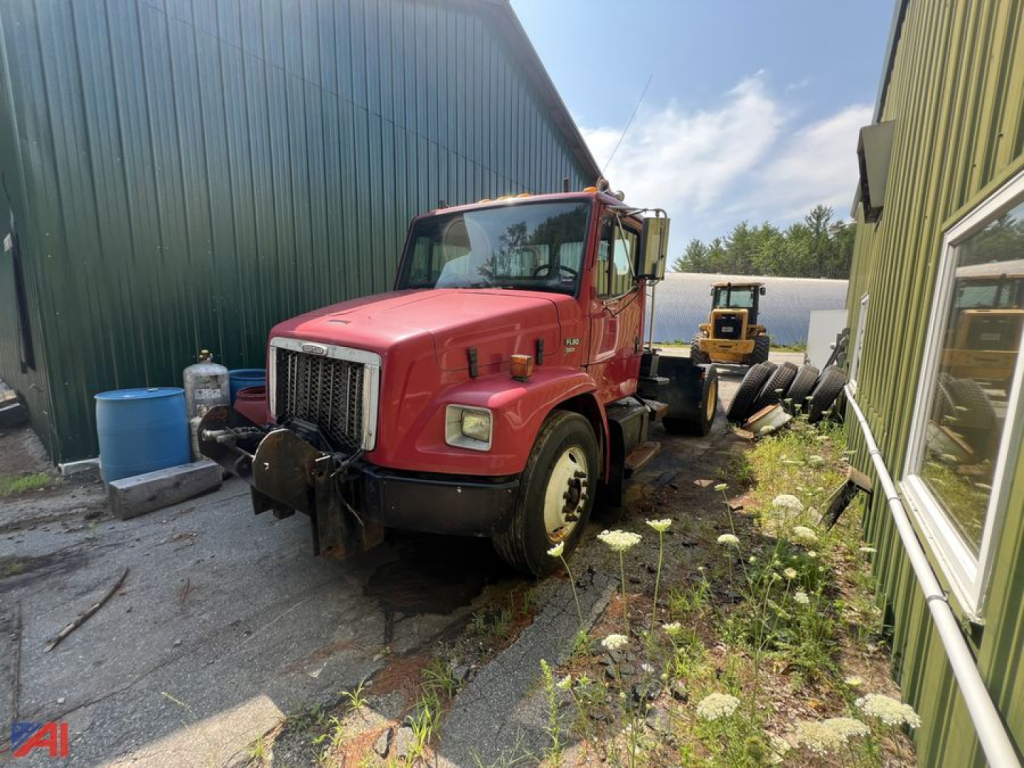
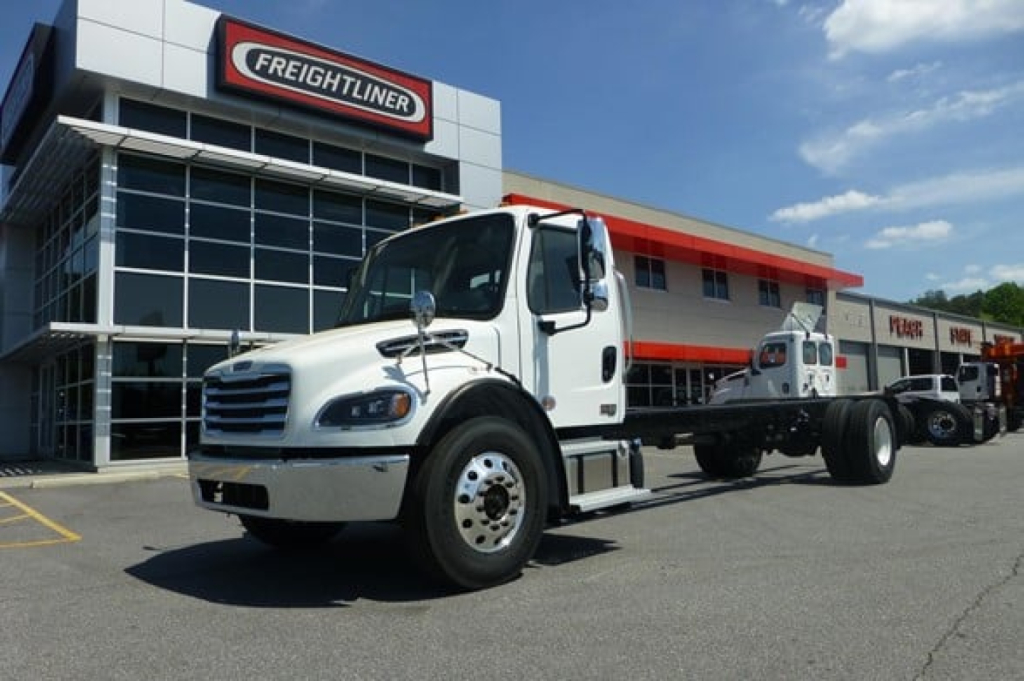
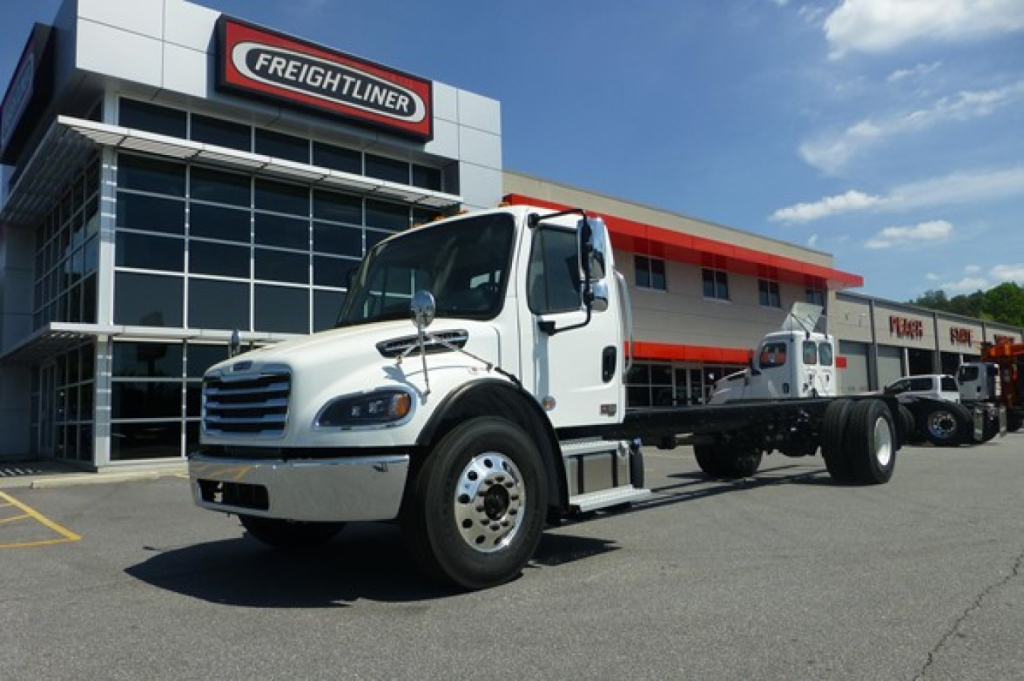
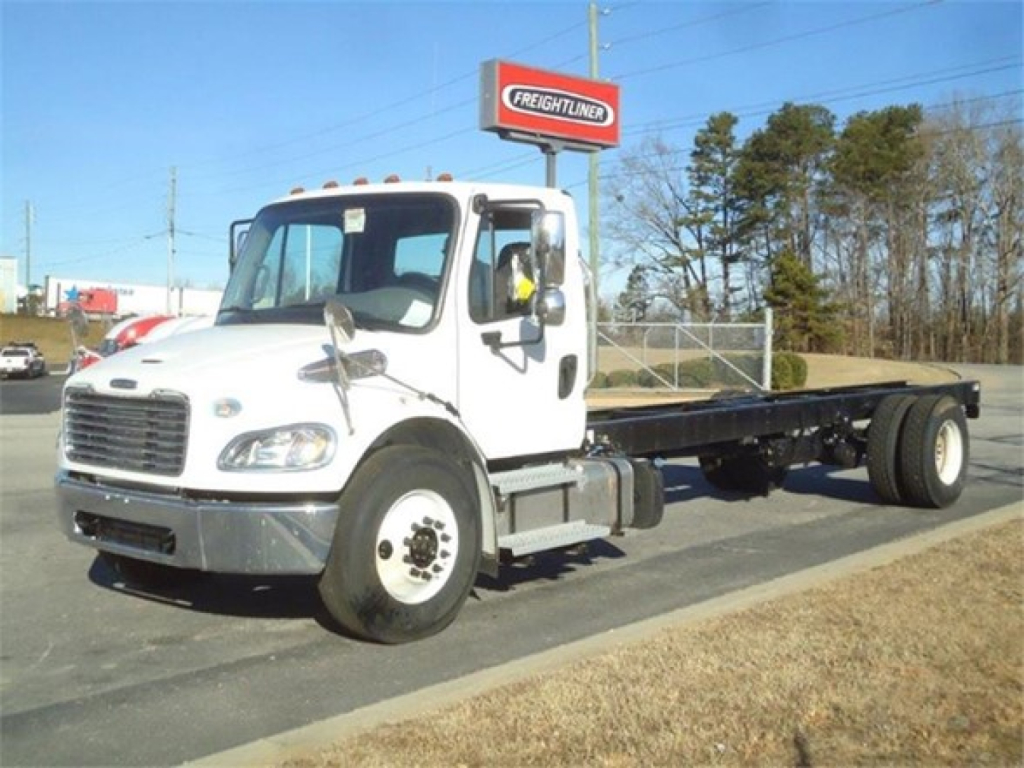

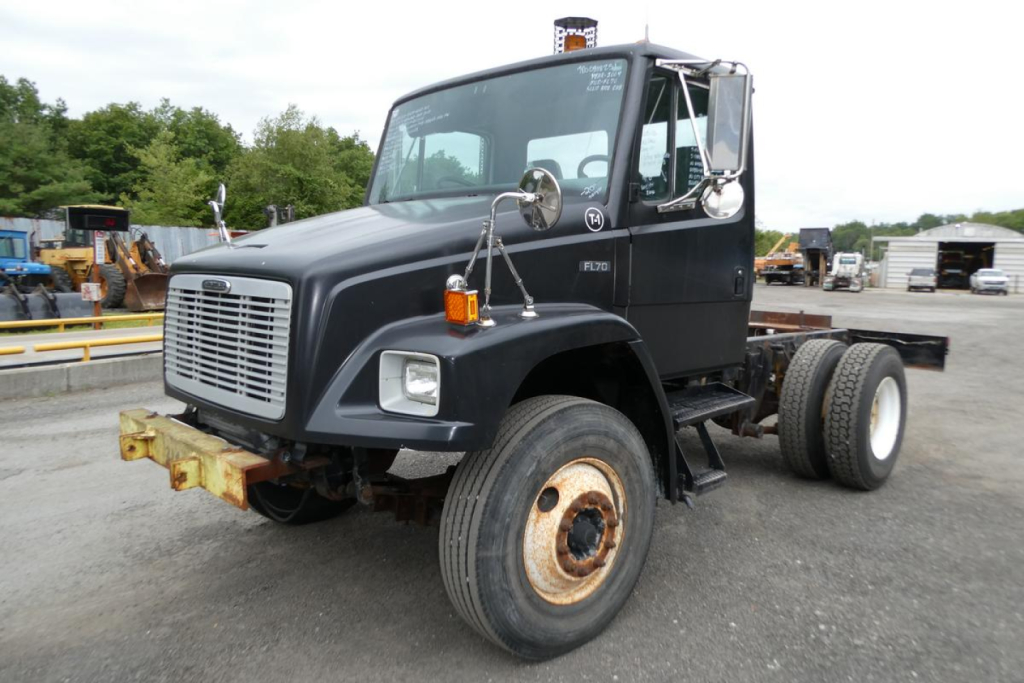
Showing 1 to 12 of 20 results
Have freightliner cab and chassis truck to sell? List it here to reach thousands of buyers.
About Freightliner Cab and Chassis Trucks
Across the lineup, buyers typically compare M2 106 and M2 112 for medium duty, 108SD and 114SD for severe duty, and select 122SD or a Cascadia-based chassis for specialized heavy vocational or regional on-highway roles. Common GVWR ranges run from the mid 20,000s into the 60,000s on M2 variants, then into the 70,000 to 92,000 class on SD models, with GCWR capability well above that when towing. Engine choices include Cummins B6.7 and L9, Detroit DD5 and DD8 in medium duty, and Detroit DD13 or Cummins X12 in SD applications, matched to Allison 2500 to 4500 series automatics, Eaton manual 8LL or automated options. Steer axles commonly span 10k to 20k ratings, tandems 40k to 46k, with pusher or tag axles available where bridge laws or payload demand it. Air disc brakes improve fade resistance and maintenance intervals, while S-cam drums remain a cost effective standard in many specs.
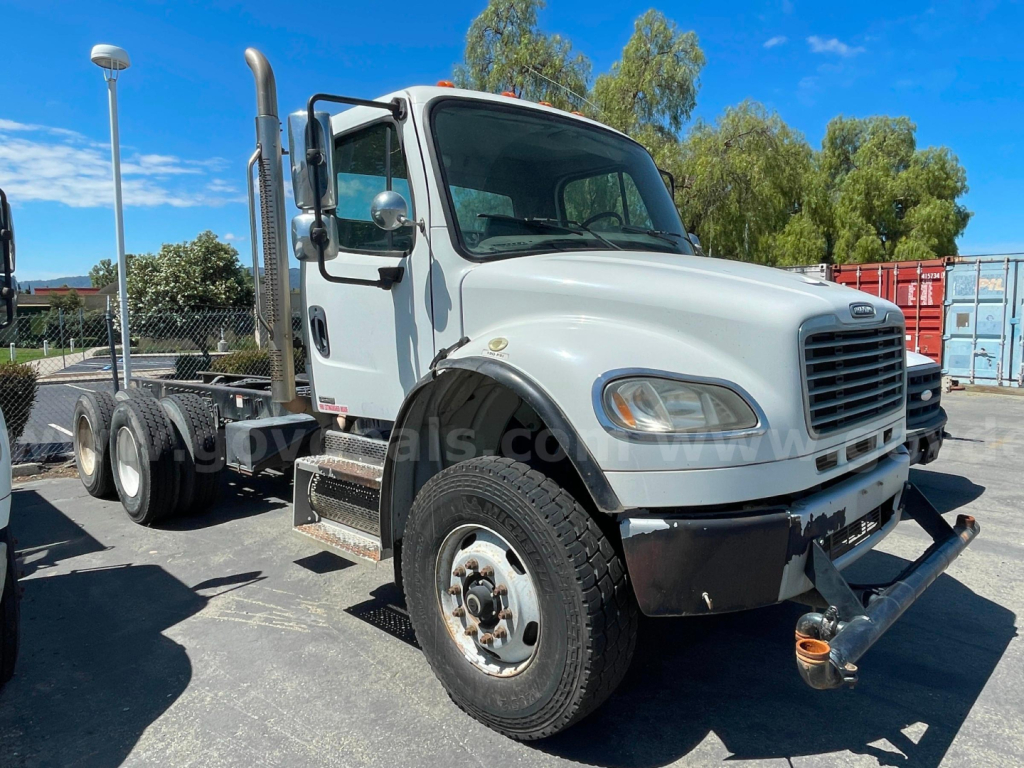
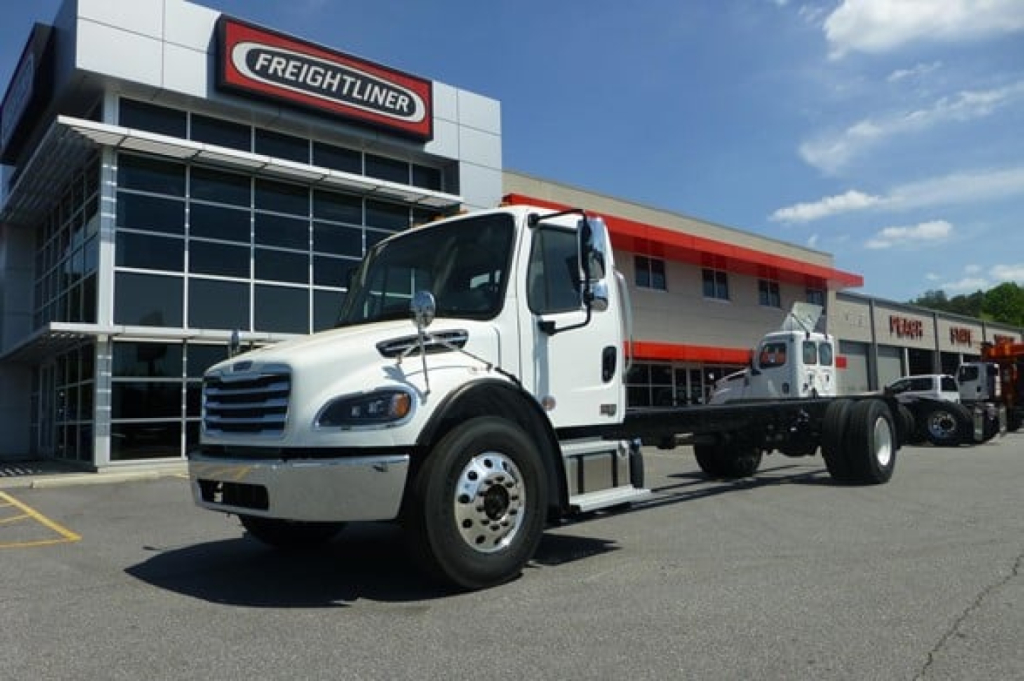
Upfit flexibility is a Freightliner strength. Frames are offered in high tensile steel with RBM ratings sized for cranes, hooklifts and dumps, and double frame or insert options where torsional loads are high. SmartPlex multiplex electrical architecture, dedicated body builder connectors and programmable switches simplify wiring. Factory PTO provisions, front frame extensions for plows or winches, vertical or horizontal exhaust, multiple fuel tank and battery box locations, and clean CA packages help fit bodies from 10 to 26 feet and beyond. As a rough guide, 84 to 120 inch CA suits many 12 to 16 foot dumps or service bodies, 138 to 162 inch CA is common for 22 to 26 foot vans or flatbeds, but final measurements must be verified with your body supplier and the Freightliner body builder manual to maintain axle loading, departure angle and DEF clearance.
Driver ergonomics and total cost of ownership matter over the life of the truck. The M2 cab provides excellent visibility and up to a 55 degree wheel cut for urban maneuvering, while SD cabs and suspensions like AirLiner air ride, TufTrac or Hendrickson vocational options balance ride quality with durability. Many late model Freightliner cab and chassis units offer collision mitigation, adaptive cruise, lane departure and telematics integration, which can reduce incident rates and support fleet compliance. Diesel remains the dominant spec, with factory natural gas options on select M2/M2 112 variants and battery electric eM2 available in certain duty cycles and regions, each with distinct range, weight and infrastructure trade-offs. Spec to your route, payload and body requirements first, then fine tune engine torque curves, gearing and brake packages to control grades, PTO demands and stop-start cycles.
Frequently Asked Questions
How do I choose between M2 106, M2 112, 108SD, 114SD and 122SD for a cab and chassis?
Match the model to duty cycle and payload. M2 106 covers a broad range of medium duty bodies like van, rollback, utility and lighter dumps up to mid 50k GVWR. M2 112 adds frame, cooling and GVWR headroom into the mid 60k range for tankers, heavier flatbeds and regional vocational work. 108SD and 114SD are severe duty with higher RBM frames, vocational suspensions and axle ratings for dumps, mixers, plows, cranes and refuse. 122SD targets heavy vocational and specialized on or off highway roles where higher front axle ratings, BBC length and GCWR are required. Availability and exact ratings vary by model year and spec.
What wheelbase and CA should I spec for common body lengths?
Use CA to match effective body length while preserving axle load balance and clearance for aftertreatment, fuel tanks and PTOs. Many 12 to 16 foot dumps or service bodies fit 84 to 120 inch CA ranges. Common 22 to 26 foot van or flatbed bodies often need 138 to 162 inch CA and wheelbases from roughly 190 to 260 inches depending on cab type and front axle set. Always confirm with the body builder, account for hitch or liftgate overhang, and verify legal axle weights with a weight distribution calculation before ordering the chassis.
Should I choose 4x2 or 6x4 on a Freightliner cab and chassis?
A 4x2 is lighter, costs less and turns tighter, which helps in city delivery or utility work with moderate payloads. A 6x4 adds a driven tandem for traction, stability and higher GAWR, which is important for dumps, mixers, cranes and off-pavement sites. Consider local bridge laws, expected payload, traction needs and turning space. Where payload pushes legal axle limits but traction needs are modest, a 6x2 with a liftable pusher or tag can be an alternative in some routes.
Which engine and transmission pairing works best for PTO and stop-start duty?
For frequent PTO use, spec an engine with adequate low speed torque, a transmission with PTO provisions and the correct PTO ratio. Allison 3000 or 3500 series automatics are common on M2 and SD chassis and offer reliable hot shift PTO options, smooth low speed control and less driver fatigue in stop-start routes. For severe vocational work or plowing, some fleets prefer manual or automated 8LL style gearing for creep control and engine braking. Match axle ratio and tire size to maintain target road speeds and gradeability without excessive heat in the torque converter or brakes.
Can I get advanced safety and driver assist features on these chassis?
Many late model Freightliner cab and chassis trucks offer collision mitigation, adaptive cruise control, lane departure warning and camera options, along with air disc brakes. Availability depends on model year and platform, with broader feature sets on newer M2 and SD variants. These systems can reduce rear-end collisions, help manage following distance and improve driver awareness, but they do not replace driver attention and training. Verify exact content on the spec sheet and test features with your intended body to ensure sensor placement remains unobstructed.