
Used Sterling Box Trucks For Sale in New York
Browse used Sterling box trucks, including Acterra models, with common specs, GVWR ranges, box lengths, liftgates, and delivery-ready features.
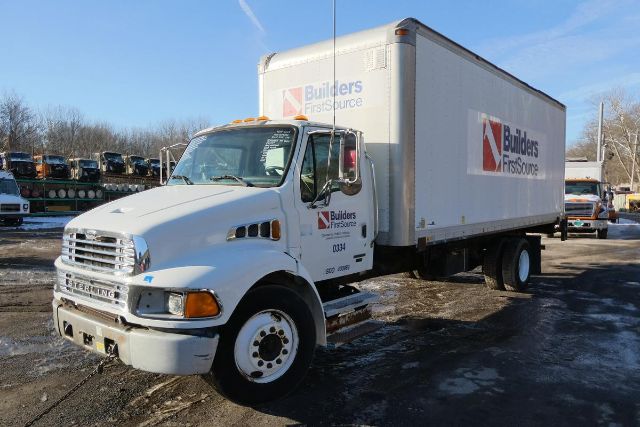
Have used sterling box truck to sell? List it here to reach thousands of buyers.
Used Sterling Box Trucks in New York
The first buying decision is usually GVWR and axle capacity. Many Sterling box trucks fall in the Class 6 to Class 7 range, often around 25,500 to 33,000 GVWR, with front axles commonly in the 8,000 to 12,000 lb range and rears in the 17,500 to 21,000 lb range. That spread affects CDL requirements, payload, brake type, and how the truck fits your operation in New York and other urban markets. Wheelbases in the mid-200-inch range and cab-to-axle dimensions around 180 inches are common on 24-foot to 26-foot bodies. Buyers should match box length, dock height, and turning radius to the actual routes, alley access, and loading conditions they deal with every day.
Powertrain specs on used Sterling box trucks vary, but Mercedes-Benz medium-duty diesel engines such as the OM906 series are common, usually paired with 6-speed manual transmissions. Rear axle ratios like 4.88 or 5.13 are typical for stop-and-go vocational use where low-speed pulling power matters more than highway fuel economy. Suspension is often spring ride, which is durable and straightforward to maintain, though ride quality will be firmer than air ride. It is also common to see either air brakes or hydraulic brakes depending on GVWR and original application, so buyers should verify which system the truck has, along with tire size, wheel type, and maintenance history.
Condition matters more than the badge on an older box truck. The box body itself should be inspected as closely as the chassis. Check the floor for rot or soft spots, especially near the rear threshold and along the side walls. Look at the roll-up door tracks, roof bows, corner caps, scuff areas, and body mounting points. If the truck has a liftgate, inspect platform corrosion, hinge pins, hydraulic cylinders, pump operation, and cycle speed under load. On the chassis side, pay attention to frame condition, steering play, cooling system health, brake wear, and signs of electrical issues in cab accessories. A well-matched used Sterling box truck can still be a cost-effective delivery platform if the body, drivetrain, and lift equipment are all aligned with the work you need it to do.
Frequently Asked Questions about Used Sterling Box Trucks in New York
What GVWR range is common for a used Sterling box truck?
Used Sterling box trucks commonly fall in the medium-duty Class 6 to Class 7 range, often around 25,500 to 33,000 GVWR. That rating affects payload capacity, registration, brake configuration, and in some cases CDL requirements. Buyers should compare the truck’s GVWR to the empty weight of the chassis and body to estimate real payload, especially if a liftgate, heavy shelving, or route-delivery equipment is already installed.
What engine and transmission setups are typical in Sterling Acterra box trucks?
Many Sterling Acterra box trucks are equipped with Mercedes-Benz medium-duty diesel engines, especially the OM906 family, paired with 6-speed manual transmissions. These setups were widely used in local and regional service where durability and low-speed drivability were more important than maximum highway speed. Rear axle ratios are often numerically higher, which helps in stop-and-go work but can keep engine rpm higher at road speed.
What should I inspect on the box body before buying?
The body should be checked for floor condition, water intrusion, roof damage, wall separation, and rear frame rust. Wood floors can hide moisture damage, especially near the roll-up door opening and along the sides where forklifts and pallet jacks cause wear. Buyers should also inspect the roll-up door balance and track condition, verify that the body sits square on the frame, and check for damage around body mounts, corner caps, and any previous repairs.
Are liftgates common on used Sterling box trucks?
Yes, many used Sterling box trucks are equipped with hydraulic liftgates from manufacturers such as Waltco or Anthony. A liftgate adds major value for route delivery, appliance hauling, and any freight moved without dock access, but its condition needs to be verified carefully. Buyers should test full up-and-down operation, inspect for hydraulic leaks, check platform rust and hinge wear, and confirm the gate lifts smoothly under load.
Is a Sterling box truck a good fit for city delivery work in New York?
A Sterling box truck can be a strong fit for city and regional delivery if the wheelbase, box length, and brake setup match the route. Trucks with 24-foot to 26-foot bodies offer solid cargo volume, but buyers still need to think about turning radius, alley access, bridge and height restrictions, and curbside unloading. In dense urban service, overall dimensions and maneuverability are often just as important as engine power or payload rating.