
Hino Box Trucks For Sale in New Jersey
Browse Hino box trucks for sale in New Jersey, including Hino 155, 338, and L6 models with van bodies, liftgates, and non-CDL GVWR options.
Learn more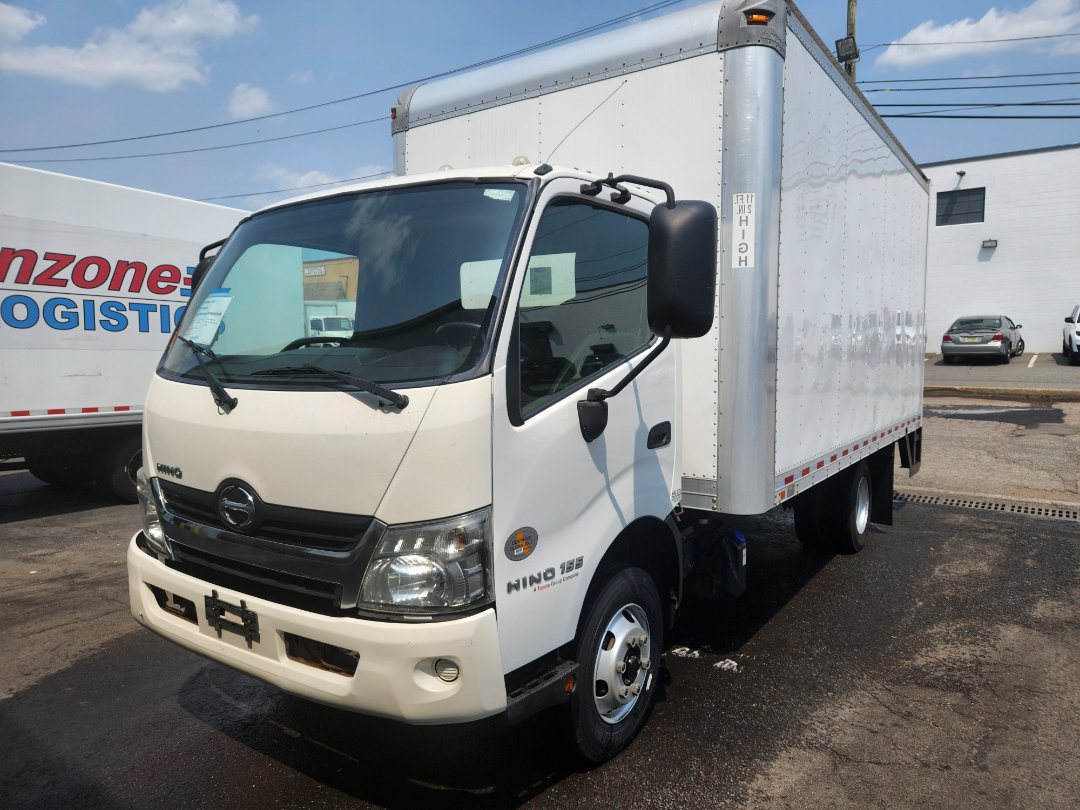
Showing 13 to 13 of 13 results
Have hino box truck to sell? List it here to reach thousands of buyers.
About Hino Box Trucks in New Jersey
One of the biggest buying decisions is CDL versus non-CDL operation. Many Hino box trucks are spec'd right under the 26,001-lb threshold, with GVWRs around 25,500 to 25,950 lbs, which makes them popular for fleets trying to widen the driver pool. Buyers comparing older Hino 338 models to newer Hino L6 trucks will usually notice the same basic priority: enough payload for a full 26-foot body without stepping into a heavier licensing requirement. Engine choices vary by year, with Hino J05 and J08 diesel engines common in older units and Cummins B6.7 power showing up in newer L Series trucks. Automatic transmissions from Allison or Aisin are typical, and they are well suited for frequent stop-and-go service.
Body spec matters as much as the truck itself. A box truck can be configured with plywood or slat-lined walls, E-track, curbside doors, roll-up rear doors, and tuck-away or rail-style liftgates depending on the freight. For appliance, beverage, route delivery, and general freight work, a 2,000-lb to 3,300-lb liftgate is a common target. Buyers should also check inside height and width, especially on 26-foot bodies where cube efficiency drives revenue. Morgan and other major body manufacturers are frequently paired with Hino chassis, and aluminum bodies can help control empty weight while resisting corrosion in Northeast service.
When comparing Hino box trucks for sale, pay attention to wheelbase, rear axle ratio, suspension, brake type, fuel tank size, and service history. A shorter wheelbase is easier in dense urban areas, while a longer wheelbase typically supports a 24-foot or 26-foot body with better load distribution. Features like heated power mirrors, air-ride driver seats, engine brake, and 11R22.5 rubber can make a real difference in day-to-day usability. For used Hino box trucks, maintenance records, current DOT inspection status, liftgate condition, and body floor wear deserve just as much scrutiny as engine mileage. A well-matched Hino box truck should give a buyer the right balance of payload, cargo cube, maneuverability, and operating cost for local or regional delivery work.
Frequently Asked Questions
What are the most common Hino box truck models for delivery work?
The most common Hino box truck models in this segment are the Hino 155 for lighter local delivery and the Hino 338 or Hino L6 for heavier medium-duty work. The 155 is often seen with 14-foot to 18-foot bodies and is well suited for urban routes, while the 338 and L6 are commonly paired with 24-foot to 26-foot van bodies for moving, distribution, and final-mile freight. The best model depends on payload needs, route density, and whether a non-CDL GVWR is important to the operation.
Is a Hino box truck available in a non-CDL configuration?
Yes. Many Hino box trucks are spec'd with a GVWR just under 26,001 lbs, commonly around 25,500 to 25,950 lbs. That setup is popular because it allows a 26-foot box in many cases without requiring a CDL, assuming no other licensing trigger applies. Buyers should still confirm the exact GVWR on the door tag and make sure the body, liftgate, and payload expectations all fit within that rating.
What should I check on a used Hino box truck before buying?
Start with engine and transmission service history, then inspect the body and liftgate with the same level of attention. Floor condition, roof leaks, wall damage, rear frame corrosion, roll-up door operation, and liftgate cycling all affect downtime and repair cost. On the chassis side, check tire wear, brake condition, suspension, steering play, and whether the truck has a current DOT inspection. If the truck is a 338 or other pre-emissions-era or older emissions-era unit, verify aftertreatment service records and confirm there are no active fault codes.
What body features are most useful on a Hino box truck?
The most useful body features depend on the cargo, but common priorities include E-track for load securement, slat or plywood liners to protect the walls, a curbside door for route stops, and a liftgate sized to the freight being handled. A roll-up rear door is standard for many applications, and interior LED lighting improves visibility for early morning or night deliveries. If payload is tight, an aluminum body can help keep empty weight down compared with heavier body constructions.
Are Hino box trucks good for city delivery in New Jersey?
Yes. Hino box trucks are a practical choice for city and regional delivery because they are available in multiple wheelbases and GVWR classes, with automatic transmissions and medium-duty chassis that handle repeated stop-and-go use well. In tighter New Jersey routes, maneuverability, mirror visibility, and body length are major considerations. A smaller Hino 155 may be easier in dense urban service, while a 338 or L6 makes more sense when cargo cube and liftgate capacity are the priority.