
Taylor Trucking Equipment For Sale
Browse Taylor trucking equipment for sale, including heavy-duty forklifts and industrial handling machines built for yard, dock, and cargo work.
Learn moreBrowse Taylor Trucking Equipment by Category
Have taylor trucking equipment to sell? List it here to reach thousands of buyers.
About Taylor Trucking Equipment
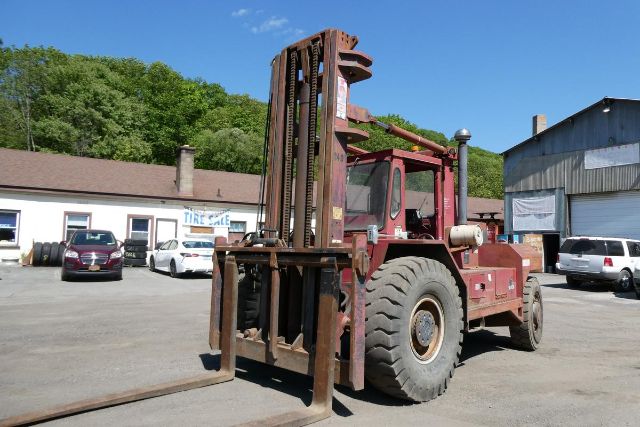
A Taylor forklift or industrial lift is typically built around a diesel powertrain, heavy steel chassis, and robust hydraulic system intended for repeated high-load cycles. Common specs to compare include rated capacity, fork length and thickness, side shift, mast height, lowered height for transport or storage, and tire type such as pneumatic or solid. On older machines, buyers should pay close attention to engine family, transmission operation, brake type, steer axle condition, cylinder leakage, and hour meter accuracy. Parts support matters too, especially on legacy units, so it is smart to confirm serial number details and service history before purchase. Machines in this class are often used outside, so condition of pins, bushings, mast rails, chains, and hydraulic hoses can tell you a lot about remaining life.
For trucking operations, the right Taylor equipment can reduce dependence on third-party loading equipment and speed up yard handling of crated freight, pipe, lumber packs, machinery, and other dense commodities. Capacity should be matched to the heaviest routine load, not the occasional light pallet, and buyers should also consider turning radius, visibility from the cab, and surface conditions in the yard. Air-filled tires may ride better on rough ground, while solid tires can make sense where puncture risk is high. If the machine will load open-deck trailers, pay attention to fork length, carriage width, lift height, and stability with elevated loads. A partially enclosed or full cab can also matter depending on weather exposure and shift length.
Taylor has long been associated with big lift trucks that are built to work in demanding environments, and that reputation makes condition assessment especially important. A lower-priced older machine can still be productive if the hydraulics are strong, the driveline shifts cleanly, and the mast and carriage components are tight. Buyers comparing Taylor trucking equipment for sale should think in terms of application fit, serviceability, and total cost of ownership rather than purchase price alone. In this category, a machine that is correctly sized and mechanically sound will usually outperform a cheaper unit that is underspecified or worn out.
Frequently Asked Questions
What kind of trucking equipment is Taylor best known for?
Taylor is best known for heavy-duty industrial lift trucks and material handling equipment used in freight yards, ports, lumber operations, steel handling, and other demanding environments. In trucking-related settings, Taylor machines are commonly used to load and unload flatbeds, move heavy cargo in the yard, and handle materials that exceed the practical limits of standard warehouse forklifts.
What should I check first when buying a used Taylor forklift or heavy lift machine?
Start with rated lift capacity, mast condition, hydraulic performance, and driveline operation. Then inspect forks, carriage, lift chains, cylinders, steer axle, brakes, tires, and frame for wear or damage. On older equipment, verify the engine model, transmission function, serial number, and hour meter credibility, because many machines in this class have worked in severe duty cycles for years.
Are older Taylor machines still practical to own?
Yes, many older Taylor machines can still be practical if they have been maintained properly and matched to the right application. Heavy industrial forklifts are often built with durable components and can remain productive well beyond the age that lighter equipment would be retired. The key is confirming parts availability, checking for hydraulic and mast wear, and making sure the machine's capacity and dimensions still fit the work you need it to do.
How do I choose the right lift capacity for Taylor equipment?
Choose capacity based on your heaviest routine load, the load center, and the height at which the load must be handled. Capacity ratings can change depending on fork length, attachment type, mast position, and load shape, so the number on the data plate should not be treated as a blanket rating for every job. A machine sized too close to the limit can create stability issues, slower cycle times, and unnecessary wear.
What features matter most for loading trucks and trailers with Taylor equipment?
For truck and trailer loading, the most important features are adequate lift capacity, proper fork length, side shift, good forward visibility, and stable operation on the yard surface you actually have. Mast height and lowered height matter if the machine must work around docks, sheds, or transport restrictions. Tire type, cab configuration, and turning radius also affect how efficiently the machine works in a busy terminal or outdoor loading area.