
Yale Lifts - Fork For Sale in New York
Shop Yale fork lifts for sale in New York. Compare lift capacity, mast height, fuel type, attachments, tire setup, and overall condition.
Learn more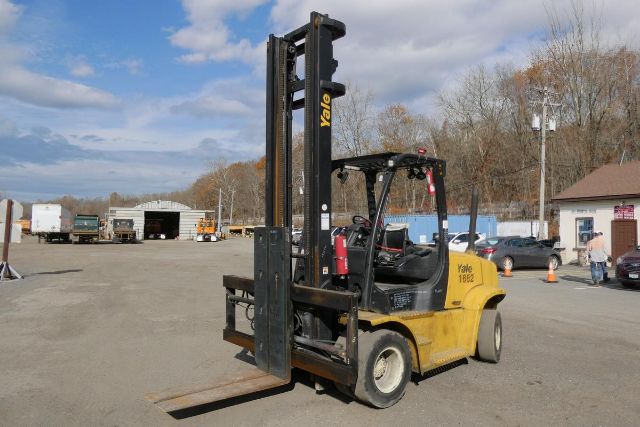
Have yale lifts - fork trucking equipment to sell? List it here to reach thousands of buyers.
About Yale Lifts - Fork in New York
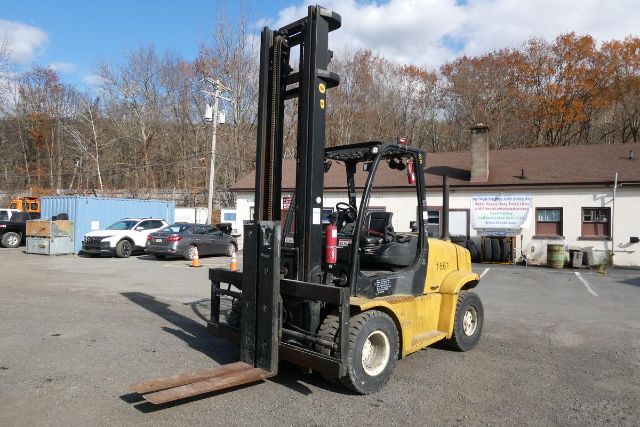
Fuel type and tire configuration tell you a lot about where the machine was designed to work. Many larger Yale fork trucks use LPG or dual-fuel gasoline-propane setups, which are popular because they refuel quickly and perform well in mixed indoor-outdoor service. Pneumatic or solid pneumatic tires are common on yard and lot trucks that see rough pavement, gravel, and dock approaches. Cushion tire models are better suited to smooth warehouse floors but are less forgiving outside. Buyers in New York often need to think about cold-weather starts, enclosed cab needs, and how the truck performs on uneven surfaces, snow residue, or seasonal yard debris.
Mast spec matters as much as rated lift capacity. A forklift may be rated for a strong base capacity, but actual safe lifting changes with load center, fork length, attachment weight, and lift height. Common features on larger Yale lifts include duplex or double masts, side shift, fork positioners, tilt functions, and sometimes auto leveling or telematics. Those options improve productivity when handling mixed pallet sizes or loading flatbeds and vans, but they also add hydraulic components that should be checked closely. On a used unit, pay attention to mast wear, chain condition, carriage play, steer axle response, brake feel, hydraulic leaks, hour meter accuracy, and whether the truck lifts smoothly under load.
For buyers comparing Yale fork trucks for sale, the practical question is how the machine fits the freight being handled every day. Fork dimensions, collapsed mast height, overall width, and service weight affect trailer access, dock clearance, and transport planning. A high-capacity Yale forklift can be an efficient yard asset, but only if the truck has the right attachment package and enough remaining life in the drivetrain, hydraulics, and mast assembly. Yale remains a recognized name in material handling because these machines are built for repetitive duty cycles, and a well-matched unit can support loading efficiency, safer handling, and lower downtime across terminal, warehouse, and industrial applications.
Frequently Asked Questions
What should I check first when buying a used Yale fork lift?
Start with rated capacity, mast type, and actual application fit. Then inspect the hydraulic system, mast channels, lift chains, carriage rollers, steering response, brakes, and tire condition. On LPG models, confirm the fuel system is clean and complete. If the unit has side shift, fork positioners, or telematics, verify every function works properly because attachment repairs can add significant cost after purchase.
Are Yale forklifts good for outdoor freight and yard work?
Many Yale forklifts are well suited for outdoor freight handling, especially pneumatic tire and high-capacity models. These units are commonly used on loading lots, construction supply yards, and industrial properties where surface conditions are rougher than a warehouse floor. The right setup usually includes adequate ground clearance, solid or pneumatic tires, strong cooling performance, and a mast height that balances stacking needs with visibility and stability.
How important is mast height on a Yale fork truck?
Mast height is critical because it affects both storage capability and clearance. Buyers need to know the lowered mast height for door access and trailer loading, along with maximum lift height for racking or stacking. A taller mast is not always better if it reduces visibility or limits where the forklift can travel. Capacity also changes as lift height and load center increase, so mast choice should always be evaluated with the intended load.
What attachments are common on larger Yale forklifts?
Common attachments include hydraulic side shift, fork positioners, specialty forks, paper roll clamps, and other application-specific handling tools. On freight and yard units, side shift and fork positioners are especially useful because they speed up trailer loading and let the operator handle different pallet widths without leaving the seat. Buyers should remember that attachments add weight and can reduce effective lifting capacity, so the truck's data plate and hydraulic performance need to be reviewed carefully.