
Hyundai Lifts - Fork For Sale in New York
Shop Hyundai fork lifts and forklift equipment with diesel or LPG power, varied lift capacities, mast options, and warehouse or yard-ready specs.
Learn more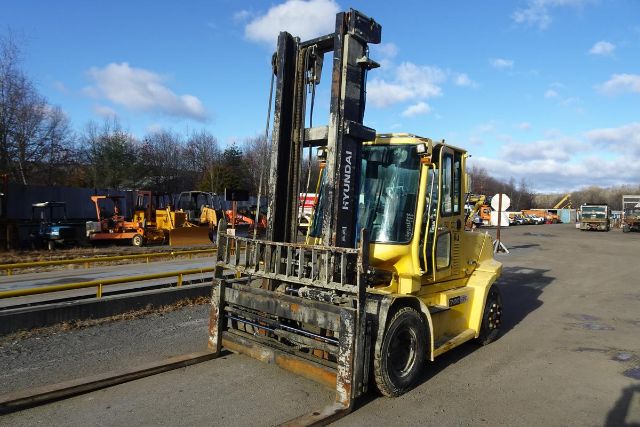
Have hyundai lifts - fork trucking equipment to sell? List it here to reach thousands of buyers.
About Hyundai Lifts - Fork in New York
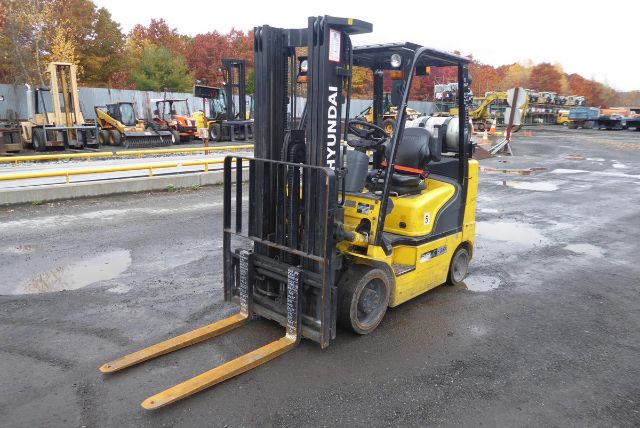
Capacity and tire type are usually the first two decisions. Smaller Hyundai fork trucks in the 4,000 to 6,000 lb class are often set up with cushion tires for smooth concrete floors, tighter turning radius, and indoor warehouse use. Larger units can move well into the 10,000 lb to 15,000 lb range and beyond, typically with pneumatic tires for better traction on asphalt, gravel, and uneven yard surfaces. Buyers should compare not just rated lift capacity, but capacity at the actual load center, maximum lift height, collapsed mast height, and whether the truck has a duplex or triple mast. A triple mast helps in low-clearance buildings while still providing higher stacking height, but it adds complexity and can affect visibility.
Powertrain choice matters based on duty cycle and operating environment. LPG Hyundai forklifts are common in mixed indoor-outdoor applications because they refuel quickly and tend to be a practical fit for warehouses and distribution work. Diesel Hyundai fork lifts are better suited for heavier outdoor use, longer run times, and higher-capacity applications where torque and durability matter. On any used unit, buyers should pay close attention to hour meter reading, cold-start behavior, transmission engagement, mast chain wear, carriage slack, steer axle condition, and hydraulic cylinder seepage. Features like hydraulic side shift and hydraulic fork positioners can add real productivity if operators regularly handle different pallet widths, bundles, or irregular loads.
For New York buyers, operating conditions often make enclosed cabs, good heater function, and tire selection more important than they look on paper. Cold-weather starts, wet yards, dock approaches, and indoor clearance limits can all change the right spec. Fork length, overall width, overhead guard height, and mast lowered height should be checked against door openings, trailer loading work, and rack systems before purchase. A well-matched Hyundai fork truck can be a cost-effective choice for warehousing, freight handling, building materials, machinery moving, and general industrial use, especially when the machine’s capacity, mast configuration, fuel type, and tire setup match the job instead of just the price tag.
Frequently Asked Questions
What lift capacities are common on Hyundai fork lifts?
Hyundai fork lifts are available in a wide range of capacities, from smaller warehouse units around 4,000 to 5,000 lbs up to heavier industrial forklifts rated at 15,000 lbs or more. The rated capacity should always be checked at the stated load center and lift height, because a truck’s effective lifting ability can drop when loads are longer, taller, or handled higher in the mast travel.
Should I choose a diesel or LPG Hyundai forklift?
Diesel Hyundai forklifts are generally the better fit for outdoor work, heavier loads, and longer duty cycles where torque and fuel efficiency matter. LPG models are popular for warehouse and mixed-use applications because they refuel quickly and can be more practical around loading docks and indoor work areas, provided ventilation requirements are met.
What is the difference between a duplex mast and a triple mast on a Hyundai fork truck?
A duplex mast is a two-stage mast design that is typically simpler and often preferred when maximum lift height is moderate. A triple mast adds an extra stage, allowing higher lift heights while keeping the collapsed height lower for doorway or trailer clearance. The tradeoff is that triple masts can add cost, complexity, and a little more restricted forward visibility.
What used forklift features add the most value in daily operation?
Hydraulic side shift is one of the most useful options because it lets the operator fine-tune fork position without repositioning the whole truck. Hydraulic fork positioners are also valuable when load widths vary throughout the day. Enclosed cabs, solid or pneumatic tire setups matched to the surface, and a mast configuration suited to your rack or trailer work can have a bigger impact on productivity than cosmetic condition.
What should I inspect first on a used Hyundai fork lift?
Start with the basics that affect uptime and safety: engine start-up, exhaust condition, transmission response in forward and reverse, brake performance, steering play, mast lift and tilt function, chain wear, and any leaks at hydraulic hoses or cylinders. Then confirm the data plate, hour meter, tire condition, fork wear, and mast lowered height so the forklift matches your building clearance and load requirements.