
Lifts - Boom For Sale
Shop boom lifts and aerial lifts for elevated access work. Compare platform height, outreach, drive type, capacity, and jobsite suitability.
Learn moreBrowse Lifts - Boom Trucking Equipment by Make
Have lifts - boom trucking equipment to sell? List it here to reach thousands of buyers.
About Lifts - Boom
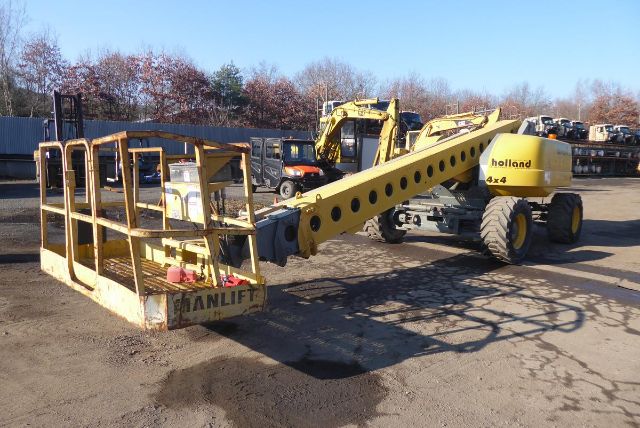
The most important buying decisions are lift type, capacity, and chassis configuration. Articulating boom lifts use multiple joints to reach up and over obstructions, while telescopic boom lifts offer longer straight-line reach and are often preferred for open jobsites. Platform capacities commonly vary by model and working envelope, and many units are rated for one or two occupants plus tools. On rough terrain machines, 4WD, oscillating axles, and higher ground clearance matter for undeveloped sites. Compact electric units fit indoor work and slab applications, while diesel-powered rough terrain booms are more common outdoors where gradeability and travel speed matter.
Pay close attention to the machine’s overall dimensions, weight, and transport requirements. Stowed height and width affect gate access and trailer choice, and machine weight matters for bridge law, trailer capacity, and floor loading inside plants or warehouses. Hydraulic condition is a major inspection point on used boom lifts. Buyers should check cylinder seepage, hose age, basket controls, emergency lowering functions, turntable operation, and wear in pins and bushings. Tire type, axle steering mode, and drivetrain also affect maneuverability and operating cost. Service history, ANSI compliance, and hour meter readings help establish remaining life, but function under load is usually more important than appearance.
A good boom lift should match the jobsite, not just the maximum height on the decal. Tight urban work may favor a narrower unit with precise controls and low tail swing. Utility and roadside work may demand rough terrain capability, strong outreach, and stable operation on uneven ground. Industrial users often focus on non-marking tires, electric power, and compact storage dimensions. Comparing lift height, outreach, platform capacity, drive system, and transport footprint will narrow the field quickly and make it easier to choose a boom lift that earns its keep without creating access or maintenance problems.
Frequently Asked Questions
What is the difference between an articulating boom lift and a telescopic boom lift?
An articulating boom lift has multiple hinged sections that let the platform move up, out, and over obstacles. It is usually the better choice for work around structures, pipe racks, rooflines, and other blocked access points. A telescopic boom lift uses a straight extending boom and is typically chosen for maximum horizontal reach and faster positioning in open areas where there are fewer obstructions.
How do I choose the right boom lift size?
Start with platform height, not just working height, and then confirm horizontal outreach at the required elevation. After that, check platform capacity for the number of occupants, tools, and materials you expect to carry. Buyers should also verify stowed dimensions, machine weight, gradeability, drive type, and surface conditions so the lift can actually get into and operate on the jobsite.
Are diesel or electric boom lifts better?
Diesel boom lifts are generally better for outdoor work, rough terrain, and longer duty cycles. They usually offer better traction, higher ground clearance, and stronger jobsite mobility. Electric boom lifts are often preferred indoors or on finished surfaces because they run quieter, produce no tailpipe emissions, and may use non-marking tires. The correct choice depends on the work environment, charging or fueling access, and the machine’s required duty cycle.
What should I inspect on a used boom lift?
Focus on hydraulic performance, structural condition, and safety systems. Check for leaks at cylinders, valves, hoses, and the turntable, and confirm smooth operation through the full range of boom functions. Inspect the basket, pins, bushings, weld areas, tires, steering response, and emergency lowering controls. Service records, fault codes, safety decals, and proof of regular inspection are also important because deferred maintenance can be expensive on aerial equipment.
Can a boom lift be used on uneven ground?
Some boom lifts are designed for uneven ground, but not all. Rough terrain models with 4WD, larger tires, and better ground clearance are intended for outdoor jobsites and mild off-road conditions. Even then, the machine must be operated within the manufacturer’s limits for slope and setup. Slab units are intended for firm, level surfaces and are not the right choice for soft ground or heavily rutted terrain.