
Gradall Trucking Equipment For Sale
Shop Gradall trucking equipment listings including wheeled excavators and truck-mounted machines built for road work, utility digging, and municipal jobs.
Learn moreBrowse Gradall Trucking Equipment by Category
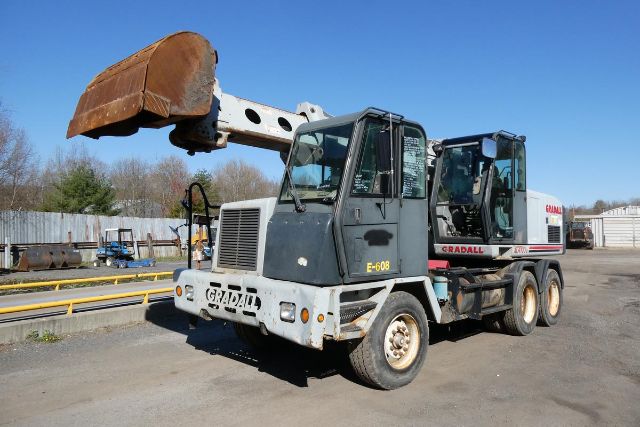
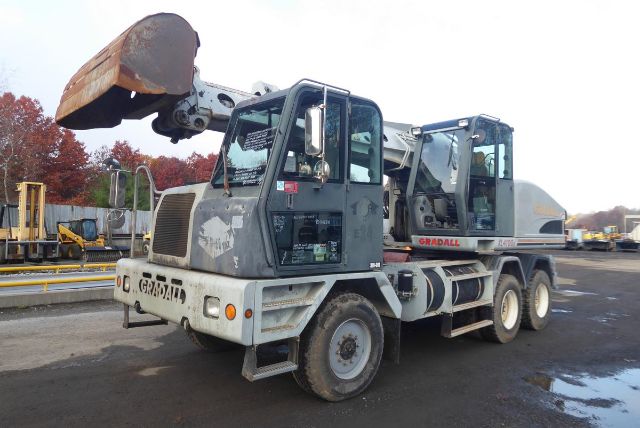
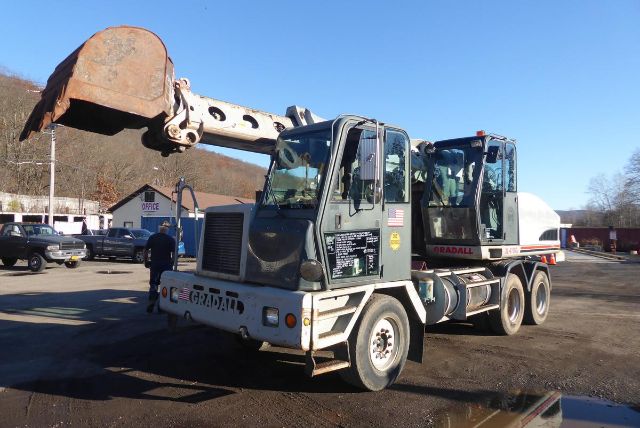
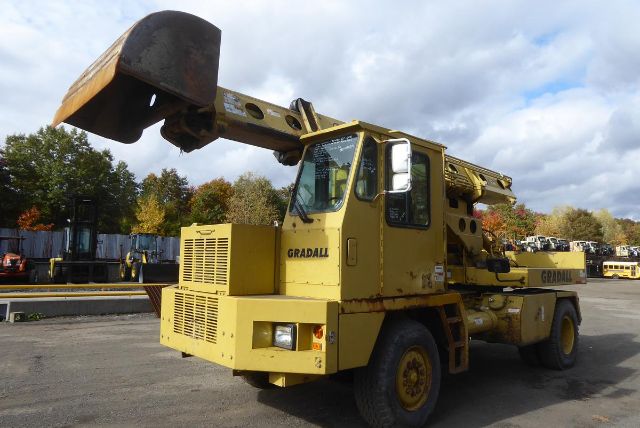
Have gradall trucking equipment to sell? List it here to reach thousands of buyers.
About Gradall Trucking Equipment
The main buying decisions usually start with upper structure and drivetrain layout. Common used units in this category are powered by Cummins or Mercedes diesel engines, often paired with Fuller 9-speed manual transmissions or Allison automatics, with heavy Rockwell or Meritor rear axles and beam suspensions. GVW and operating weight can vary significantly by series, but many larger XL4100 machines run in the upper 40,000-pound range and use 46,000 to 50,000-pound rear axle ratings. Buyers should pay close attention to engine hours versus odometer miles, since these machines often spend long periods working hydraulics at low road mileage. On older units, hydraulic cylinder seepage, drive motor performance, boom wear, turntable condition, and play in pins and bushings matter as much as the truck chassis itself.
Attachment and boom configuration have a direct effect on productivity. Gradall excavators are known for telescopic, tilting booms that give them a different working envelope than a standard knuckle or conventional excavator. Bucket size, tooth or smooth-edge setup, auxiliary hydraulics, and quick-change arrangements all affect how well the machine fits ditch shaping, culvert work, trenching, demolition cleanup, or shoulder maintenance. Stabilizer condition is another key inspection point, especially on machines used in repeated roadside excavation. Cab layout also matters because many Gradall units have dual-control or specialized operating stations, and buyers should confirm that gauges, HVAC, swing functions, extend-retract boom functions, and travel controls all operate correctly.
A good used Gradall should be evaluated as both a truck and a hydraulic excavator. That means checking the frame, transmission, axle ratios, tires, wheel ends, brakes, and roadability, then separately reviewing hydraulic response, boom drift, swing bearing wear, pump condition, and attachment fitment. Parts support, service access, and technician familiarity can vary by region, so buyers should also consider local support for Gradall-specific hydraulic and boom systems. For the right application, Gradall trucking equipment fills a niche that standard dump trucks, backhoes, and crawler excavators cannot match. It is especially valuable where crews need one machine that can travel legally on roads, set up fast, and handle excavation or maintenance work without a lowboy move between every stop.
Frequently Asked Questions
What is Gradall trucking equipment commonly used for?
Gradall trucking equipment is commonly used for roadside excavation, ditch maintenance, utility trenching, culvert installation, bridge and canal cleaning, rail work, and municipal maintenance. Its biggest advantage is the ability to travel between jobs like a truck while still performing excavation work with a telescoping boom. That combination makes it especially practical for contractors and public agencies handling multiple short-duration jobs across a broad territory.
What should I inspect first on a used Gradall machine?
Start with the hydraulic system and boom structure, because those components define the machine's working value. Check for cylinder leaks, boom drift, weak hydraulic drive motors, worn pins and bushings, excessive swing bearing play, and poor response under load. After that, inspect the truck side of the unit including engine condition, transmission operation, axle ratings, brakes, tires, frame integrity, and signs of hard municipal or roadside service such as corrosion or underbody damage.
How is a Gradall different from a conventional wheeled excavator?
A Gradall uses a telescoping, often tilting boom that gives it a distinct working range and better reach for ditch shaping, sloping, and work over obstacles such as guardrails or uneven shoulders. Many Gradall units are also designed for strong road mobility and truck-like travel between sites. A conventional wheeled excavator may offer different attachment flexibility or operator familiarity, but a Gradall often stands out in highway and maintenance applications where repositioning speed and reach geometry are critical.
Do miles or hours matter more on a used Gradall?
Both matter, but engine and hydraulic working hours are often more important than odometer miles. Many Gradall machines accumulate relatively low road mileage while spending thousands of hours running the boom, pumps, and hydraulic functions on job sites. A unit with modest miles can still have significant wear in the hydraulic system, swing components, and boom sections, so buyers should evaluate usage history in both categories instead of relying on mileage alone.
Which specs matter most when comparing Gradall listings?
The most important specs usually include engine model and horsepower, transmission type, rear axle rating, operating weight, wheelbase, boom configuration, bucket setup, and overall hydraulic condition. Buyers should also confirm whether the excavator functions run from the truck engine or a separate power source, because that affects maintenance and troubleshooting. Tire size, frame type, stabilizer condition, and transport dimensions are also important if the machine will be used on restricted roads, in urban areas, or on state and county right-of-way work.