
Used Link Belt Excavators For Sale
Used Link-Belt excavators for sale, including hydraulic crawler models built for digging, loading, trenching, demolition, and site work.
Learn more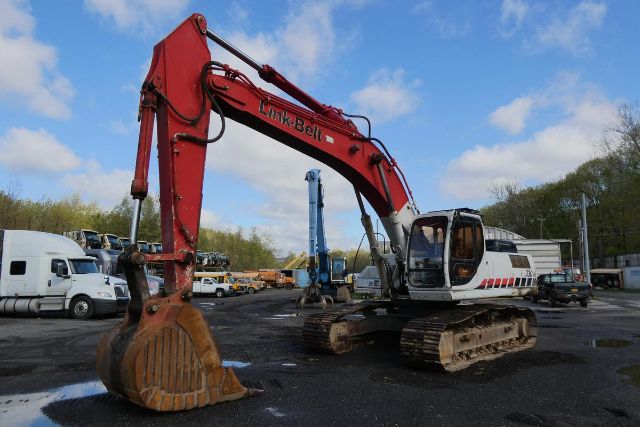
Have used link belt excavators trucking equipment to sell? List it here to reach thousands of buyers.
About Used Link Belt Excavators
One of the first decisions is size class. A machine in the 30-ton range, such as a Link-Belt 330 series, is a common choice for mass excavation, trenching, pipe installation, truck loading, and heavier site prep. Typical specs in this class include a diesel engine in the mid-200 hp range, hydrostatic travel, an enclosed cab, and operating weights that can approach 78,000 pounds depending on stick, bucket, guards, and track setup. Buyers should pay close attention to boom length, stick length, auxiliary hydraulics or third valve plumbing, bucket width and tooth condition, and whether the machine is set up for hammers, thumbs, or other attachments.
Condition matters most in the hydraulic system and undercarriage. On a used excavator, inspect boom, stick, and bucket pins and bushings for play, check cylinders for seepage or pitting, and look for pump noise, slow functions, or weak travel that can point to hydraulic wear. Undercarriage life has a major effect on ownership cost, so rails, pads, rollers, idlers, and sprockets deserve a close look. Triple grouser pads are common on crawler excavators used in mixed dirt conditions, but pad width should match the work and flotation needs. Cab condition also matters more than many buyers expect. Working A/C, clear monitors, responsive controls, and intact glass all affect operator productivity over a long shift.
Transport and jobsite fit should be part of the buying decision. Shipping length, overall width, cab height, and lowered boom height determine how easily a machine can move between jobs and what trailer and permitting requirements may apply. A larger used Link-Belt excavator can be a strong value when the structure is tight, the hydraulics are healthy, and the service history is documented. For buyers comparing multiple listings, the best machine is usually the one with the cleanest undercarriage, the least pin and cylinder wear, the right boom-stick-bucket combination, and hydraulic options that match the attachments the work actually requires.
Frequently Asked Questions
What should I inspect first on a used Link-Belt excavator?
Start with the undercarriage, hydraulic system, and structural components. Measure wear on rails, sprockets, rollers, and idlers, then check for leaks or seepage at the boom, stick, and bucket cylinders. Look for excessive movement in pins and bushings, inspect the boom and stick for weld repairs or cracks, and confirm the machine tracks straight, swings smoothly, and has full digging power under load.
Is a 30-ton Link-Belt excavator a good general-purpose size?
Yes. A 30-ton class machine is one of the most versatile sizes in the excavator market because it can handle trenching, site development, truck loading, utility installation, and heavier excavation without moving into the largest transport and access constraints. It is large enough for production work but still common enough to support a broad range of buckets, thumbs, hammers, and hydraulic attachments.
How important is auxiliary hydraulics or a third valve on a used excavator?
It is very important if the machine will run more than a standard bucket. Auxiliary hydraulics or third valve plumbing allow the excavator to operate attachments such as hydraulic thumbs, breakers, compactors, and specialty tools. Adding plumbing later can be expensive, so a machine already equipped for the intended attachments can lower setup cost and reduce downtime.
What affects the value of a used Link-Belt excavator the most?
Hours matter, but condition usually matters more. A machine with higher hours and a strong maintenance record can be a better buy than a lower-hour machine with a worn undercarriage, weak hydraulics, or poor structural condition. Buyers place the most value on undercarriage life, pump and cylinder health, engine performance, attachment readiness, and documented service history.
Do transport dimensions matter when buying a used excavator?
Yes. Operating weight, shipping length, overall width, and lowered boom height affect trailer choice, route planning, and permit requirements. A machine may fit the production target on the jobsite but still create higher hauling cost or reduced flexibility if it is too wide, too tall, or too heavy for the fleet moving it between jobs.