
Link Belt Excavators For Sale in New York
Shop Link-Belt excavators for sale in New York. Compare operating weight, reach, hydraulic setup, undercarriage condition, and attachment fit.
Learn more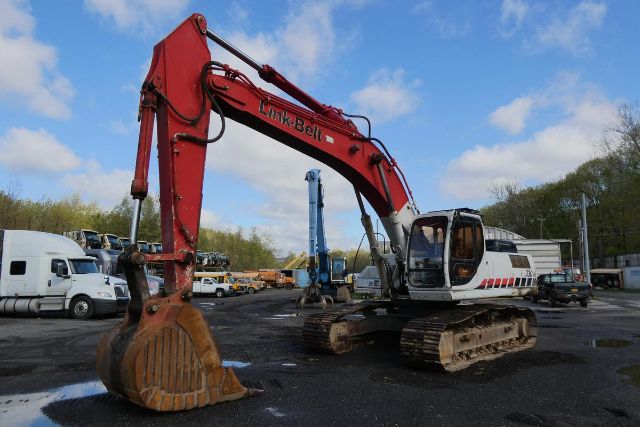
Have link belt excavators trucking equipment to sell? List it here to reach thousands of buyers.
About Link Belt Excavators in New York
A buyer comparing Link-Belt excavators should look closely at operating weight, boom and stick configuration, bucket size, auxiliary hydraulics, and track setup. Standard and long-reach configurations serve different applications, and the hydraulic package matters if the machine will run thumbs, hammers, plate compactors, or specialty attachments. Undercarriage condition is a major value driver on any crawler excavator. Track pads, rollers, idlers, sprockets, and chain wear can change ownership cost fast. Cab layout, visibility, climate control, and control pattern options also matter for operator productivity, especially on longer shifts.
On larger models, engine horsepower, hydraulic flow, and lift capacity become more important than headline digging depth alone. Buyers should match the machine to the truck loading target, trench depth, pipe handling needs, and production cycle times expected on the job. Many contractors also pay attention to transport logistics, since some excavators may require permits, specific trailer configurations, or partial disassembly depending on width, boom length, and total shipping weight. In tighter Northeast markets, reduced tail swing models can be attractive for road work, municipal projects, and confined commercial sites.
Link-Belt excavators are also known for being practical fleet machines when parts support, serviceability, and attachment compatibility are part of the buying decision. A careful evaluation should include pin and bushing play, cylinder seepage, swing bearing condition, pump response, final drives, and any signs of structural repair on the boom, stick, or carbody. For buyers shopping this equipment class, the best unit is usually the one sized correctly for the work, equipped with the right hydraulic options, and supported by a clean inspection history rather than simply the newest year model.
Frequently Asked Questions
What should I check first when buying a used Link-Belt excavator?
Start with the undercarriage, hydraulic system, and structural condition. Undercarriage wear can represent a major future expense, so inspect the chains, sprockets, rollers, idlers, and pad condition closely. Then check boom, stick, and bucket cylinders for leaks, test swing and travel functions, and look for pin and bushing wear. It is also important to inspect for weld repairs or cracks around the boom foot, stick, house, and carbody.
Are Link-Belt excavators good for attachment work?
Many Link-Belt excavators are well suited for attachment use if they are equipped with the correct auxiliary hydraulics and valve configuration. Buyers planning to run a hydraulic hammer, thumb, compactor, or specialty tool should confirm flow rates, pressure settings, return lines, and control setup before purchase. The right hydraulic package can make a major difference in performance, attachment compatibility, and long-term reliability.
How do I choose the right size Link-Belt excavator for my work?
Match the excavator to the material volume, trench depth, lift requirements, and access limitations of the job. Compact and mid-size machines are often better for utility work, residential construction, and tight commercial sites, while larger crawler excavators make more sense for deep excavation, truck loading, and production earthmoving. Transport requirements also matter, since machine width and total shipping weight can affect trailer choice, permit needs, and overall mobility between jobs.
Why is undercarriage condition so important on a crawler excavator?
The undercarriage is one of the most expensive wear areas on any excavator, and its condition directly affects operating cost. A machine with worn rails, thin pads, bad rollers, or hooked sprockets may still move and dig, but it can require significant investment soon after purchase. Measuring wear and checking track tension, alignment, and component life remaining gives a clearer picture of the machine's true value.
Do reduced tail swing Link-Belt excavators make sense for New York job sites?
Reduced tail swing models can be a strong fit for dense urban and suburban work where space is limited and traffic control is a factor. They are commonly considered for road work, utility installation, and commercial sites with barriers, buildings, or active lanes nearby. The tradeoff is that buyers should still confirm lift capacity, front stability, and attachment suitability for the intended application.