
Used John Deere Dozers & Crawler Tractors For Sale
Shop used John Deere dozers and crawler tractors. Compare sizes, undercarriage, blade setups, hydrostatic drive, and jobsite applications.
Learn more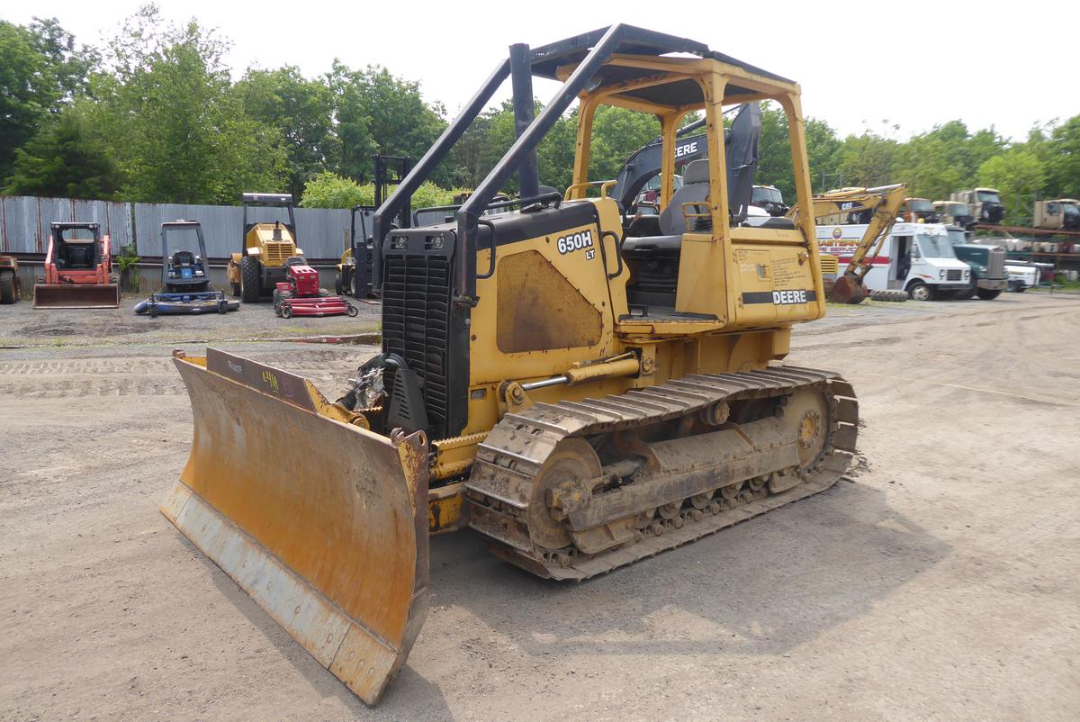
Have used john deere dozers & crawler tractors trucking equipment to sell? List it here to reach thousands of buyers.
About Used John Deere Dozers & Crawler Tractors
A used John Deere dozer should be evaluated heavily on undercarriage life because rails, pads, rollers, idlers, sprockets, and adjusters can represent a major share of ownership cost. Blade type matters just as much. Many buyers prefer a 6-way PAT blade for finish work, shaping, backfilling, and versatile grading, while straight or semi-U blades are more common when pushing larger volumes of material. John Deere hydrostatic transmissions are a major selling point in this category because they allow smooth directional changes, good modulation, and precise control in grading applications. Track width, grouser style, ground pressure, and overall machine width also matter if the machine will be hauled regularly or used in muddy, sandy, or highly compacted conditions.
Engine condition, cooling system performance, and hydraulic response are key inspection points on any used crawler tractor. Buyers should pay attention to cold starts, blow-by, steering response, travel strength under load, and any seepage at blade cylinders, final drives, or hydraulic hoses. Blade pins and bushings, equalizer bar wear, and track frame condition can tell you a lot about how the machine was used and maintained. Cab or open ROPS configuration is another practical consideration. An enclosed cab can be a better fit for long hours, dust control, and cold-weather work, while open station machines may appeal to buyers looking for simplicity and lower acquisition cost.
For hauling and job matching, machine dimensions and transport weight deserve close attention. Smaller John Deere crawler tractors can be easier to move behind a tag trailer and may fit owner-operator or property maintenance use, while heavier dozers require more planning for permits, trailer capacity, and daily transport cost. The best used John Deere dozer for a buyer is usually the one with the strongest remaining undercarriage, a blade setup that matches the work, and service records that support the hour meter. A lower-hour machine is not automatically the better value if undercarriage wear, hydraulic issues, or neglected maintenance offset the savings.
Frequently Asked Questions
What should I check first on a used John Deere dozer?
Undercarriage condition should be one of the first items checked because it is one of the most expensive wear systems on a crawler tractor. Inspect track rails, sprockets, rollers, idlers, pads, and adjusters, then compare the remaining life to the asking price. After that, evaluate the hydrostatic drive, blade hydraulics, engine performance, final drives, and any structural wear around the blade linkage and track frames.
Are John Deere hydrostatic dozers good for finish grading?
Yes. John Deere hydrostatic crawler dozers are widely used for finish grading because they offer smooth speed control, easy forward-to-reverse transitions, and precise steering input. That control helps operators feather the blade, maintain grade, and work efficiently in tighter spaces. Machine balance, blade type, undercarriage condition, and operator skill still affect grading quality, but hydrostatic drive is a strong advantage in this application.
How important is blade type on a used crawler tractor?
Blade type has a direct impact on how well the machine matches the work. A 6-way PAT blade is typically the most versatile option for grading, shaping, ditching, backfilling, and general site work because it can angle and tilt. Straight and semi-U blades are often preferred for pushing and carrying more material. Buyers should match the blade to the primary job, not just choose by machine size or price.
Do operating hours tell the full story on a used dozer?
No. Hours matter, but they do not tell the full story without maintenance records, undercarriage measurements, and a proper operating inspection. A machine with higher hours and documented service can be a better buy than a lower-hour unit with worn rails, weak hydraulics, or neglected cooling and final drive service. Condition, wear history, and repair quality are usually more important than the meter by itself.
What makes a crawler dozer better than a wheeled machine for some jobs?
A crawler dozer puts more surface area on the ground through its tracks, which improves traction and flotation on soft, muddy, uneven, or sloped terrain. That makes it well suited for pushing material, rough grading, clearing, and working where wheeled equipment may spin or sink. The tradeoff is slower travel speed and higher undercarriage wear, so buyers should balance terrain needs against transport frequency and total operating cost.