
Massey Ferguson Backhoes For Sale
Shop Massey Ferguson backhoes for digging, trenching, loading, and farm or contractor work, with buyer tips on specs, hydraulics, drivetrains, and size.
Learn more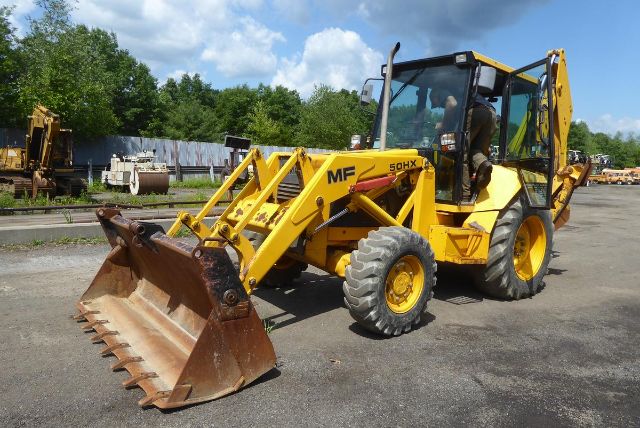
Have massey ferguson backhoes trucking equipment to sell? List it here to reach thousands of buyers.
About Massey Ferguson Backhoes
On many Massey Ferguson backhoes, a Perkins diesel is a major selling point because parts support and field service familiarity are still strong in many markets. Machines in this class often fall into the mid-size range, with operating weights around 14,000 to 16,000 pounds, enough mass for stable digging without becoming difficult to haul. A 4-speed transmission, mechanical controls, and closed ROPS or cab configurations are common on older models. Four-wheel drive matters if the machine will spend time in mud, on loose fill, or moving material with a loaded front bucket. Tire condition, axle wear, and steering response deserve close attention because these machines often split time between loader work and repeated travel around a property or site.
Hydraulic condition is usually the deciding factor on a used backhoe. Look for smooth boom, dipper, bucket, and stabilizer functions without chatter, drift, or weak cycle times. Minor seepage at cylinders is not unusual on an older machine, but excessive leakage, loose pins and bushings, or visible slop at the hoe linkage can point to higher repair costs. Many buyers also prefer a 4-in-1 front bucket because it adds clamping, grading, and material-handling flexibility beyond standard loader work. Rear bucket width should match the work. Narrow buckets make more sense for trenching and utility cuts, while wider buckets help with general excavation and cleanup.
Transport and job fit are just as important as brand preference. A Massey Ferguson backhoe may be compact enough for easier trailer moves than larger construction hoes, but buyers should still confirm shipping length, overall width, transport height, and machine weight before committing to a haul plan. Check how the machine starts cold, how quickly the hydraulics build pressure, and whether the transmission shifts cleanly under load. For farm use, acreage maintenance, drainage work, and light contractor service, a well-kept Massey Ferguson backhoe can still be a practical machine with the right balance of size, digging capability, and operating simplicity.
Frequently Asked Questions
What should I check first on a used Massey Ferguson backhoe?
Start with the hydraulic system, engine, and structural wear points. A used backhoe should raise, dig, curl, and stabilize smoothly without hesitation or excessive drift. Inspect cylinders for leakage, pins and bushings for looseness, and the boom, dipper, loader arms, and frame for cracks or weld repairs. On Massey Ferguson units, buyers also pay close attention to Perkins diesel cold starts, transmission engagement, brake function, and front axle condition, especially on 4WD machines.
Are Massey Ferguson backhoes good for farm and property maintenance work?
Yes. Massey Ferguson backhoes are often a strong fit for farms, ranches, large properties, and light contractor work because they combine loader capability with digging performance in one machine. They are commonly used for drainage, culvert installation, trenching, stump removal, material handling, and cleanup. Older models are especially appealing to buyers who want a simpler mechanical machine that can be maintained without relying heavily on electronic systems.
Is 4WD important on a Massey Ferguson backhoe?
Four-wheel drive is a major advantage if the machine will work in soft ground, mud, gravel, or uneven terrain. It improves loader traction, helps the machine climb out of excavations or loose fill, and generally makes a backhoe more versatile across changing site conditions. A 2WD machine can still work well on firm ground and for lighter duty, but many buyers prefer 4WD because it holds value well and expands the range of jobs the machine can handle.
What bucket and attachment setup makes the most sense on a backhoe?
That depends on the work mix. A 4-in-1 front bucket is valuable for buyers who need one machine to load, clamp, grade, and backdrag. On the rear, a narrower digging bucket is better for trenching and utility work, while a wider bucket improves production on general excavation and cleanup. Buyers should also confirm coupler style, bucket tooth condition, auxiliary hydraulic availability if equipped, and overall compatibility with the tasks the machine will perform most often.
How important are transport dimensions when buying a backhoe?
Transport dimensions are critical because they directly affect trailer choice, permit requirements, and hauling cost. Even a mid-size backhoe can exceed the limits of a lighter trailer setup once you factor in operating weight, bucket width, and overall height. Buyers should confirm shipping length, width, boom position for transport, and total weight before purchase. Matching machine size to your hauling equipment can save time, reduce compliance issues, and prevent expensive transport surprises.