
John Deere Backhoes For Sale
Shop John Deere backhoes for digging, trenching, loading, and utility work. Compare loader capacity, dig depth, 2WD or 4WD, and controls.
Learn more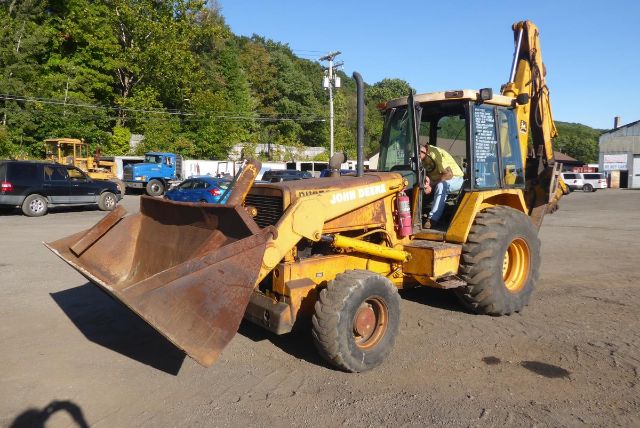
Have john deere backhoes trucking equipment to sell? List it here to reach thousands of buyers.
About John Deere Backhoes
A John Deere backhoe buyer should pay close attention to boom configuration and hydraulic condition. Features like Extend-A-Hoe or extendable dipper give extra reach and deeper trench capability without stepping up to a larger machine. That matters for drainage, septic, water line, and general utility work where depth and reach drive cycle time. Check for play in pins and bushings, cylinder leakage or seepage, swing tower wear, stabilizer performance, and bucket edge condition. If the machine will spend time loading trucks or handling aggregate, loader lift performance, front axle condition, steering response, and transmission operation are just as important as the backhoe end.
John Deere backhoes are commonly found with diesel engines, powershift transmissions, and enclosed or open operator stations depending on age and application. Tire sizing, tread condition, and axle setup matter more than many buyers expect, especially if the machine will travel across mixed ground, paved surfaces, or muddy utility cuts. An enclosed cab with heat and air conditioning helps on long municipal or road maintenance shifts, but visibility, control layout, and ease of entry still matter more than cab trim on a working backhoe. Bucket sizes also change the machine's usefulness. A wider front bucket improves loading and grading, while narrower rear buckets with digging teeth are better for trenching and breakout force.
For transport and ownership cost, operating weight, overall length, and transport height should be reviewed before purchase. A backhoe may be easy to deploy compared with separate loader and excavator units, but it still needs to match your trailer capacity, route restrictions, and jobsite access. John Deere has a long reputation in the backhoe market for durable frames, strong parts support, and familiar controls, which helps when buying used equipment. The best fit comes down to matching machine size, driveline, boom reach, and attachment setup to the type of excavation and loading work you do most often.
Frequently Asked Questions
What should I look for first when buying a used John Deere backhoe?
Start with structural and hydraulic condition before cosmetics. Check boom, dipper, loader arms, stabilizers, and frame areas for weld repairs, cracks, and excessive wear. Inspect pins and bushings for looseness, look for seepage or active leaks at hydraulic cylinders and hoses, and confirm the transmission shifts properly under load. Tire condition, steering performance, brake function, and axle play also matter because repair costs in those areas can add up quickly on an older backhoe.
Is 4WD worth it on a John Deere backhoe?
For many buyers, 4WD is a major advantage because it improves traction in mud, loose fill, wet grass, and uneven jobsites. It also helps loader performance when pushing into piles or climbing grades with a loaded bucket. A 2WD machine can still be a workable choice for hard surfaces, farm use, or lighter duty applications where purchase price is the main concern, but 4WD generally brings better all-around jobsite capability and resale appeal.
What is the benefit of an Extend-A-Hoe on a backhoe loader?
An Extend-A-Hoe adds reach and digging depth by extending the dipper stick, which lets the operator trench farther from the machine and reduce repositioning. That can improve production in utility, drainage, and septic work where depth and reach are important. The tradeoff is more moving parts and wear points, so buyers should inspect the extendable section closely for slack, wear, and hydraulic performance.
How important are bucket size and configuration on a John Deere backhoe?
Bucket setup has a direct effect on productivity. A wider front bucket is useful for loading, stockpiling, and rough grading, while the rear bucket should match the trench width and material being excavated. Narrow digging buckets with teeth are common for utility and pipe work because they cut cleaner trenches and concentrate breakout force. Buyers who handle a mix of tasks should consider whether the machine can easily accept different bucket widths or other attachments.
Are older John Deere backhoes still a practical buy?
Older John Deere backhoes can still be a solid choice if the machine has been maintained and wear is within reason. Many buyers value older units for their simpler mechanical systems, lower upfront cost, and broad parts familiarity. The key is to judge remaining life realistically by looking at engine starting, smoke, hydraulic strength, driveline response, structural wear, and service history rather than focusing only on hour meter readings.