
Utility Trailers For Sale in New York
Browse utility trailers for sale with common GVWRs, axle setups, ramp styles, and deck options for landscaping, equipment, and general hauling.
Learn moreBrowse Utility Trailers by Make
Have utility trailer to sell? List it here to reach thousands of buyers.
About Utility Trailers in New York
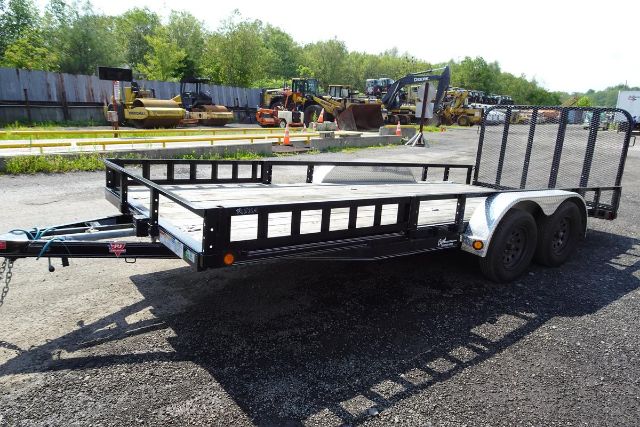
A lot of the buying decision comes down to construction details. Steel-frame utility trailers are the most common and are favored for durability and straightforward repair. Wood floors are popular because they are cost-effective and easy to replace, while steel floors can hold up better to abrasive loading in certain applications. Buyers should look closely at ramp design, side height, tie-down placement, coupler rating, jack capacity, and brake configuration. Tandem-axle utility trailers in the 7K class often include electric brakes, a breakaway kit, and a rear mesh gate or split ramps. Tire size, wheel bolt pattern, and spring-ride suspension also matter because replacement parts and service access are easier when the trailer uses common running gear.
In New York, capacity and braking requirements matter more when the trailer sees mixed local and highway use. A trailer that only hauls a zero-turn mower a few miles at a time can be spec'd very differently than one used daily for compact tractors, side-by-sides, or contractor materials. Deck height affects loading angle, especially with low-clearance equipment. Trailer width between fenders or an open deck width can limit what machines actually fit, even when the listed overall width sounds adequate. Side rails and removable sides can add flexibility for mulch, debris, and loose materials, while allowing the trailer to convert back to equipment hauling.
The best utility trailer is usually the one that matches the heaviest real load, not the occasional light load. Buyers should compare empty weight against payload, confirm axle ratings and VIN plate data, and check how the trailer is wired and protected from corrosion. For commercial use, details like sealed wiring, powder-coated finishes, stake pockets, D-rings, LED lighting, and pressure-treated decking can make a meaningful difference in uptime and maintenance cost. Utility trailers are simple by design, but small spec differences have a big impact on loading speed, tire life, brake performance, and long-term durability.
Frequently Asked Questions
What size utility trailer is best for landscaping or general contractor work?
For many landscaping and light contractor applications, tandem-axle utility trailers in the 6x12, 6x14, 7x14, and 7x16 range are common because they balance payload, maneuverability, and deck space. The right size depends on the actual equipment footprint and total loaded weight, including attachments, fuel, and materials. Buyers hauling zero-turn mowers, compact tractors, or pallets should verify usable deck width, side height, and ramp capacity, not just overall trailer dimensions.
What is the difference between a utility trailer and a landscape trailer?
A landscape trailer is typically a utility trailer configured for lawn and grounds work. It often has taller side rails, expanded metal sides or rear gate, and may include racks for trimmers, blowers, and hand tools. Standard utility trailers can be more open and flexible for mixed cargo, while landscape-oriented setups are designed to secure equipment and contain debris, mulch, and other loose materials more effectively.
Should I choose a single-axle or tandem-axle utility trailer?
Single-axle utility trailers are lighter, simpler, and easier to maneuver by hand, making them a practical choice for lighter loads and occasional use. Tandem-axle trailers usually offer higher GVWR, better stability at speed, and improved weight distribution for heavier or more frequent hauling. They also commonly include brake equipment that is important when hauling equipment or operating on busier roads and longer routes.
What specs matter most when comparing utility trailers for sale?
The most important specs are GVWR, empty weight, payload capacity, deck length, usable deck width, axle configuration, brake setup, and ramp style. Buyers should also review coupler size, tire type, suspension, floor material, side construction, and tie-down points. A trailer can look similar on paper but perform very differently depending on deck height, ramp angle, running gear quality, and how well the frame matches the intended load.
Are wood floors or steel floors better on a utility trailer?
Wood floors are common on utility trailers because they are affordable, easy to replace, and provide good traction for many loads. Steel floors can be more durable in abrasive or heavy-duty applications, but they can add weight and may become slick when wet if not properly treated or textured. The better choice depends on what the trailer hauls, how often it is loaded, and how important repair cost and corrosion resistance are over time.