
New Tank Trailers For Sale
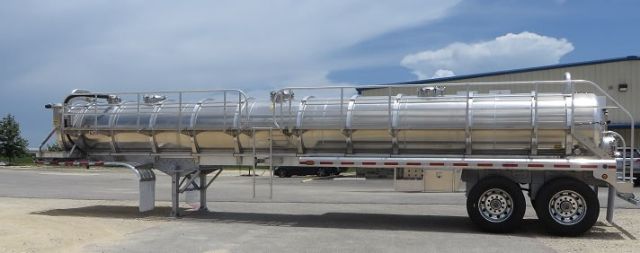
New tank trailers for petroleum, vacuum, and liquid hauling. Compare capacities, codes, compartments, materials, and unloading systems.
Learn moreBrowse Tank Trailers by Make
Have new tank trailer to sell? List it here to reach thousands of buyers.
About New Tank Trailers
Frequently Asked Questions
What is the main difference between a petroleum tank trailer and a vacuum tank trailer?
A petroleum tank trailer is built to transport refined fuels and similar flammable liquids under the appropriate DOT code, commonly DOT 406. These trailers usually have multiple compartments, bottom loading and unloading hardware, vapor recovery, overfill systems, and terminal-compatible API equipment. A vacuum tank trailer is designed to move fluid by vacuum or pressure-assisted service, often for oilfield water, mud, waste, or related products. It typically uses a single-compartment barrel or simpler internal layout, heavier shell construction, relief valves, and different discharge arrangements than a fuel trailer.
What capacities are common on new tank trailers?
Common capacities depend on the application and legal weight limits. Petroleum tank trailers are often seen around 9,000 to 9,500 gallons in tandem axle configurations, with multiple compartments sized to match delivery routes and product splits. Vacuum tank trailers are often described by gallons or barrels, such as 130 to 150 BBL, which puts many units in the 5,500 to 6,300 gallon range. Actual usable capacity depends on commodity, shell design, expansion space, and axle specifications.
Why do compartments matter on a tank trailer?
Compartments determine how many products you can haul on one trip and how efficiently you can build delivery loads. Fuel haulers often need separate compartments for regular gasoline, premium, diesel, or ethanol blends, and double bulkheads help reduce contamination risk between products. Compartment size also affects load balance, axle loading, and routing flexibility. A trailer with the right compartment layout can improve terminal loading speed and reduce partial-load inefficiencies on delivery runs.
What specs should I prioritize when comparing new tank trailers?
Start with the commodity, required code, and unloading method, then compare barrel material, total capacity, compartment layout, suspension, axle rating, kingpin setting, and brake configuration. On petroleum trailers, pay close attention to API equipment, vapor recovery, overfill protection, emergency valve actuation, hose tray and cabinet layout, and sight glass arrangement. On vacuum units, focus on shell thickness, baffles, bulkheads, relief systems, rear discharge valves, frame strength, and corrosion protection such as liners or coatings. These details affect both legal compliance and day-to-day serviceability.
Is aluminum the standard material for new tank trailers?
Aluminum is common because it helps keep tare weight down while offering good corrosion resistance for many liquid-hauling applications. That lower empty weight can translate into better payload within legal limits, which is a major advantage in petroleum and vacuum service. Material choice still depends on the commodity, expected corrosion exposure, and service environment. Buyers should evaluate shell alloy, thickness, frame design, and any internal liner or coating as a complete package rather than assuming all aluminum tanks are built the same.