
New EXA Tank Trailers For Sale
Shop new EXA tank trailers built for oilfield fluid hauling, with aluminum construction, vacuum capability, air ride, and heavy-duty axle specs.
Learn more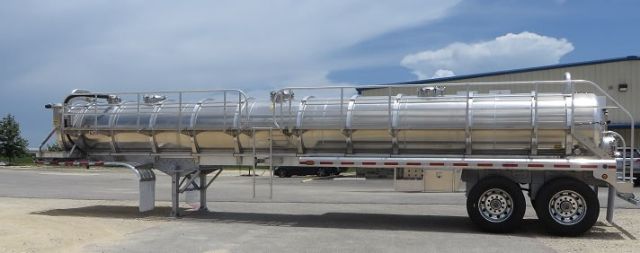
Have new exa tank trailer to sell? List it here to reach thousands of buyers.
About New EXA Tank Trailers
One of the first things to compare on an EXA tank trailer is barrel capacity and construction. A common setup in this class is a 150 BBL trailer, roughly 6,300 gallons, with a single-compartment aluminum barrel, internal baffles, and aluminum bulkheads and shell. Buyers should pay close attention to tank material, shell thickness, design pressure, relief protection, and internal lining. On vacuum trailers, details like the vacuum connector size, butterfly valve arrangement, blowdown line, shutoff system, and sight glass or float-style level indication directly affect loading speed, unloading control, and day-to-day serviceability.
Running gear and chassis specs matter just as much as the tank itself. Many EXA tank trailers in this segment use tandem 30,000 lb axles, air ride suspension such as Hendrickson, ABS-equipped air brakes, and an adjustable upper coupler with a set kingpin setting to match fleet tractors. Tire and wheel spec is important on oilfield routes, especially if the trailer is equipped with 24.5 rubber and cut-and-chip tires for rougher access roads. Buyers should also evaluate overall trailer height, length, axle spread, landing gear, and frame construction to make sure the trailer fits local bridge laws, site access conditions, and the tractor configurations already in the fleet.
Safety and operator access are major buying points on this category. Full-length walkways, handrails, side and rear ladder access, rear work lights, multiple manways, overturn protection, and DOT-compliant lighting all contribute to safer operation at the lease, terminal, or disposal site. On new EXA tank trailers, it is also worth reviewing practical details such as hose trays, tool boxes, fenders, exterior coating on steel components, and epoxy internal liners. For buyers comparing new tank trailers for oilfield work, the best unit is usually the one that balances capacity, tare weight, valve layout, suspension quality, and maintenance access with the fluid types and route conditions it will handle every day.
Frequently Asked Questions
What are new EXA tank trailers commonly used for?
New EXA tank trailers are commonly used for hauling oilfield fluids such as water, drilling mud, and certain waste streams generated in field service. Many units in this category are vacuum tank trailers, which makes them well suited for loading and unloading liquid material in oilfield, industrial, and environmental applications. The exact fluid compatibility depends on the tank construction, lining, valve package, and pressure or vacuum rating.
Why do buyers choose an aluminum tank trailer instead of steel?
Aluminum tank trailers are often chosen for their lighter weight and strong corrosion resistance. A lower empty weight can improve usable payload, which is important in fluid hauling where every gallon affects gross weight. Aluminum also holds up well in many water and oilfield service applications, though buyers still need to confirm compatibility with the specific commodities being hauled and review the condition and type of any internal liner.
What specs matter most when comparing new EXA vacuum tank trailers?
The key specs are capacity in barrels or gallons, shell and bulkhead thickness, tank material, design pressure, vacuum connection size, outlet valve configuration, axle rating, suspension type, brake system, and kingpin setting. Buyers should also check tare weight, overall dimensions, baffle arrangement, manway access, and the presence of practical features like hose trays, tool boxes, and fluid level indicators. These details affect payload, serviceability, safety, and how well the trailer matches an existing tractor and route profile.
How important is axle and suspension setup on a tank trailer?
Axle and suspension setup is critical because it affects legal loading, ride quality, durability, and stability on uneven roads. Tandem heavy-capacity axles with air ride suspension are common in oilfield tank trailer applications because they help protect the trailer structure and improve control when the trailer is loaded on rough lease roads or highway runs. Buyers should also verify axle spread, brake specification, tire type, and whether the setup matches local regulations and the fleet’s maintenance standards.
What safety features should buyers look for on a new tank trailer?
Important safety features include pressure and vacuum reliefs, secure shutoff systems, ABS brakes, full walkways with handrails, safe ladder access, quality lighting, conspicuity tape, overturn protection, and clearly laid out rear controls. Multiple manways and a good valve layout can also improve safety during inspection, loading, and unloading. For field service work, visibility aids such as rear work lights and fluid level indicators can make day-to-day operation safer and more efficient.