
Tank Trailers For Sale in Alberta
Shop tank trailers for sale in Alberta, including fuel, chemical, and pneumatic tankers with common specs, codes, capacities, and suspension options.
Learn moreBrowse Tank Trailers by Make
Have tank trailer to sell? List it here to reach thousands of buyers.
About Tank Trailers in Alberta
For petroleum service, compartment layout matters as much as total capacity. A 9,500-gallon fuel trailer may be split into three, four, or more compartments, and those compartment sizes directly affect delivery flexibility and load planning. Buyers should pay close attention to double bulkheads, bottom loading equipment, API adapters, vapor recovery, overfill protection, emergency shutoff systems, and discharge plumbing material. Features like aluminum piping, sight glasses, hose trays, fittings cabinets, adjustable kingpin settings, and air-operated emergency valves are common on modern spec fuel tankers. In Alberta, cold-weather operation also makes valve protection, cabinet sealing, lighting, and suspension condition especially important.
For chemical and industrial liquid service, barrel material and tank configuration drive long-term value. Stainless steel tanks, especially T-316 stainless, are common when product purity and corrosion resistance are critical. Double-conical barrels, center discharge layouts, pressure manholes, air-off capability, and multiple compartments are frequently seen on higher-spec chemical tank trailers. Buyers should confirm the trailer code plate, working pressure, lining or material spec, and whether the discharge setup matches plant or customer requirements. A trailer can look right on paper but still create unloading problems if the manifold, hose tube arrangement, or outlet configuration does not match your operation.
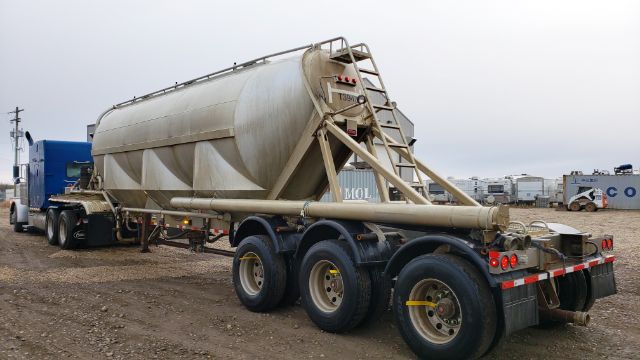
Pneumatic tank trailers, also known as dry bulk tankers, are a different class entirely and are typically rated in cubic feet rather than gallons. Common specs include one to three hoppers, center or rear discharge, super singles or 11R22.5 tires, aluminum frames, and air ride suspension. These trailers are used for products like cement, sand, lime, plastic pellets, and feed, and the blower setup and plumbing design matter as much as barrel capacity. Across all tank trailer types, smart buyers focus on code compliance, barrel material, compartment design, suspension, wheel-end condition, and valve system integrity before comparing cosmetic details. That approach narrows the field quickly and helps match the trailer to the actual freight, loading rack, and unload site requirements.
Frequently Asked Questions
What is the difference between a DOT 406, DOT 407, and non-code tank trailer?
A DOT 406 tank trailer is commonly used for refined petroleum products such as gasoline and diesel, with specs centered on bottom loading, vapor recovery, and compartmented delivery. A DOT 407 trailer is built for a broader range of chemical and industrial liquid products and often includes stainless construction, pressure-rated components, and more specialized discharge systems. A non-code tank trailer is typically used for dry bulk pneumatic service or certain non-regulated applications where DOT cargo tank code requirements do not apply in the same way. The correct code depends on the commodity, not just the trailer shape.
How do I choose the right capacity and compartment setup on a tank trailer?
Total capacity needs to match your route structure, bridge and axle laws, and the density of the product you haul. On fuel trailers, compartment sizes are critical because they determine how many grades or delivery drops can be handled on one load. A 9,500-gallon trailer with four compartments gives more flexibility than a single-compartment tank, but it also adds complexity in plumbing and loading. For dry bulk pneumatic tanks, capacity is measured in cubic feet, and the right size depends on product weight, unload time, and legal payload limits.
What tank trailer materials are most common?
Aluminum is widely used for petroleum and some pneumatic applications because it keeps tare weight down and resists corrosion well in many environments. Stainless steel, especially 316-grade stainless, is common for chemical service where product compatibility and cleanliness are major concerns. Carbon steel still appears in certain applications where chemical compatibility allows it and lower acquisition cost is a priority. The right material is determined by the commodity, required washout standard, expected corrosion exposure, and target payload.
What should I inspect first on a used tank trailer?
Start with the code plate, barrel material, and service history to confirm the trailer is suitable for your intended commodity. Then inspect the tank shell, welds, bulkheads, manholes, valves, piping, suspension, wheel ends, brakes, and frame for structural issues or deferred maintenance. On petroleum units, verify the condition of API equipment, vapor recovery hardware, overfill system components, and emergency valves. On pneumatic tanks, inspect the hoppers, discharge plumbing, aeration system, and blower-related connections because unload performance often tells the real story of trailer condition.
Are tank trailers in Alberta affected by different operating considerations?
Yes. Alberta operators often place more emphasis on cold-weather reliability, corrosion control, and sealing of cabinets, valves, and electrical connections. Winter conditions can expose weaknesses in suspension components, lighting systems, air controls, and discharge hardware, especially on trailers that work in oilfield, fuel delivery, or bulk commodity service. Buyers should also confirm provincial compliance, axle configuration, tire spec, and intended cross-border use if the trailer will run outside Alberta or into the U.S.