
Cross Country Tag Trailers For Sale in New York
Browse Cross Country tag trailers for sale, including tilt-deck models built for equipment hauling, compact machines, and jobsite transport.
Learn more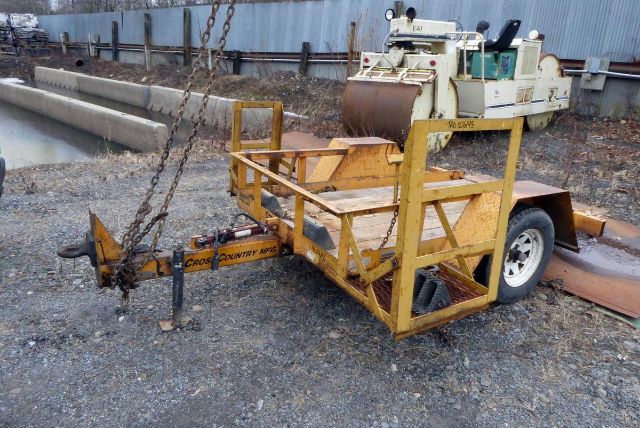
Have cross country tag trailer to sell? List it here to reach thousands of buyers.
About Cross Country Tag Trailers in New York
The first decision point on a used Cross Country tag trailer is capacity versus trailer weight. Many units in this class fall into light-duty to medium-duty specs, often with single-axle or tandem-axle configurations, spring suspension, electric brakes, and deck lengths suited to compact equipment rather than larger iron. Buyers should compare GVWR, empty weight, actual deck space, and usable payload after accounting for ramps, toolboxes, or added accessories. On smaller tag trailers, deck width between fenders, deck height, tire size, and coupler rating matter just as much as overall trailer length because they directly affect what machines can be loaded safely.
Loading style is another key factor. Cross Country tag trailers may be equipped with mechanical tilt decks or traditional rear ramps, and each setup has tradeoffs. A tilt deck can speed up loading and reduce ramp handling, but hinge points, latch systems, and deck alignment need close inspection on a used trailer. Ramp-style units should be checked for spring assist function, ramp angle, and signs of twisting from repeated machine loading. Buyers should also inspect the wood floor for rot, steel frame rails for corrosion, axle condition, brake function, tire date codes, and wiring integrity. In New York, where road salt and seasonal weather can accelerate corrosion, frame condition, brake reliability, and lighting performance deserve extra attention.
For buyers comparing multiple Cross Country tag trailers for sale, the best value usually comes from matching trailer dimensions and running gear to the equipment you move every week, not the one oversized load you may handle once a year. A lower GVWR trailer can be economical and easy to tow behind a pickup, but it still needs enough axle, tire, and brake capacity for real-world operating conditions. If your application involves compact loaders, mowers, mini excavators, or jobsite materials, focus on payload, deck usability, tie-down points, and serviceable components. A well-matched tag trailer, also known as a tag-along trailer, should load easily, track straight, brake predictably, and hold up to repeated short-haul commercial use.
Frequently Asked Questions
What is a Cross Country tag trailer typically used for?
A Cross Country tag trailer is typically used to haul compact equipment and utility loads behind a pickup or similar tow vehicle. Common applications include transporting lawn and landscape equipment, compact tractors, small loaders, mini excavators, light construction tools, and jobsite materials. Their lower deck height and simple design make them practical for frequent local and regional moves where fast loading and basic durability are more important than maximum payload.
What should I check first on a used Cross Country tag trailer?
Start with the frame, axles, brakes, tires, deck, and coupler. Check for rust scale, frame repairs, bent crossmembers, worn spring suspension components, and uneven tire wear that may indicate axle issues. Confirm that electric brakes are operating correctly, inspect wiring and lights, and look closely at the wood floor for soft spots or rot. On tilt-deck models, inspect the pivot points, latch mechanism, and deck alignment because loading hardware takes repeated stress over the life of the trailer.
How do I know if a tag trailer has enough capacity for my equipment?
Use the trailer's GVWR minus its empty weight to estimate usable payload, then compare that number to the actual operating weight of your machine, attachments, fuel, and any extra cargo. Buyers often focus on advertised capacity but overlook deck width, deck height, and axle rating, all of which affect real-world usability. The trailer should have enough payload margin to handle the machine safely without overloading the tires, brakes, or suspension.
Is a tilt-deck tag trailer better than a ramp trailer?
A tilt-deck tag trailer can be better for compact equipment because it reduces ramp handling and can provide a smoother loading angle. That said, a ramp trailer may be simpler to maintain and easier to use with certain loads that do not distribute weight well on a tilting platform. The better choice depends on what you haul, how often you load, and the condition of the trailer's loading components. On used trailers, condition matters more than design alone.
Are smaller single-axle tag trailers suitable for commercial work?
They can be, as long as the trailer's rated capacity matches the load and the duty cycle is realistic. A smaller single-axle tag trailer can work well for light commercial hauling, property maintenance, rental fleets, and local equipment transport. Buyers should be careful not to exceed tire, axle, or brake limits, and they should understand that lighter trailers generally offer less margin for heavy repeated use than larger tandem-axle models.