
New Dragon Crude Oil Trailers For Sale
Shop new Dragon crude oil trailers built for petroleum hauling, with DOT 407 specs, aluminum tanks, vapor recovery, and oilfield-ready features.
Learn more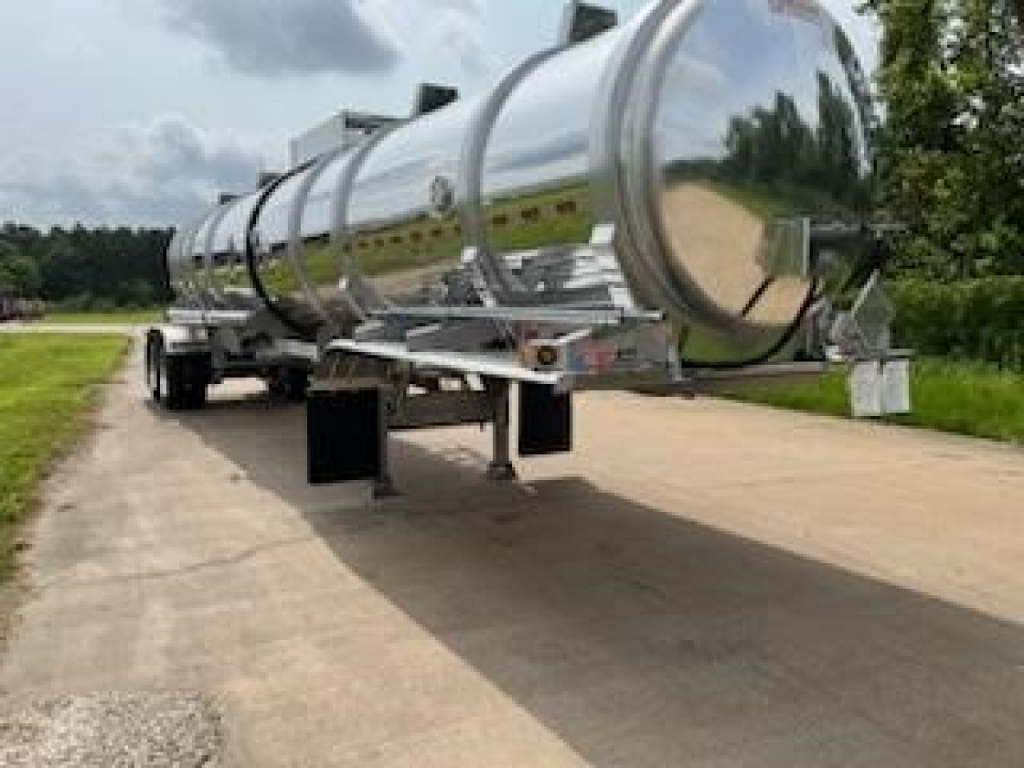
Have new dragon crude oil trailer to sell? List it here to reach thousands of buyers.
About New Dragon Crude Oil Trailers
Tank construction and capacity are usually the first decision points. Many crude oil trailers in this class use aluminum tank bodies to reduce tare weight and maximize legal payload, with common capacities in the 8,000-gallon range depending on axle spacing, shell design, and state weight laws. Double conical designs are common because they promote drainage and help with unloading efficiency. A single-compartment tank is typical for crude service, and buyers should pay close attention to manway count, cleanout access, internal baffling or surge management, and thermometer or gauging provisions if product monitoring is part of the operation. Vapor recovery equipment is a key spec on many units, especially where site compliance and closed loading systems are required.
Running gear and unloading equipment deserve just as much attention as the tank itself. Closed tandem axle setups with air ride suspension are common on new crude oil trailers because they balance ride quality, product stability, and serviceability on mixed highway and oilfield routes. Wheel material, tire size, fenders, landing gear, and bumper construction all affect long-term operating cost in rough environments. If the trailer is equipped with a pump, verify pump type, drive arrangement, flow expectations, seal serviceability, and plumbing layout. Bottom load configurations are widely preferred for petroleum handling because they support faster, cleaner loading and unloading while reducing exposure compared with top-only methods. Work lights, ladders, hose storage, tire carriers, placard mounts, and spill-control related details also matter because they directly affect daily use and inspection readiness.
A smart comparison between new Dragon crude oil trailers comes down to matching the spec to the lane and the field conditions. Buyers should confirm overall length, axle spread, suspension, tire package, and gallon capacity against local bridge laws and customer site requirements. It also helps to review outlet sizes, vapor system compatibility, pump and valve access, and how easily the trailer can be cleaned or serviced between loads. For operations hauling crude from well sites to terminals, a properly spec'd trailer can improve cycle times, reduce downtime, and simplify compliance with petroleum transport procedures. In practical terms, the best trailer in this category is the one that carries the most legal product with the fewest service interruptions and the least hassle at the rack or lease site.
Frequently Asked Questions
What is the typical capacity of a crude oil trailer in this class?
Many crude oil trailers in this category are spec'd around 8,000 to 8,400 gallons, but legal payload depends on the tank material, axle configuration, trailer weight, and the specific state or regional weight laws where the trailer will run. Aluminum construction is common because it helps reduce tare weight and preserve payload capacity. Buyers should compare gallon rating and empty weight together, not as separate numbers.
Why is vapor recovery important on a crude oil trailer?
Vapor recovery is important because it helps control hydrocarbon vapors during loading and unloading, supports safer closed-system transfers, and may be required by customer sites or local regulations. It is especially relevant in crude service where emissions control and product handling practices are closely monitored. A trailer with the correct vapor recovery setup can integrate more easily with terminal and field equipment.
What should I look for in a pump-equipped crude oil trailer?
Focus on pump type, output expectations, drive system, plumbing layout, and how easy the pump is to maintain in the field. The right pump setup depends on unloading method, product characteristics, and how often the trailer cycles. Service access matters because seal replacement, hose routing, and valve maintenance can affect downtime just as much as the pump's rated performance.
Are most crude oil trailers single compartment or multi-compartment?
Single-compartment tanks are common for crude oil hauling because the product is usually moved as one load and the tank can be optimized for drainage and unloading efficiency. A single compartment also simplifies cleaning and reduces internal complexity. Buyers should still verify the tank design, cleanout access, and any internal features that affect surge control or product evacuation.
What suspension and axle setup is common on new crude oil trailers?
Closed tandem axles with air ride suspension are a common choice because they offer a good balance of ride quality, product stability, and durability on oilfield and highway routes. This setup is widely used in petroleum service where the trailer may see uneven lease roads and frequent loading cycles. Axle spacing and suspension selection should always be reviewed alongside bridge law compliance and site access conditions.