
New Container Trailers For Sale
New container trailers and intermodal containers for storage, shipping, and chassis use, including 20-foot, 40-foot, and 53-foot configurations.
Learn moreBrowse Container Trailers by Make
Showing 13 to 15 of 15 results
Have new container trailer to sell? List it here to reach thousands of buyers.
About New Container Trailers
Frequently Asked Questions
What is the difference between a shipping container and a container trailer?
A shipping container is the box itself, built to be lifted by corner castings and carried on a chassis, rail well car, vessel, or in a yard. A container trailer usually refers to the transport setup used to move that box, most often a chassis designed around ISO or domestic container dimensions. On many marketplace pages, the category can include the container body as well as equipment associated with hauling it, so buyers should verify whether the listing is for the container only, a chassis, or a complete package.
What sizes are most common for new container equipment?
The most common sizes are 20-foot, 40-foot, and 53-foot. Twenty-foot units are common for storage, jobsite use, and heavier commodities because the shorter floor can handle dense loads efficiently. Forty-foot containers are standard in international shipping and general storage applications. Fifty-three-foot containers are domestic intermodal units used heavily in U.S. freight networks, offering higher cube and more pallet capacity than international containers.
What specs matter most when buying a new container for freight use?
Floor rating, cubic capacity, door configuration, and structural design matter most. Freight buyers should look at floor construction, crossmember strength, corner fitting integrity, side rail design, and whether the unit is standard height or high-cube. For domestic intermodal service, details such as gooseneck tunnel design, stacking capability, and compatibility with common chassis and terminal handling practices are important. If the container will carry palletized dry freight, interior width, door opening dimensions, and overall cube should be checked against the actual freight profile.
Are new containers used only for transportation?
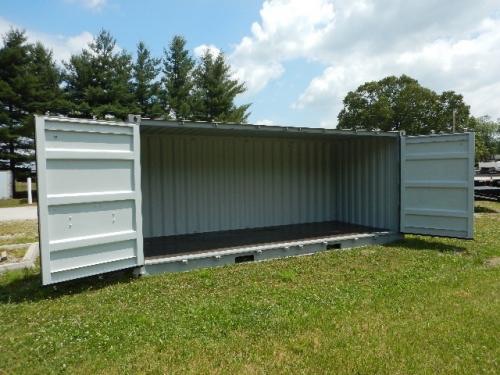
No. Many new containers are bought for fixed-site storage, mobile offices, tool cribs, parts rooms, and secure yard support. Specialty versions can include side openings, double doors, office-storage combinations, and modified interiors. For non-transport use, buyers usually focus less on intermodal handling specs and more on access, ventilation, flooring, lock protection, and whether the unit will be placed permanently or moved occasionally between locations.