
Trail King Belt Trailers For Sale in Nebraska
Browse Trail King belt trailers for sale. Compare live bottom specs, axle ratings, belt construction, liner options, and hauling applications.
Learn more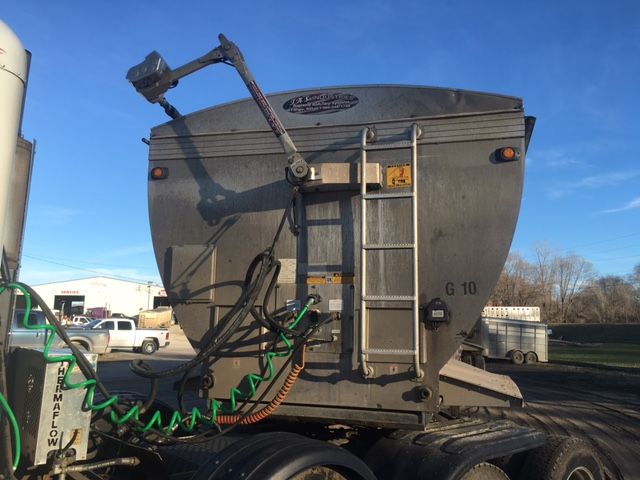
Have trail king belt trailer to sell? List it here to reach thousands of buyers.
About Trail King Belt Trailers in Nebraska
On Trail King belt trailers, pay close attention to body length, side height, cubic yard capacity, and belt width. A 48-inch belt is common in this class, and material type should drive the rest of the spec. Asphalt, sand, gravel, millings, compost, feed ingredients, and other bulk materials all place different demands on the belt, liner, and floor design. Full liners help protect the body and improve cleanout. Aluminum wheels, low-profile 24.5 tires, and lightweight construction can improve payload, while axle ratings in the 23,000-pound range per axle are typical on tandem units. Suspension choice also matters. Air-ride systems such as Hendrickson INTRAAX are popular for ride quality, load protection, and easier scaling.
Compared with a traditional end dump, a belt trailer gives the operator more control at the point of discharge and reduces rollover risk in soft or sloped conditions. That makes this category a strong fit for road building, shoulder work, stockpiling, and job sites where a raised body is not practical. Buyers should inspect belt condition, splice quality, chain wear, drive components, cross tubes, rear discharge area, and liner integrity. On used units, check for tracking issues, uneven belt wear, drum condition, tarp function, suspension bushing wear, and signs of corrosion around the floor and side structure. If the trailer will spend most of its time in asphalt service, look closely at heat exposure, liner condition, and how well the discharge system has been maintained.
In Nebraska and across the Plains, belt trailers are often chosen for aggregate, paving, and agricultural bulk hauling where weather, distance, and mixed road conditions can expose weaknesses in the trailer quickly. A good spec starts with the material being hauled and the unloading environment, then matches capacity, axle spread, suspension, and belt design to the work. Trail King has a strong reputation in the heavy-haul and specialty trailer market, and buyers considering its belt trailer lineup should focus on structural condition, discharge reliability, and real-world payload efficiency rather than just cubic yard numbers alone.
Frequently Asked Questions
What is the main advantage of a Trail King belt trailer compared with an end dump?
The main advantage is controlled unloading without lifting the trailer body. A belt trailer moves material to the rear with a conveyor-style floor, which improves stability and reduces rollover risk on uneven ground, soft shoulders, and low-clearance jobs. That makes it especially useful for paving, shoulder work, and other applications where a raised dump body creates safety or clearance problems.
What materials are commonly hauled in a Trail King live bottom trailer?
Trail King live bottom trailers are commonly used for asphalt, sand, gravel, crushed stone, millings, dirt, compost, mulch, grain-related bulk products, and other free-flowing materials. The ideal material mix depends on belt construction, liner package, body dimensions, and how abrasive or temperature-sensitive the load is. Buyers should match the trailer spec to the density, heat, and flow characteristics of the product they haul most often.
What should I inspect on a used Trail King belt trailer?
Start with the belt itself, including wear pattern, splice condition, tracking, and any cuts or chunking. Then inspect the chain drive, cross tubes, drums, bearings, rear discharge opening, liner condition, tarp system, and suspension components. Also look for structural cracking, corrosion, floor damage, axle alignment issues, and brake or hub service history. On a used live bottom trailer, belt and drive condition can affect operating cost as much as the frame and body.
Are air-ride suspensions common on Trail King belt trailers?
Yes, air-ride suspensions are common because they help with ride quality, load protection, and scale consistency. Systems such as Hendrickson INTRAAX are frequently seen on belt trailers in this class. Air-ride can also reduce shock to the trailer structure and improve handling over mixed road surfaces, which is useful for aggregate and paving operations that move between highways, county roads, and job sites.
How do I choose the right belt trailer capacity and size?
Capacity should be based on the material's density, target payload, legal axle limits, and the type of jobs being served. A higher cubic yard body is useful for lighter materials, but heavier products can gross out before the trailer is full. Buyers should consider overall length, belt width, side height, liner package, axle rating, and tire setup together. The right trailer is the one that meets payload goals while still unloading cleanly and safely in the environments where it will actually work.