
Peerless Belt Trailers For Sale in Kansas
Browse Peerless belt trailers for sale in Kansas. Compare capacities, belt widths, axle setups, liner options, and unloading features.
Learn more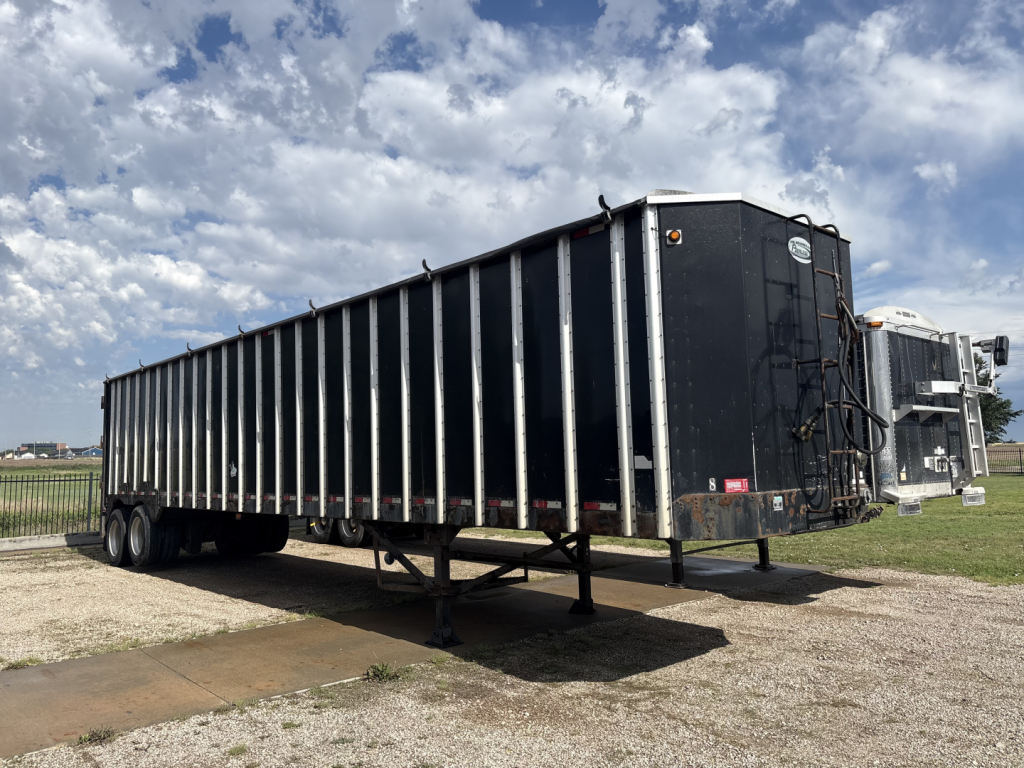
Have peerless belt trailer to sell? List it here to reach thousands of buyers.
About Peerless Belt Trailers in Kansas
For most buyers, the key decisions are trailer length, cubic capacity, axle configuration, belt condition, and liner or sidewall construction. Belt trailers in this class are commonly spec'd in aluminum to keep tare weight down, with tandem or tri-axle setups depending on legal payload targets and route requirements. Buyers should pay close attention to belt wear, splice condition, slider and roller condition, rear door sealing, hydraulic system performance, and signs of corrosion around crossmembers, subframe areas, and discharge openings. If the trailer has been used in fertilizer service, corrosion inspection becomes even more important.
A good Peerless belt trailer spec depends on the commodity. Agricultural operators often want smooth, clean discharge for corn, soybeans, meal, or byproducts without product hang-up. Aggregate and construction users may focus more on belt durability, impact resistance, gate design, and ease of cleanout between loads. Features that can add value include electric tarp systems, air ride suspension, lift axles, tire inflation systems, roll tarp bows, inspection windows, vibrators, and remote controls for unload functions. Rear discharge rate and belt tracking are worth checking closely, especially if the trailer will handle multiple commodity types.
Compared with a hopper bottom, a belt trailer offers more flexibility at sites where overhead clearance, uneven ground, or restricted dumping space make gravity discharge less practical. Compared with a dump trailer, it provides more stable unloading and more precise material placement. Buyers shopping Peerless belt trailers in Kansas should match the trailer's empty weight, discharge speed, and structural condition to the actual work cycle, not just the headline capacity. The right trailer is the one that unloads cleanly, holds belt alignment under load, and fits the legal and operational demands of the routes it will run.
Frequently Asked Questions
What is a Peerless belt trailer best used for?
A Peerless belt trailer is best used for bulk materials that benefit from controlled rear unloading and stable operation. Common applications include grain, feed, fertilizer, seed, mulch, sand, and some aggregates. Because the trailer unloads with a conveyor-style belt instead of raising the body, it is often preferred where overhead clearance is limited, ground conditions are uneven, or the load needs to be placed precisely.
How is a belt trailer different from a hopper bottom or dump trailer?
A belt trailer uses a moving belt to carry material out the rear, while a hopper bottom relies on gravity discharge through hopper gates and a dump trailer raises the body to tip the load out. Belt trailers are generally more versatile than hopper bottoms at constrained sites and more stable than dump trailers during unloading. They are especially useful when product flow control, lower unloading height, and reduced tip-over risk matter more than absolute simplicity.
What should I inspect first on a used Peerless belt trailer?
Start with the belt itself, including belt thickness, tracking, splice quality, edge wear, and any cuts or delamination. Then inspect the hydraulic motor and pump operation, rear door seals, rollers, slider bed or wear surface, suspension, brakes, tires, and frame condition. Corrosion around the discharge area, crossmembers, and lower structure is important, especially on trailers that have hauled fertilizer or other corrosive materials. A trailer that looks clean but has poor belt tracking or weak hydraulics can turn into an expensive repair unit quickly.
Are Peerless belt trailers a good fit for agricultural hauling in Kansas?
Yes. Peerless belt trailers are a strong fit for Kansas agricultural hauling because they can unload grain, feed ingredients, and fertilizer cleanly at elevators, bins, mills, and farm sites where space or terrain may be less than ideal. They also help reduce product bridging and give operators more control over discharge speed and placement. That combination makes them practical for mixed ag operations that handle different commodities through the season.
Which specs matter most when comparing belt trailers for sale?
The most important specs are trailer length, cubic capacity, axle setup, tare weight, belt width, hydraulic system condition, and overall structural integrity. Buyers should also look at suspension type, liner material, gate configuration, tarp system, and any added features such as lift axles or tire inflation systems. The right combination depends on payload goals, commodity type, route laws, and how often the trailer will be unloaded in tight or uneven locations.