
Used Isuzu Refrigerated Trucks For Sale
Shop used Isuzu refrigerated trucks with diesel power, insulated van bodies, and reefer units built for food, floral, and cold-chain delivery.
Learn more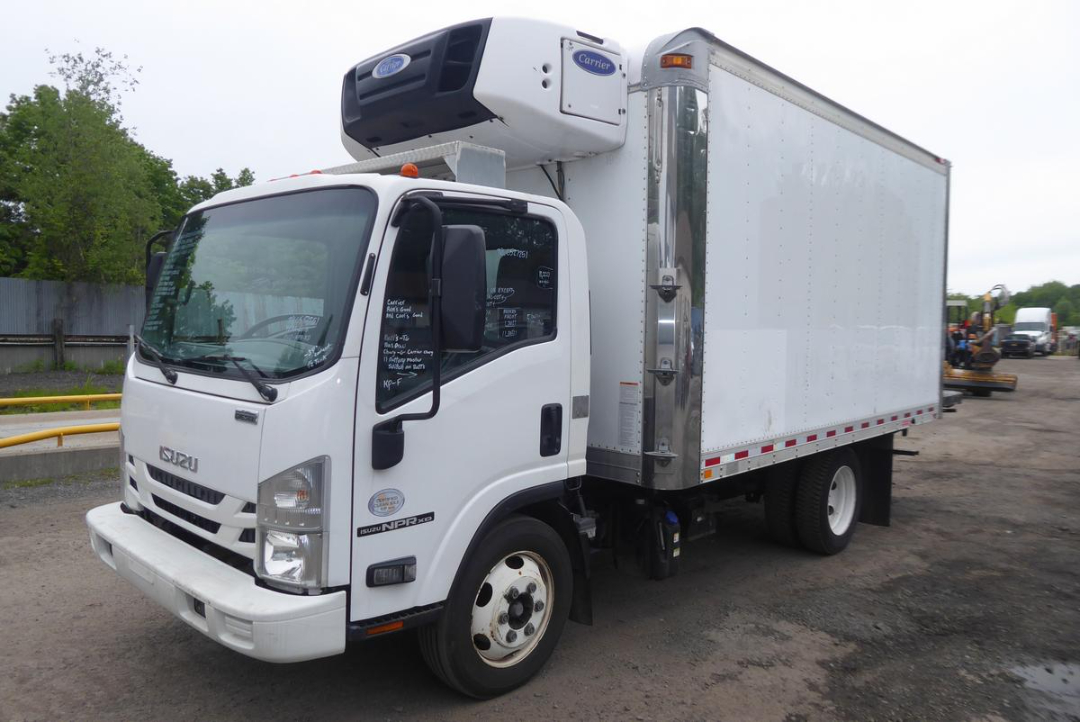
Have used isuzu refrigerated truck to sell? List it here to reach thousands of buyers.
About Used Isuzu Refrigerated Trucks
A typical used Isuzu reefer truck in this class will carry a diesel engine such as the 4HK1, an automatic transmission, and a GVWR commonly in the 14,500 to 19,500 lb range depending on chassis series. Body lengths often fall in the 12 to 18 foot range, with 14 to 16 foot boxes being especially common for restaurant supply, produce, dairy, meat, pharmacy, and floral delivery. Buyers should pay close attention to reefer brand and model, engine hours on the refrigeration unit, evaporator condition, door seal integrity, insulation performance, and floor type. Aluminum floors, stainless rear frames, and roll-up rear doors are common, but side doors, bulkheads, and multi-temp partitions can add real operational value depending on the route structure.
The refrigeration system deserves as much scrutiny as the truck itself. Carrier and Thermo King units are common on used Isuzu refrigerated trucks, and unit age, maintenance history, pull-down performance, and operating mode matter more than brand name alone. Confirm the unit can hold target temperature under load, not just cool an empty box. Check for fuel system condition on self-powered reefers, verify reefer hours against service records, and inspect the box for soft spots, moisture intrusion, damaged scuff liners, and worn door hardware. On the chassis side, brake type, tire date codes, axle ratings, and signs of repeated stop-and-go wear are worth reviewing carefully because refrigerated delivery trucks often live hard urban duty cycles.
For many buyers, the appeal of a used Isuzu refrigerated truck is predictable operating cost and route-friendly packaging. These trucks are also known as reefer trucks or refrigerated box trucks, and they are commonly chosen by fleets that need CDL-exempt or near-CDL payload flexibility depending on spec. The best unit for the job comes down to temperature requirement, daily stop count, product density, and dock environment. A lighter 14 foot body can be ideal for urban foodservice runs, while a heavier chassis with a longer insulated body may make more sense for regional wholesale distribution. Matching box size, reefer capacity, and GVWR to the cargo profile is what keeps a refrigerated truck productive and profitable.
Frequently Asked Questions
What should I check first on a used Isuzu refrigerated truck?
Start with the refrigeration unit, insulated body, and maintenance records before focusing on cosmetics. Verify the reefer can pull down to the required temperature and hold it consistently, review reefer engine hours and service history, and inspect door seals, insulation, floor condition, and evaporator cleanliness. On the chassis, confirm GVWR, axle ratings, brake condition, tire age, and signs of heavy stop-and-go use. A clean-running truck with a weak box or inconsistent reefer will create more downtime than a higher-mile chassis with a well-maintained cold box.
Are Isuzu refrigerated trucks good for city delivery routes?
Yes. Isuzu refrigerated trucks are widely used for urban and suburban delivery because the cab-over layout improves maneuverability and forward visibility while keeping overall vehicle length compact. That matters for dock access, alley stops, parking lot deliveries, and dense route work with frequent backing. Their low cab height and practical body lengths also make them a common choice for foodservice, produce, bakery, dairy, and pharmacy distribution.
How many hours on a reefer unit is too many?
There is no single cutoff because reefer value depends heavily on maintenance quality, operating environment, and repair history. A unit with higher hours and documented service can be a better buy than a lower-hour unit with poor maintenance and weak temperature performance. Buyers should compare reefer hours to the truck's mileage and route type, then look for evidence of regular preventive maintenance, clean starts, stable operation, and strong pull-down performance under realistic conditions.
What box size is most common on a used Isuzu reefer truck?
Many used Isuzu refrigerated trucks are built with insulated bodies in the 12 to 18 foot range, with 14 to 16 feet being especially common. The right size depends on product cube, pallet count, and stop density. Shorter bodies are easier in downtown service and tighter docks, while longer bodies can improve route efficiency when product volume is the limiting factor. Buyers should also consider interior height, rear door opening, and whether a side door or bulkhead is needed for the application.
Do I need to match reefer capacity to the product, not just the box size?
Yes. Reefer capacity should be matched to the cargo temperature target, door-open frequency, ambient climate, and loading pattern, not just body dimensions. Frozen product, high-stop routes, and hot-weather operation place a much heavier demand on the unit than short-haul chilled delivery with limited door openings. A reefer that is marginal for the application will struggle to recover temperature, increase fuel use, and put product integrity at risk.