
Water Trucks For Sale in Iowa
Browse water trucks for sale, including dust control, road work, and site service units with common tank sizes, spray systems, and axle setups.
Learn moreBrowse Water Trucks by Make
Have water truck to sell? List it here to reach thousands of buyers.
About Water Trucks in Iowa
The spray package is just as important as the tank. A useful water truck should have a pump sized for consistent flow, front and rear spray heads, side spray capability when needed, and a hose reel or water cannon for spot application. Buyers should check pump type, plumbing condition, valve layout, tank baffles, and whether the unit has manual or in-cab controls. Tank construction also matters. Steel tanks are common and durable, while some bodies use corrosion-resistant materials or protective coatings. Internal baffling helps control surge, which improves handling and braking when the tank is partially full.
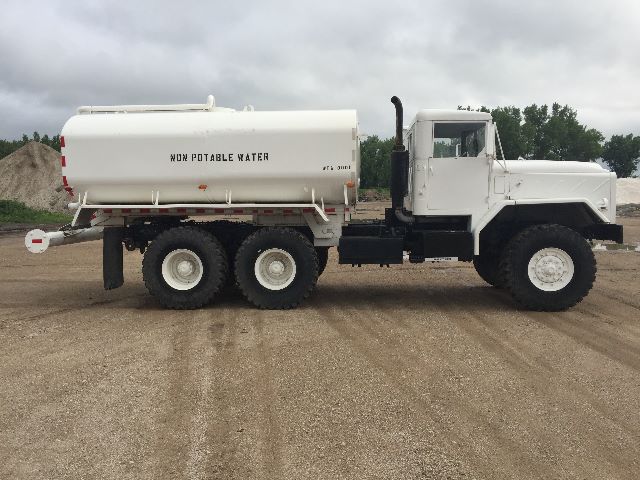
Chassis spec should match the terrain and duty cycle. PTO-driven systems are standard on many water trucks, and transmission, axle rating, suspension, and brake type all affect how the truck performs with a full load. Off-road and ex-military 6x6 water trucks can be attractive for buyers needing traction and simple mechanical systems, especially on remote projects or undeveloped ground. For road-legal operation, pay close attention to GVWR, bridge compliance, overall length, turning radius, and local licensing requirements. Tire condition, frame integrity, and evidence of tank or plumbing repairs are worth close inspection on used units because water service adds weight and can expose weak points quickly.
A good used water truck is defined by application fit more than model year. A municipality may prioritize dependable road spray and easy service access, while a contractor may need higher pump output, off-road mobility, and a rugged tank mount. In cold-weather regions like Iowa, winterization is a serious consideration, including drain points, pump protection, and storage practices that prevent freeze damage. Buyers comparing water trucks for sale should focus on tank capacity, spray coverage, pump performance, drivetrain layout, and the truck's history in severe-duty work. Those factors usually tell you more than cosmetics about how the truck will perform on the next job.
Frequently Asked Questions
What size water truck do I need?
The right size depends on haul distance, refill frequency, site size, and application rate. Many buyers look at 2,000 to 3,000 gallon units for lighter municipal or site support work, while 4,000 to 5,000 gallon water trucks are common for road projects, dust control, and longer cycles between fills. Larger capacity increases productivity, but it also adds weight, affects maneuverability, and may require a heavier chassis or different licensing considerations.
What features matter most on a used water truck?
Tank condition, pump performance, spray system function, and chassis integrity matter most. Inspect the tank for corrosion, cracks, poor weld repairs, and secure mounting points. Confirm that the PTO engages properly, the pump builds pressure consistently, valves operate smoothly, and spray heads deliver even coverage. On the truck side, pay attention to frame condition, suspension wear, brake performance, tire condition, and signs that the vehicle has spent time in severe off-road service.
Are 6x6 water trucks better than standard highway chassis units?
A 6x6 water truck is usually the better choice for soft ground, steep grades, undeveloped sites, and remote job locations where traction is critical. These trucks are often favored in construction, forestry, mining support, and disaster response. A standard highway or tandem-axle chassis is often more efficient for paved-road travel and municipal routes. The best choice depends on terrain, travel speed, legal road use, and how often the truck will operate fully loaded off pavement.
How important is tank baffling on a water truck?
Tank baffling is very important because it controls water surge inside the tank during braking, acceleration, and cornering. Proper baffling improves stability, reduces driver fatigue, and helps the truck handle more predictably when the tank is not full. On larger-capacity water trucks, poor baffling can negatively affect safety and shorten component life by increasing stress on the tank mounts and chassis.
Can a water truck be used year-round in Iowa?
Yes, but cold-weather operation requires attention to winterization. Pumps, valves, spray bars, and hose reels can be damaged by freezing if the system is not drained or protected correctly. Buyers in Iowa should look for accessible drain points, serviceable plumbing, and a maintenance routine that accounts for freezing temperatures. Seasonal use is common, but a well-maintained truck can stay productive year-round if the water system is protected properly.